


%201.svg)


Emergency Hotline:
(+63) 2 911 – 8688


Manila, Philippines – The government has launched a new transparency website as it moves to counter the spread of misinformation claiming it has taken no action amid the ongoing oil crisis.
The Department of Budget and Management introduced the UPLIFT microsite, accessible at uplift.gov.ph, as a centralized platform where the public can track government efforts across various agencies responding to the crisis.
DBM Undersecretary Goddes Hope Libiran said the initiative comes in response to the surge of false information circulating on social media.
"Ang dami po kasing kumakalat na mga maling impormasyon, may mga kumakalat na balita na walang ginagawa ang gobyerno. Which is not true at all."
("A lot of misinformation has been spreading, with reports circulating that the government is doing nothing. Which is not true at all.")
The website contains key data including the allocation of subsidies and cash aid, updates on commodity prices, locations of ayuda payout centers, available discounts, the country's electricity and supply situation, and the number of Filipinos who have returned home following the conflict in the Middle East.
Usec. Libiran described the platform as a "source of truth" for the public.
"Kaya po gusto naming makita nila under the directive of the President ano ba talaga ang ginagawa ng gobyerno para sa kanila. Lahat naman ng mga programa, proyekto, ayuda, tulong, lahat yan sila ang true beneficiary. Para maiwasan maligaw ng landas dahil sa mga fake news na kumakalat."
("We want them to see, under the directive of the President, what the government is truly doing for them. All the programs, projects, aid, and assistance — they are the true beneficiaries. This is to keep them from being misled by the fake news circulating.")
The DBM official added that the website is not merely a public information update but also a demonstration of the government's readiness to be scrutinized and held accountable.
Meanwhile, the proposed Unified Package for Livelihood, Industry, Food, and Transport — or UPLIFT Bill is expected to require hundreds of billions of pesos in funding once enacted into law.
The UPLIFT Committee recently convened to discuss further steps to ease the impact of rising petroleum product prices. Usec. Libiran placed the preliminary funding requirement at ₱155 billion.
"The estimated funding requirement for the proposed UPLIFT intervention is at least 155 billion based on the preliminary presentation of the Office of the Executive Secretary."
She clarified, however, that the figure is not yet final and remains subject to change depending on the needs and proposals of implementing agencies.
"We are not looking at entirely new spending but rather strategic reprioritization within the current fiscal space, consistent with prudent fiscal management and in line with whole-of-government efforts."
Under the proposed measure, President Ferdinand Marcos Jr. seeks to accelerate the flow of funds for government projects, including the use of savings or unobligated allotments from fiscal years 2025 and 2026.

Manila, Philippines – The Senate is preparing for the possible transmission of Vice President Sara Duterte's articles of impeachment, though senior legislators say it is too early to set a definitive timeline as the complaint has yet to formally reach the chamber.
Senate President Pro Tempore Panfilo "Ping" Lacson clarified that the impeachment trial will not be affected by the Senate's sine die adjournment on June 9, stressing that trial proceedings operate separately from regular legislative sessions.
"Tuloy-tuloy yun, separate naman yung impeachment trial sa session. So yung sine die adjournment will not in any way affect the schedule of the impeachment trial," Lacson said.
Senate President Vicente "Tito" Sotto III echoed the same position, saying the Senate can extend its work even during a break. Sotto added that once the articles of impeachment are received, the Senate will act on it forthwith, the following day, regardless of what day it falls.
"If ever we do receive the articles of impeachment, we will act on it forthwith — the following day, whatever day that is," Sotto said.
Sotto also stressed the need for impartiality, noting that the public is closely watching how the Senate handles the case against the country's second-highest official.
"We have to be impartial — kahit sino ipapadala sa amin na articles of impeachment, we have to look at it at a very impartial attitude," he said.
The Senate president further confirmed that the impeachment trial will be open to the public and that the chamber must be in session when the articles are formally received. Once convened as an impeachment court, proceedings will continue uninterrupted.
Lacson, meanwhile, acknowledged that the trial will pose challenges for senators without legal backgrounds, noting that lawyers in the chamber hold a natural advantage in litigation and court proceedings. He said he and Sotto are nonetheless working diligently to ensure due process is upheld.
Senator Pia Cayetano, a lawyer who has participated in a previous impeachment trial, said she already comes prepared. Senator Rodante Marcoleta, on the other hand, said he is not actively preparing and will simply wait for whatever reaches the Senate floor.
Senator Rodante Marcoleta, on the other hand, said he is not actively preparing and will simply wait for whatever reaches the Senate floor.
"Di naman ako nagpe-prepare. Basta kung ano yung dumating, darating," Marcoleta said.
Following a caucus held the same day, Sotto reiterated that the Senate will act on the articles of impeachment the moment they are received.
Sotto added that the Senate must be in session when the articles are formally transmitted. However, once convened as an impeachment court, proceedings will continue uninterrupted.
The Senate leadership also confirmed that the trial will be open to the public.
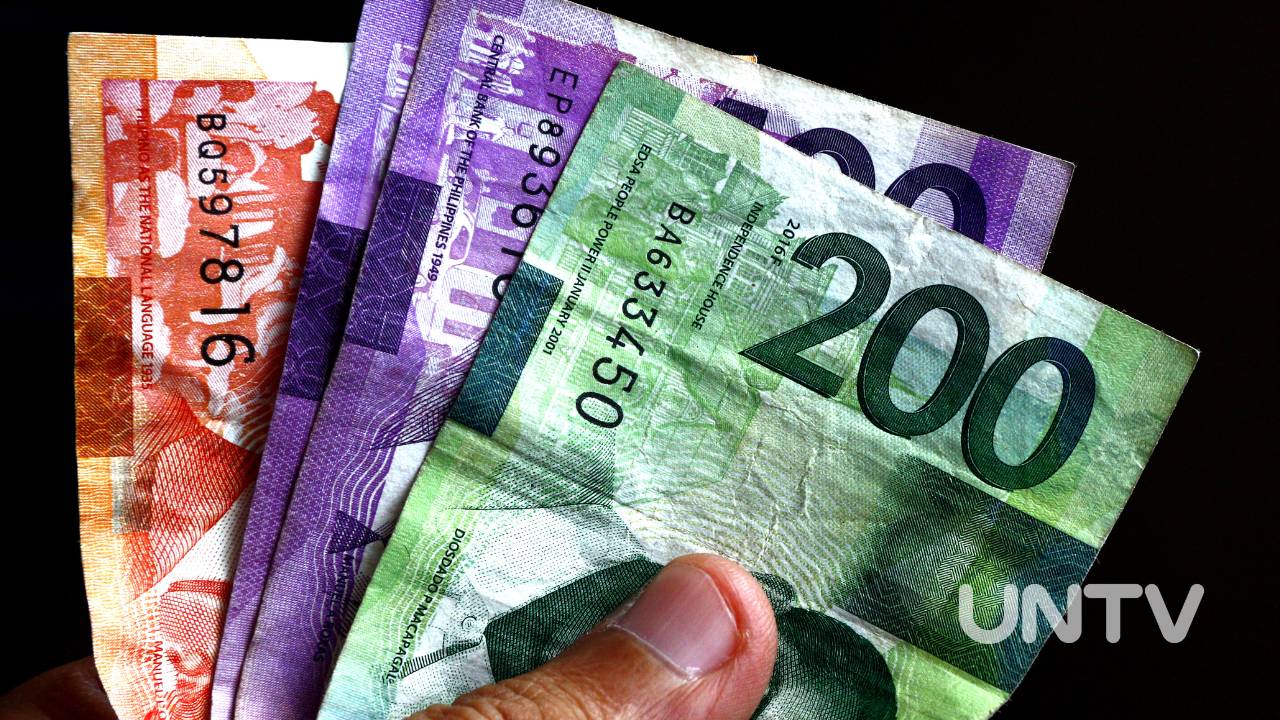
The Philippine peso touched a new all-time low of P61.567 against the US dollar on Wednesday, April 30, 2026, yet another blow to Filipinos already struggling with a rapidly shrinking purchasing power.
The local currency closed at P61.30 the previous day, April 28, itself a record-breaking close. That figure surpassed the previous all-time low close of P60.748 logged on March 31, and marked the peso's biggest single-day drop in over seven months.
The latest record comes as data continues to paint a grim picture of what Filipinos can actually afford. The Philippine Statistics Authority reported that the purchasing power of the peso stood at 0.75 in March 2026, the lowest on record based on 2018 prices.
To put it in everyday terms, what cost P1,000 in 2018 now effectively costs P1,333, meaning the same grocery budget buys considerably less than it did eight years ago. Economists say many Filipinos are already feeling this at the palengke, even when spending the same amount they always have.
What's driving the peso down
Analysts point to the stalled US-Iran negotiations and the prolonged closure of the Strait of Hormuz as key factors behind the peso's continued slide.
As a net oil importer that sources much of its supply from the Middle East, the Philippines is especially exposed to global fuel price shocks. The Bangko Sentral ng Pilipinas responded by hiking benchmark interest rates by 25 basis points, its first increase in more than two years, and has signaled further tightening ahead.
The central bank has also raised its inflation forecast to 6.3% for 2026 and 4.3% for 2027, and now expects prices to remain above its 2%–4% target band well into next year.
Some economists note that this is the third major inflation wave to hit Filipino households in recent years, following the rice price crisis in 2018 and the oil and wheat surge driven by the Russia-Ukraine war in 2022. The current Middle East conflict has added a fresh and severe layer of price pressure.
Who wins, who loses
OFW families and Filipinos earning in US dollars stand to benefit from the weaker peso, as remittances convert to higher amounts in local currency. On the other hand, ordinary consumers bear the brunt of costlier imports, fuel, food, and power among them pushing everyday prices even higher.
Economists have also raised the alarm over the risk of stagflation, where rising prices and slowing economic growth happen simultaneously, squeezing both consumers and businesses.
For now, Filipinos are left stretching every peso further, with no clear end in sight.

The House Committee on Justice has unanimously found probable cause in the impeachment complaint against Vice President Sara Duterte, with all 53 members voting to endorse the case filed by La Union 1st District Representative Paolo Ortega and Manila 6th District Representative Benny Abante.
In response, the defense team of Vice President Duterte released an official statement saying the committee's finding did not come as a surprise, given how the proceedings had unfolded.
The defense team maintained that the process before the committee deviated from its constitutional mandate, arguing that the proceedings went beyond the scope of the verified complaints and their attachments, and instead ventured into matters that should only be taken up during a full trial.
“The finding of probable cause by the House Committee on Justice was not unexpected, given the direction the proceedings had taken.
We respectfully maintain that the proceedings before the Committee departed from the constitutional design. Instead of confining itself to the verified complaints and their attachments, the process expanded into matters that properly belong to a full trial.” - Official statement of the Defense team of VP Sara Duterte.

Two beloved Filipino dishes have made it to TasteAtlas' World's 50 Best Chicken Dishes, with Chicken Inasal landing in the top three and Chicken Adobo breaking into the top 40.
Taste Atlas, an online travel guide that researches and ranks traditional foods and their ingredients worldwide, gave Chicken Inasal a 4.4-star rating, placing it third on the global list. Chicken Adobo, meanwhile, earned a 4.1-star rating, securing a spot in the top 40.
According to TasteAtlas, Chicken Inasal is a distinctly Filipino style of grilled chicken said to have originated in Western Visayas. The guide also recommended Bacolod, Iloilo, and Tagaytay as the best places to experience the dish.
Chicken Adobo was described as a traditional Filipino stew cooked with garlic, onion, bay leaves, pepper, soy sauce, vinegar, and a small amount of sugar.
Topping the list was Korean Fried Chicken, followed by Peru's Pollo a la Brasa in second place. Turkey's Pili Topkapi ranked fourth, while Pakistan's Murgh Karahi rounded out the top five.
