%201.svg)



MANILA, Philippines — Reports of a suspected pneumonic plague case in Russia have raised public health concerns, prompting Philippine health officials to monitor the situation while infectious disease experts reassure Filipinos that the risk of the disease reaching the country remains extremely low.
The concern follows the death of a laboratory worker in Irkutsk, Siberia, who reportedly died of pneumonia. However, Russian health officials have not confirmed that the death was caused by pneumonic plague, while the World Health Organization (WHO) continues to seek additional information about the incident.
In an interview, Infectious disease specialist Dr. Rontgene Solante said Thursday, October 8, that the possibility of the disease spreading internationally to the Philippines is extremely low, emphasizing that the suspected infection in Russia remains unconfirmed.
Meanwhile, Malacañang said the Department of Health (DOH) is closely monitoring developments and following relevant WHO guidelines.
But what exactly is pneumonic plague, how does it spread, and what symptoms should the public watch for?
What is pneumonic plague?
Pneumonic plague is a rare but potentially life-threatening bacterial infection that primarily affects the lungs.
According to the World Health Organization, it is caused by Yersinia pestis, a bacterium commonly found in small mammals, particularly rodents, and the fleas that live on them.
Plague has three main clinical forms: bubonic, septicemic, and pneumonic. Of these, pneumonic plague is considered the most severe because it directly affects the respiratory system and can spread from person to person.
The disease is also associated with the historic Black Death pandemic, which killed millions of people in Europe during the 14th century.
Unlike during that period, however, plague can now be treated with antibiotics, particularly when diagnosed early.
What are the symptoms?
Pneumonic plague can develop rapidly, with symptoms sometimes appearing within 24 hours of infection.
According to the WHO and the US Centers for Disease Control and Prevention (CDC), common symptoms include:
- Sudden onset of fever and chills
- Headache and body weakness
- Cough, sometimes producing bloody or watery mucus
- Chest pain
- Difficulty breathing or shortness of breath
- Rapidly developing pneumonia
The infection can progress quickly and may lead to respiratory failure and death if left untreated.
Health experts emphasize that these symptoms can also occur in other respiratory illnesses. Laboratory testing is necessary to confirm pneumonic plague.
How does pneumonic plague spread?
Unlike bubonic plague, which is commonly acquired through the bite of infected fleas, pneumonic plague can spread directly between people.
Transmission occurs primarily when someone inhales infectious respiratory droplets released by a person with pneumonic plague, particularly during close contact.
The infection can also develop when the bacteria spread to the lungs from another form of plague.
However, pneumonic plague does not spread as efficiently as some common respiratory viruses, and transmission generally requires close exposure to an infected person.
The WHO recommends avoiding close contact with infected individuals and using appropriate protective measures to reduce transmission
Can pneumonic plague be treated?
Yes. Although pneumonic plague is one of the most dangerous forms of bacterial infection, it is treatable with appropriate antibiotics.
The WHO emphasizes that early diagnosis and treatment are critical, as untreated pneumonic plague can become fatal within 18 to 24 hours after symptoms begin.
Patients with suspected infections require immediate medical attention, laboratory evaluation, and appropriate isolation to prevent possible transmission.
People who develop symptoms after a known exposure should seek urgent medical care rather than self-medicate with antibiotics.
Should Filipinos be worried?
Infectious disease experts say there is currently no reason for Filipinos to panic over reports of a suspected infection in Russia.
Dr. Edsel Salvana said the death of the Russian laboratory worker requires a thorough investigation, stressing that pneumonia can result from numerous bacterial and viral infections.
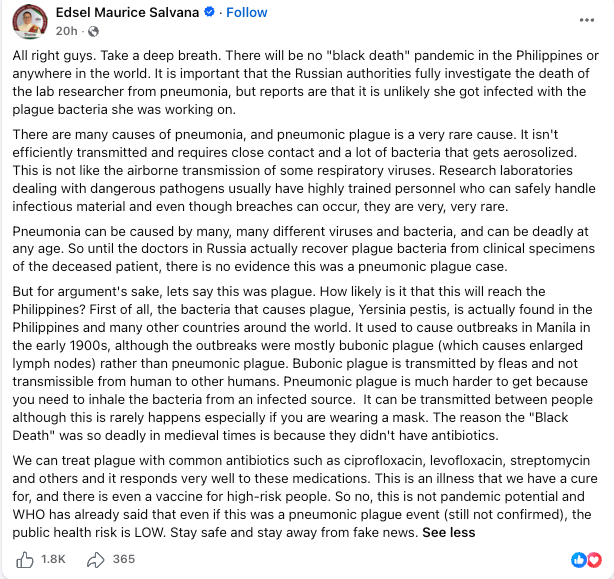
He also emphasized that there is no confirmed evidence that the laboratory worker died from plague.
Solante similarly described the likelihood of the disease reaching the Philippines as extremely low.
While pneumonic plague is a serious infection, its rarity, available treatments, and established infection-control measures distinguish the current situation from the conditions that allowed historical plague pandemics to spread.
The DOH continues to monitor the situation, while the WHO seeks further information from Russia to clarify the cause of the laboratory worker's death and assess any potential public health risks.



















.png)



.png)