%201.svg)


MANILA – The Land Transportation Franchising and Regulatory Board (LTFRB) on Tuesday, March 17, announced an average 19% fare increase for all modes of land transportation, expected to take effect on Thursday, March 19, once published by the UP Law Center.
LTFRB Chair Vigor Mendoza II said the fare hike was thoroughly deliberated and supported by data and analysis gathered by the agency alongside the Department of Transportation (DOTr) and the Department of Economy, Planning and Development (DEPDev).
Mendoza cited rising petroleum prices driven by Middle East tensions as a key factor behind the adjustment.
“And this is timely because the transport sector is currently facing a serious challenge on the prices of petroleum products as a result of the Middle East tensions,” he said during a press conference at the LTFRB headquarters.
The approved increases are as follows:
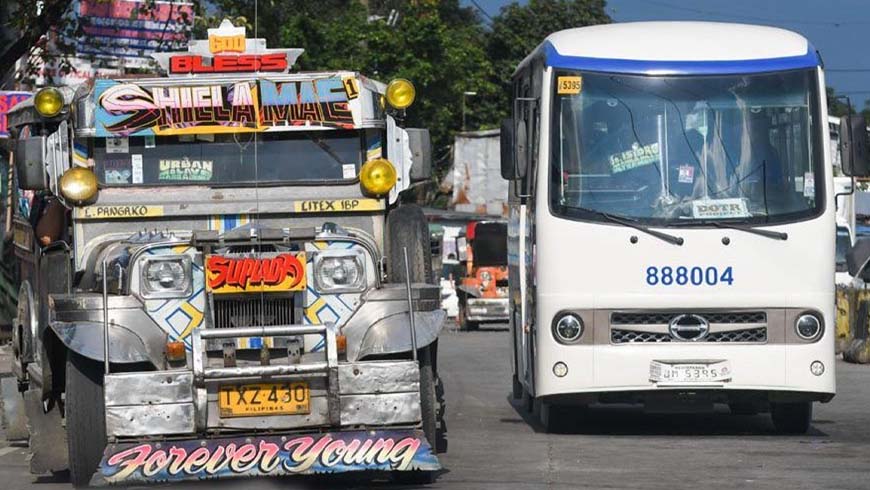
For jeepneys, traditional units will see a PHP1 increase in minimum fare, from PHP13 to PHP14, plus PHP2 for every succeeding kilometer.
Modern jeepneys will have a PHP2 minimum fare increase, from PHP15 to PHP17, plus PHP2.30 per succeeding kilometer.
For airport taxis, the flagdown rate increases by PHP40 for the first 500 meters, from PHP75 to PHP115. Charges for succeeding 300-meter intervals and a two-minute wait time remain unchanged.
For transport network vehicle services (TNVS), a PHP20 base fare increase and a PHP15 pick-up fare per kilometer were approved. Sedans go from PHP45 to PHP65; AUVs from PHP55 to PHP75; hatchbacks from PHP35 to PHP55; and premium TNVS from PHP145 to PHP165. Per-kilometer and per-minute charges remain unchanged.
For ordinary buses in Metro Manila and other cities, the minimum fare increases by PHP2, from PHP13 to PHP15 for the first 5 kilometers, plus PHP2.49 per succeeding kilometer. Air-conditioned buses go from PHP15 to PHP18 for the first 5 kilometers, with a PHP3 increase, plus PHP2.98 per succeeding kilometer.
For provincial buses, ordinary units see a PHP1 increase for the first 5 kilometers, with succeeding kilometer charges varying by bus type.
Petitions for fare hikes filed by transport groups for ordinary taxis and UV Express units are still being reviewed by the LTFRB.
Mendoza emphasized that the increases are permanent and may be implemented immediately upon publication. He added that a fare matrix must be posted inside each public utility vehicle before operators begin collecting the new rates.
Separately, the DOTr, the Department of Social Welfare and Development (DSWD), and local governments in Metro Manila have begun distributing fuel subsidies for tricycle drivers across 30 sites in the region. The government said the distribution will expand in the coming weeks to cover drivers and operators of other public land transport modes, as part of broader efforts to cushion the impact of rising fuel costs.