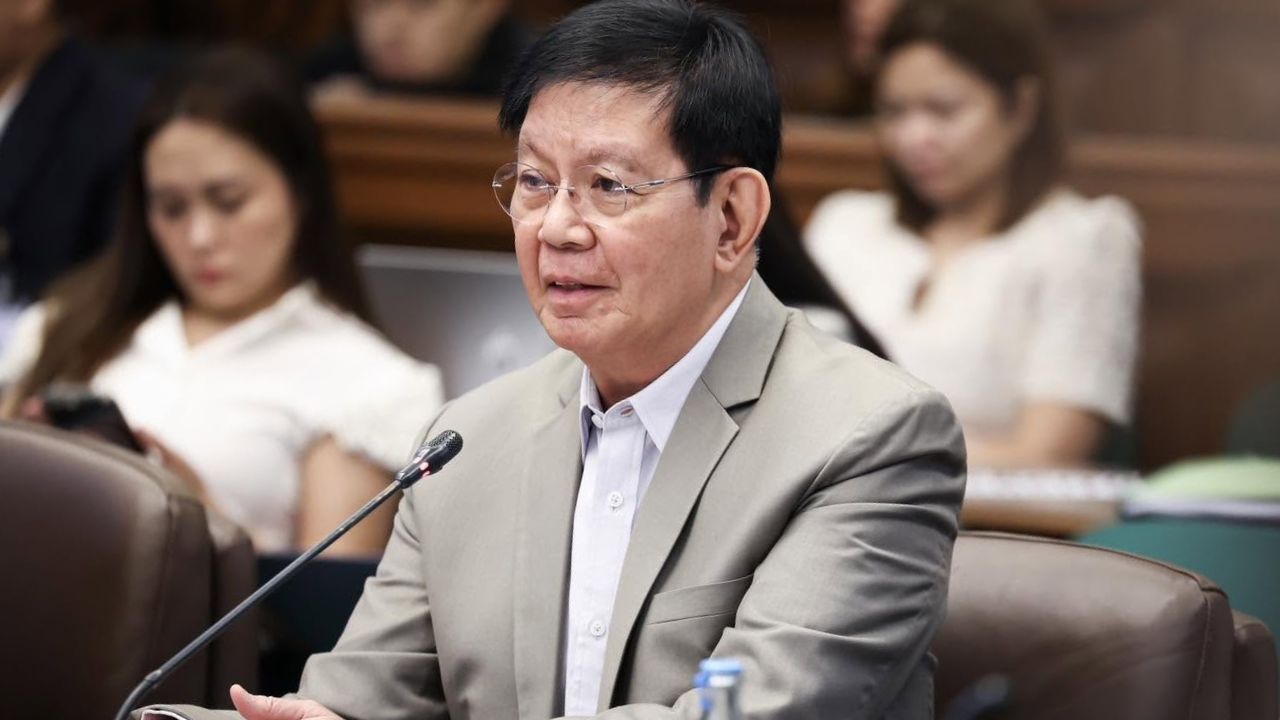
MANILA, Philippines — Senator Panfilo “Ping” Lacson has criticized the 2024 and 2025 national budgets following a Supreme Court ruling that found unconstitutional increases in government appropriations, saying the decision exposes serious problems in how Congress approved public spending.
In a statement on Wednesday, October 21, Lacson said the two General Appropriations Acts (GAAs) would be remembered as among the worst budgets passed by Congress, comparing them with previous government spending controversies involving the Disbursement Acceleration Program (DAP).
The senator welcomed the timing of the ruling, which came as the Senate examines the House-approved version of the proposed ₱7.2-trillion national budget for 2027.
He said the decision serves as a reminder that Congress must observe constitutional limits when reviewing and amending the President's proposed spending program.
Supreme Court flags unconstitutional budget increases
In a decision announced Tuesday, October 20, the Supreme Court found that Congress exceeded its constitutional authority when it increased certain appropriations beyond the amounts recommended by the executive branch.
Among the disputed items was a ₱449.5-billion increase in unprogrammed appropriations under the 2024 General Appropriations Act.
The increase raised the allocation from ₱281.9 billion in the National Expenditure Program to approximately ₱731.4 billion in the enacted budget.
The Court also found unconstitutional an additional ₱17.99 billion for the Special Road Fund under the 2025 national budget.
In both instances, the increases violated constitutional restrictions on Congress raising the President's total recommended appropriations.
The Supreme Court also invalidated certain provisions governing the release of unprogrammed funds under the 2026 budget, citing insufficient safeguards and the risk of allowing spending decisions outside established fiscal limits.
What are unprogrammed appropriations?
Unprogrammed appropriations are standby funds included in the national budget for specific purposes that may be financed when legally prescribed funding conditions are met.
The Supreme Court clarified that such appropriations are not automatically unconstitutional.
However, the Court emphasized that they must remain within the government's fiscal program and be governed by clear restrictions, spending priorities, and accountability measures.
The decision also highlighted the need for transparency in the bicameral conference committee, particularly when lawmakers introduce substantial changes to proposed budget allocations.
Lacson says ruling is timely for 2027 budget review
Lacson said the decision could guide senators as they scrutinize changes introduced by the House of Representatives to the proposed 2027 spending plan.
He previously warned that the Senate review could result in the restoration of hundreds of billions of pesos in allocations reduced or realigned by the House, including funds intended for foreign-assisted projects.
The senator also clarified that he was not serving in the Senate when Congress approved the 2024 and 2025 budgets.
Regarding the possible consequences of the Supreme Court ruling, Lacson said funds affected by the decision that remain unspent may no longer be released, while expenditures already made may not necessarily be invalidated.
These potential effects remain subject to the ruling's specific terms and implementation.
Court ruling raises budget accountability concerns
The decision comes amid renewed scrutiny of congressional budget amendments, particularly infrastructure allocations and the handling of unprogrammed funds.
Former Albay lawmaker Joey Salceda also welcomed the ruling, emphasizing that the decision recognized unprogrammed appropriations as a legitimate fiscal mechanism when subject to constitutional restrictions.
He said the ruling could provide an opportunity to establish a more transparent and accountable national budget system.
With the 2027 spending proposal now under Senate review, the Supreme Court's decision places renewed attention on how lawmakers revise spending priorities and ensure that appropriations comply with constitutional requirements.