MANILA, Philippines — Senator Risa Hontiveros has called on President Ferdinand Marcos Jr. to declare Chinese Ambassador Jing Quan persona non grata or ask Beijing to recall him, citing a series of confrontations in the West Philippine Sea and the envoy's controversial remarks about China's military strength.
Hontiveros filed Proposed Senate Resolution No. 746 on Tuesday, October 20, arguing that the ambassador's statements should be examined alongside China's actions involving Philippine vessels and personnel in disputed waters.
The measure marks the second Senate resolution seeking diplomatic action against Jing in two days, following a similar proposal filed by Senator Erwin Tulfo on Monday.
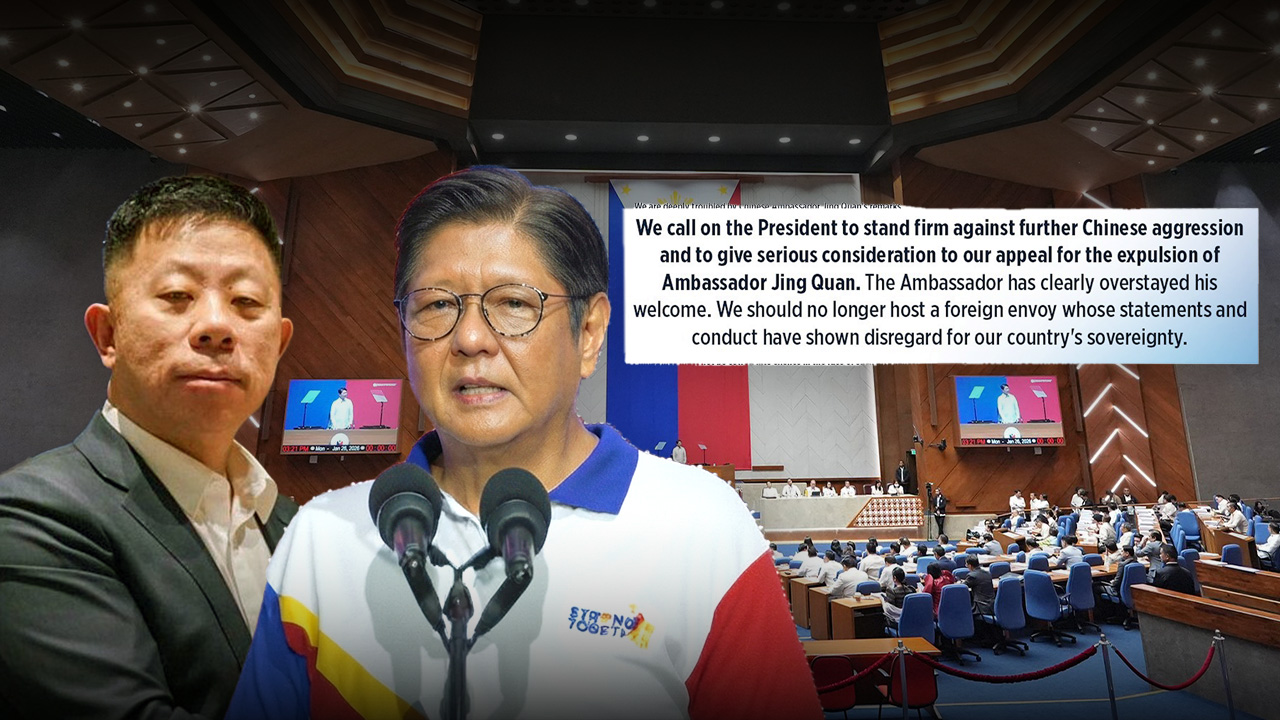
Unlike Tulfo's resolution, which asks the Department of Foreign Affairs (DFA) to recommend the declaration, Hontiveros' measure appeals directly to the President to declare Jing unwelcome or formally request his recall by the Chinese government.
Hontiveros cites confrontations in West Philippine Sea
In seeking the ambassador's removal, Hontiveros pointed to several reported incidents involving Chinese vessels and Philippine personnel, arguing that Beijing's conduct contradicts its repeated assurances of peaceful intentions.
Her resolution cited the reported assault on a Filipino sailor at Ayungin Shoal, water cannon incidents involving Philippine fishing vessels at Bajo de Masinloc, and the ramming of fisheries vessel BRP Datu Magat Salamat during a fuel delivery mission for Filipino fishermen.
It also referred to a Chinese fighter jet's dangerous approach toward a Philippine patrol aircraft and the reported obstruction of a medical evacuation from the BRP Sierra Madre, which delayed the transfer of an ailing sailor by more than eight hours.
Another incident mentioned in the resolution involved a Chinese fishing vessel that allegedly entered the territorial waters of Lawak Island on October 15 and deployed four smaller boats to conduct fishing activities without Philippine authorization.
Hontiveros linked these incidents to the 2016 South China Sea arbitral ruling, which upheld key Philippine maritime rights and rejected the legal basis for China's expansive historic-rights claims.
The senator maintained that the pattern of reported maritime confrontations raised questions about the sincerity of Beijing's stated commitment to restraint.
Ambassador's remarks deepen diplomatic dispute
The latest controversy began during the October 15 Diliman Dialogues in Quezon City, where Jing responded to Defense Secretary Gilberto Teodoro Jr.'s criticism of China as a regional troublemaker.
During the exchange, Jing suggested that China could easily prevail if it resorted to military force, while insisting that Beijing would choose peace instead.
President Marcos subsequently described the statement as sounding like a threat, while the DFA criticized its implications for bilateral relations.
Foreign Affairs Secretary Ma. Theresa Lazaro summoned the ambassador on October 19 to formally convey the Philippine government's objection to his remarks.
The Chinese Embassy rejected the criticism, maintaining that Jing's statement had been taken out of context.
Chinese Embassy's challenge adds to controversy
Hontiveros also raised concerns about the Chinese Embassy's public response to Philippine lawmakers who were considering moves against the ambassador.
On October 17, the embassy challenged lawmakers to proceed with their proposed action rather than merely threaten it, while criticizing politicians and journalists for their interpretation of Jing's remarks.
The senator's resolution also referenced previous diplomatic controversies, including a July video published by Chinese state media that portrayed a monkey wearing a barong and receiving instructions from the United States and Japan.
According to the resolution, the DFA protested the material, but China maintained that it did not represent the government's official position.
Hontiveros cited these incidents as part of her argument that the ambassador's conduct should be evaluated against the broader state of Philippine-China relations.
Final decision rests with President Marcos
Despite the growing calls for Jing's removal, the resolution acknowledges the President's constitutional authority over the country's foreign relations.
Under the Vienna Convention on Diplomatic Relations, a receiving state may declare a foreign diplomat persona non grata without having to explain its decision.
However, a Senate resolution does not itself expel an ambassador or compel the executive branch to take diplomatic action.
Malacañang earlier indicated that Marcos was not inclined to declare Jing persona non grata, preferring to address the disagreement through established diplomatic channels.
The Palace has also said it is awaiting the DFA's report on Lazaro's meeting with Jing before announcing any further steps.