%201.svg)


MANILA, Philippines — The Philippine Embassy in Nairobi has urged Filipinos in Kenya to remain vigilant and observe health precautions following the confirmation of the country's first imported case of Bundibugyo Ebola virus disease on October 6, 2026.
The advisory comes as Kenyan health authorities intensify disease surveillance, contact tracing, and border screening to prevent further transmission of the potentially deadly virus.
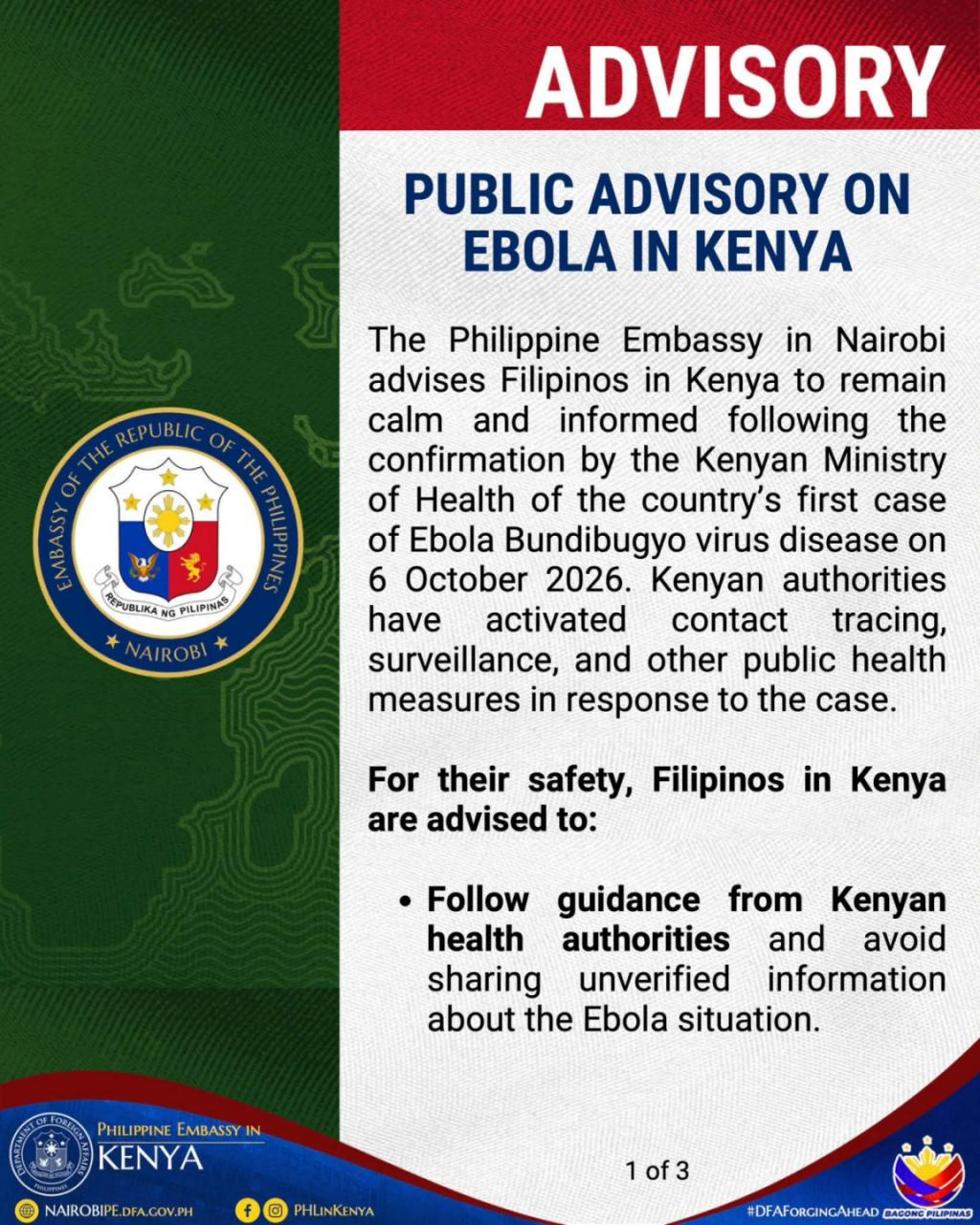
According to Kenya's Ministry of Health, the confirmed patient was a Kenyan citizen who had been living in the Democratic Republic of the Congo (DRC), where an Ebola outbreak has been ongoing since May.
The patient reportedly developed symptoms about a month before traveling to Kenya and had received treatment at several health facilities in the DRC.
On October 2, the patient traveled by road through Beni to Kampala, Uganda, before boarding a flight to Nairobi on October 3.
Upon arrival, the patient was taken to Nairobi Hospital and isolated after exhibiting symptoms including fever, chills, fatigue, muscle pain, sore throat, difficulty swallowing, and bleeding beneath the skin at injection sites.
Laboratory tests conducted by Kenya's National Virology Reference Laboratory and the Kenya Medical Research Institute confirmed infection with the Bundibugyo virus.
Despite receiving medical care, the patient died on the night of October 5 and was buried the following day under Ebola safety protocols, according to the World Health Organization (WHO).
Kenya intensifies contact tracing
Following confirmation of the case, Kenya's Ministry of Health strengthened surveillance and launched efforts to identify individuals who may have been exposed to the infected patient.
As of October 7, health officials had identified 57 contacts associated with the case, including people who may have been exposed during the patient's travel and hospital treatment.
Of these, 10 individuals had been located and placed under quarantine at the National Police Service Hospital in Nairobi, while efforts to trace and monitor the remaining contacts continued.
Kenyan Health Cabinet Secretary Aden Duale assured the public that the country was not experiencing a broader Ebola outbreak, emphasizing that the confirmed infection was an imported case linked to the ongoing outbreak in the DRC.
Kenya has also designated five healthcare facilities for the management of suspected and confirmed Ebola cases, with a combined capacity of 244 isolation beds.
What is Bundibugyo Ebola virus disease?
Bundibugyo virus disease is a rare but severe viral illness belonging to the group of diseases commonly known as Ebola.
According to the WHO, the virus can spread through direct contact with the blood, bodily fluids, or contaminated materials of an infected person.
Early symptoms include fever, severe headache, fatigue, muscle pain, and sore throat. As the illness progresses, patients may experience vomiting, diarrhea, abdominal pain, and, in some cases, internal or external bleeding.
Symptoms generally develop within two to 21 days after exposure. Infected individuals are not considered contagious before symptoms appear.
The WHO emphasizes that early medical attention and infection-control measures are important in reducing the risk of severe illness and further transmission.
Filipinos advised to remain cautious
Amid the confirmed case, Filipinos in Kenya are being reminded to follow official health advisories and observe preventive measures, particularly when traveling to or staying in areas affected by Ebola.
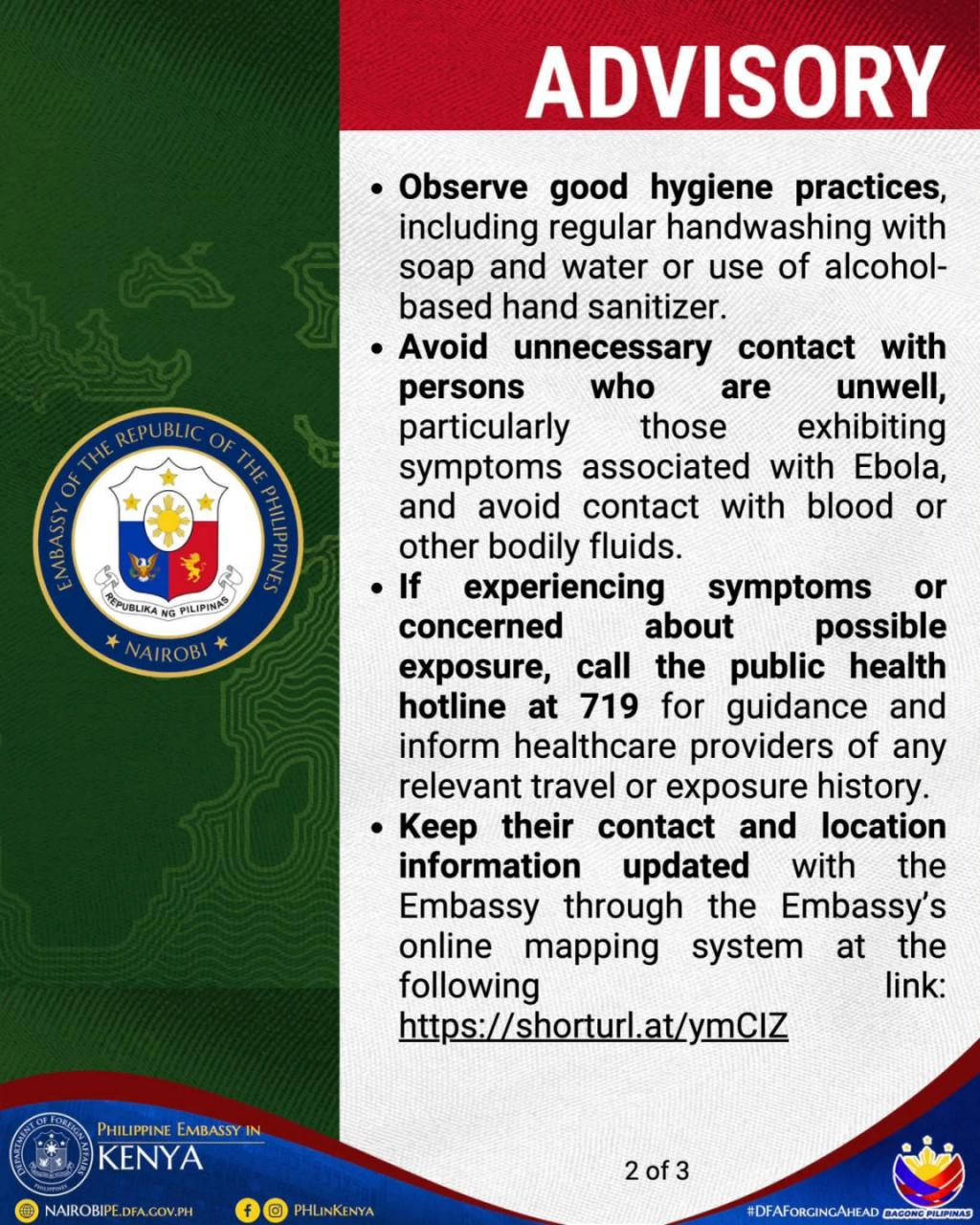
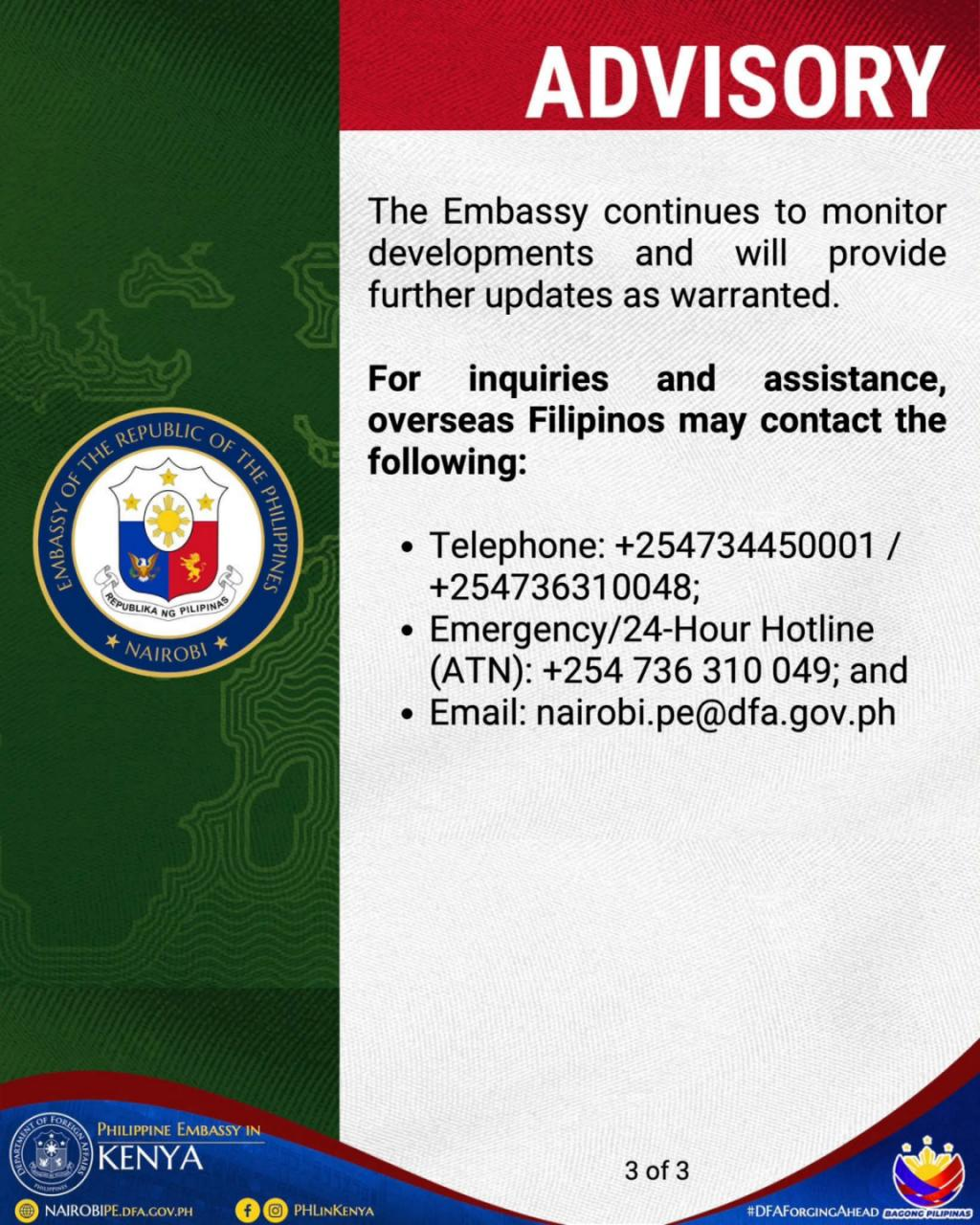
The WHO recommends avoiding direct contact with the blood and bodily fluids of infected individuals, refraining from handling potentially contaminated materials, and practicing appropriate infection-prevention measures.
Individuals who experience symptoms after possible exposure are advised to seek immediate medical attention and inform healthcare providers of their travel history or possible contact with an infected person.
Meanwhile, the WHO is working with the Kenyan government to strengthen disease surveillance, laboratory testing, contact tracing, and public health communication.
Kenyan authorities continue to monitor individuals who may have been exposed to the patient as health officials work to prevent additional infections.


















.png)

.png)