


%201.svg)


Emergency Hotline:
(+63) 2 911 – 8688


Manila, Philippines - Filipino workers cannot be punished for refusing to work during typhoon #UwanPH or any severe weather disturbance. This protection comes from Labor Advisory No. 17, Section 3, Series of 2022, which provides guidelines for work suspension and wage payment during weather disturbances and similar events in the private sector.
This protection is absolute. No termination, suspension, memo, salary deduction, or negative attendance record can be imposed on workers who prioritize their safety during typhoons.
The Department of Labor and Employment issued this advisory to ensure worker safety and health during weather disturbances, making it clear that no employer can punish workers for refusing to risk their lives.
The timing of this discussion is critical. Recently, screenshots from Cebu sparked widespread outrage and led to formal complaints after a BPO team leader told agents to report for work despite the magnitude 6.9 earthquake that struck the region.
This action could violate Labor Advisory No. 17-22, which protects employees from pressure during imminent danger caused by natural disasters, including typhoons, earthquakes, and other hazardous conditions.
The protection covers all private sector employees, regardless of employment type. Regular, probationary, contractual, or agency-based workers are entitled to the same rights.
Employers cannot use absences caused by imminent danger to affect performance reviews, deny bonuses, or revoke perfect attendance awards.
Even when companies do not suspend operations, individual workers still have the right to refuse work if they believe conditions threaten their safety.
Section 2 of the labor advisory explains the rules on pay.
If work is suspended by the company, employees are not automatically entitled to their regular pay unless there is a company policy, collective bargaining agreement, or available leave credits.
However, the absence remains protected. Whether paid or unpaid, employers cannot penalize workers for choosing safety. Employees who report to work but must leave early due to worsening conditions are entitled to pay corresponding to the hours they have already worked.
Workers should keep evidence of violations, such as screenshots, emails, or chat messages that pressure them to report despite danger.
DOLE can issue penalties, order reinstatement with back pay, or impose other sanctions on employers who disregard the advisory. If violations lead to injury or death, companies may face criminal and civil liabilities under labor and safety laws.
The advisory also applies to other natural calamities, such as floods, volcanic eruptions, and earthquakes.
The protection extends beyond the duration of the disaster itself and covers recovery periods when danger remains - such as when roads are impassable or transportation has not yet resumed.
Responsible employers follow these regulations by coordinating with safety officers, monitoring official weather advisories, and suspending work when needed.
Every Filipino worker has the right to stay safe when danger strikes. Labor Advisory No. 17, Series of 2022 makes this protection clear and enforceable.
No employer, company, or client demand can take away that right. Safety always comes before attendance.
Employers who respect this law protect not just their workers but also their own integrity. Those who ignore it face legal and moral consequences.

Many Filipinos start and end the day with their phones in hand. A quick check of messages turns into an hour of scrolling through news, social issues, and viral videos. What was meant to be a short glance often leaves the mind restless. This cycle, now widely called doomscrolling, has quietly become part of daily life.
The fatigue that comes with it has led people to search for balance. A growing number are turning to digital detox programs that offer time away from screens and the constant noise of online life.
One initiative, called Month Offline, is gaining attention for its simple approach. Participants try a basic “dumbphone” for 30 days and join a small group of neighbors for weekly meetups, creative challenges, and digital accountability sessions. The goal is not to abandon technology but to rebuild attention and presence. Grant Besner, co-founder of Month Offline, said the change can be surprisingly meaningful.
“The phone certainly amplifies some of our avoidant tendencies. Just replacing it even for a little bit and needing to sit with your own thoughts, to be bored, can be a transformative and really positive experience in someone’s life,” he explained.
His words reflect what many people are beginning to notice. Smartphones keep everyone connected but rarely satisfied.
What feels like social interaction often becomes routine scrolling through updates that leave people feeling drained. The constant access to information fills quiet moments that once gave space for thought, rest, or genuine connection.
Month Offline asks participants to examine what happens when they take that access away. Without social media and notifications, they see how often they reach for their phones without purpose.
They start to rediscover the value of uninterrupted time—eating without distractions, reading, walking, or simply sitting in silence. Many describe a sense of calm that feels both strange and overdue.
Research supports this experience. Studies show that limiting screen time improves focus, sleep quality, and emotional balance. Short breaks from digital platforms reduce anxiety and restore clarity.
Experts say the benefit lies not in complete disconnection but in regaining control—deciding when to engage instead of reacting by habit.
As the Philippines is known for long hours online, a digital detox may sound impossible.
Yet small changes make a difference. Turning off notifications, setting screen-free hours, or keeping the phone away during meals can help restore attention and peace.
Month Offline reminds people that technology should serve human life, not replace it.
The challenge is not about cutting off from the digital world but about creating space for the real one.

MANILA - The Civil Aviation Authority of the Philippines (CAAP) has raised its airport and area center operations to heightened alert status as the country braces for the arrival of potential Super Typhoon Uwan.
CAAP Director General Raul Del Rosario ordered all airport managers, especially those in areas projected to be affected by the storm, to activate their respective emergency preparedness and response plans.
The agency said the directive aims to ensure the safety of passengers, aircraft, and airport facilities amid the expected impact of the approaching typhoon.
CAAP added that its teams are closely monitoring weather updates from PAGASA and are coordinating with airlines and local authorities to prevent disruptions and ensure readiness once the potential Super Typhoon Uwan enters the Philippine area of responsibility.
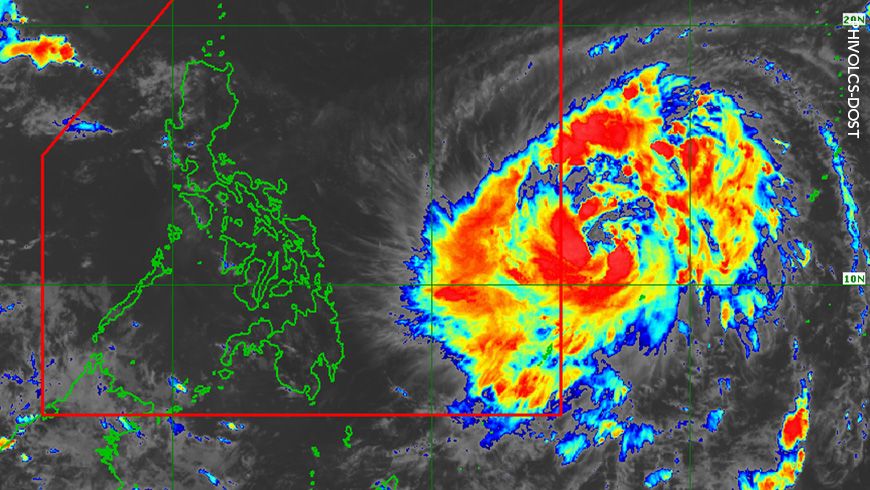
On Friday, November 7, 2025, PAGASA warned that heavy rainfall is expected in at least 25 provinces across Luzon and the Visayas on Sunday as Severe Tropical Storm Fung-wong, to be named Uwan once it enters the Philippine area of responsibility (PAR), continues to intensify.
The state weather bureau said heavy to intense rain, ranging from 100 to 200 millimeters, is forecast in Isabela, Aurora, Quezon, Camarines Norte, Camarines Sur, and Catanduanes.
Moderate to heavy rain, or 50 to 100 millimeters, is expected in Apayao, Kalinga, Mountain Province, Ifugao, Batanes, Cagayan, Quirino, Nueva Vizcaya, Nueva Ecija, Bulacan, Rizal, Laguna, Albay, Sorsogon, Masbate, Northern Samar, Eastern Samar, Samar, and Biliran.
PAGASA stated rainfall totals may increase in mountainous or elevated areas, adding that previous rains could worsen flooding and landslides in some locations.
“Forecast rainfall may be higher in mountainous and elevated areas. Moreover, impacts in some areas may be worsened by significant antecedent rainfall,” the agency said.
Meanwhile, PAGASA also reported Fung-wong strengthened into a severe tropical storm early Friday morning and is expected to enter the PAR by midnight or early Saturday.
The weather system may reach typhoon status within 24 hours and could further intensify into a super typhoon by Saturday night or Sunday morning.
Current forecasts show that possible Super Typhoon Uwan could make landfall in Northern or Central Luzon on Monday.
Authorities have advised local governments in potentially affected areas to prepare for possible flooding, strong winds, and landslides.
The agency urged residents to remain alert and monitor official weather bulletins as the storm approaches the country.

Senator Sherwin Gatchalian is pushing to strengthen the authority of the Energy Regulatory Commission (ERC) to impose heavier and more proportionate penalties on power sector players that fail to meet project deadlines.
During a joint Senate hearing of the Committee on Energy with the Committees on Public Services; Civil Service, Government Reorganization and Professional Regulation; and Finance, on November 6, 2025, the Transmission Corporation (TransCo) and Power Sector Assets and Liabilities Management Corporation (PSALM) presented their findings on delays in numerous transmission projects.
According to TransCo’s assessment, 56.63% or 141 out of 249 transmission projects did not meet their target completion dates. Of these, 100 were finished beyond schedule, while 41 remain ongoing and delayed. TransCo also noted that some projects remain unassessed because of their limited access to records, as NGCP only allows reviews of financial-related documents.
NGCP’s legal counsel, Atty. Lally Mallari, defended the company, saying they have “extensively addressed the allegations” of non-compliance with their concession agreement. She explained that unassessed projects are still under contractors and, therefore, not yet considered transmission projects.
However, TransCo disagreed, emphasizing that ongoing transmission projects are already part of NGCP’s obligations under the concession agreement.
“The bulk [of projects] are delayed — ganun na lang ba talaga ang buhay?” Senator Pia Cayetano remarked, expressing frustration over the recurring issue of project delays.
Senator Gatchalian echoed this concern, highlighting that existing penalties are too small to deter large companies. He cited that in 2024, the ERC fined NGCP ₱15 million for 34 delayed projects — a minimal amount compared to its ₱17 billion net profit that year.
“Yung mga ganitong kumikita ng bilyon, dapat ang penalties hindi 15 million. Dapat hundreds of millions, at least, para maramdaman nila,” Gatchalian said.
