


%201.svg)


Emergency Hotline:
(+63) 2 911 – 8688


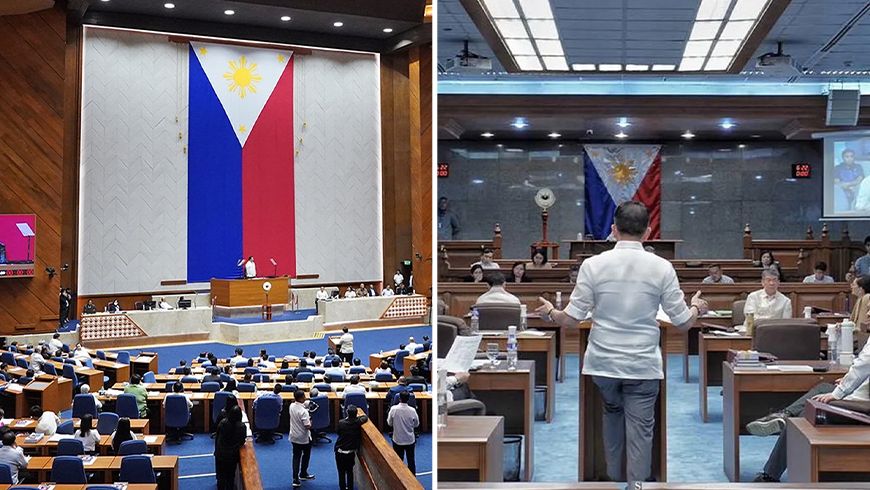

President Ferdinand Marcos Jr. has assured the public that those responsible for the flood control projects anomaly will be held accountable, with arrests expected before the year ends.
When asked whether anyone would be imprisoned for their involvement in the scandal, President Marcos gave a definitive timeline for justice.
“Palagay ko, hindi palagay ko ,alam ko bago magpasko marami papangalanan at marami palagay ko makukulong, buo na kaso nila, wala silang merry christmas, bago mag-christmas makukulong na sila”
["I know—before Christmas many will be named and many will be jailed. Their cases are complete. They won't have a merry Christmas. Before Christmas, they'll be in jail,"] PBBM stated firmly.
President Marcos emphasized that accountability will not be limited to contractors or private individuals involved in the anomaly. Politicians implicated in the scandal will also face consequences, signaling a comprehensive crackdown on all parties involved in the corruption scheme.
The President's strong statement comes amid ongoing Senate investigations into the flood control projects scandal, which has revealed alleged misuse of public funds intended for critical infrastructure meant to protect communities from flooding.
This timeline suggests law enforcement agencies have been building solid cases against those involved, with sufficient evidence now gathered to proceed with arrests.
The President's confidence in announcing imminent arrests before the holidays indicates the investigations have reached their final stages.
The flood control scandal has drawn significant public attention as it involves essential infrastructure projects that directly impact public safety during the rainy season. With the President's assurance of swift action, Filipinos expect major developments in the case within the coming weeks.
Will the promised arrests materialize before year-end, and will high-ranking politicians truly face the consequences of their involvement in this massive corruption scandal? - with reports from Nel Maribojoc, UNTV Correspondent

Senator Imee Marcos has revealed that witnesses are expected to recant their testimonies during the upcoming Senate Blue Ribbon Committee hearing scheduled for Friday, November 14, which will investigate the flood control scandal. She also indicated that former Speaker Martin Romualdez may not attend the proceedings.
Speaking to media, Senator Marcos warned that witnesses would likely withdraw their previous statements and reverse their earlier testimonies due to alleged pressure and threats against their families.
"Magre-recant ang mga testigo, panoorin ninyo, sigurado ako dyan. Iisa isa yan biglang babaliktad, pinressure, tinakot ang pamilya, halos tinutukan ang asawa at anak."
["The witnesses will recant, watch and see, I'm certain about this. One by one they'll suddenly flip, having been pressured, their families threatened, with wives and children practically held at gunpoint,"] Marcos stated.
When repeatedly asked by media whether she was referring to former security consultant Orly Guteza, who allegedly delivered suitcases of money to the address of resigned Ako Bicol Partylist Representative Zaldy Co, the presidential sister declined to confirm directly.
Instead, she provided hints that the witness in question had provided personal knowledge about the anomaly, which included dropping major names and delivering significant testimony during the hearing.
According to Marcos, aside from this witness, others are allegedly being prevented from speaking and are no longer willing to be invited to testify.
"Sa palagay ko, kahit ano pang mag recant dyan, kahit ano pang mangyari, kahit si Guteza man kahit iba pang marines ay magbaliktaran. Diba sinsiraan na sya naumpisanahan na peke daw ang nanotirize, falsify daw, kung anu ano sinasabi, wala nang nainiwala sa inyo, nililinlang nyo ang sambayanang Pilipino, pero ang sambayang Pilipino hindi na magpapaloko."
["I believe that no matter who recants, no matter what happens, whether it's Guteza or other marines who turn around—they're already being slandered, claiming the notarization was fake, that documents were falsified, all sorts of allegations. Nobody believes you anymore; you're deceiving the Filipino people, but the Filipino people won't be fooled,"] the senator emphasized.
While Senator Marcos did not name those allegedly intimidating the witnesses, she described them as powerful individuals who are themselves afraid of being implicated in the corruption scandal. Despite these developments, she maintained that the entire Senate knows the truth, and the Filipino people are aware of who is involved in this corruption.
Regarding former Speaker Romualdez's potential absence, Marcos suggested there had been a change of plans about his appearance as a star witness.
"Hindi na star witness ang aking pinsan, yun ata ang original plan, e. JC: Nagbago ata isip, nahiya din, sa sarili. So di na attend? Ang narinig ko sya ang star witness, bibigyan ng witness protection. Pwede ba yun niloloko tayo ng lubus-lubusan."
["My cousin is no longer the star witness, that seemed to be the original plan. Maybe he changed his mind, felt ashamed. So he won't attend? What I heard was he would be the star witness and would be given witness protection. Is that even possible? They're completely fooling us,"] she remarked.
According to her sources, the seventeen congressmen who were also invited by Blue Ribbon Committee Chairperson Ping Lacson will now serve as replacement witnesses in the hearing.
The investigation continues to unfold as questions mount about witness intimidation and the credibility of testimonies in this high-profile corruption case. - with reports from Evan Alvarez, UNTV Correspondent
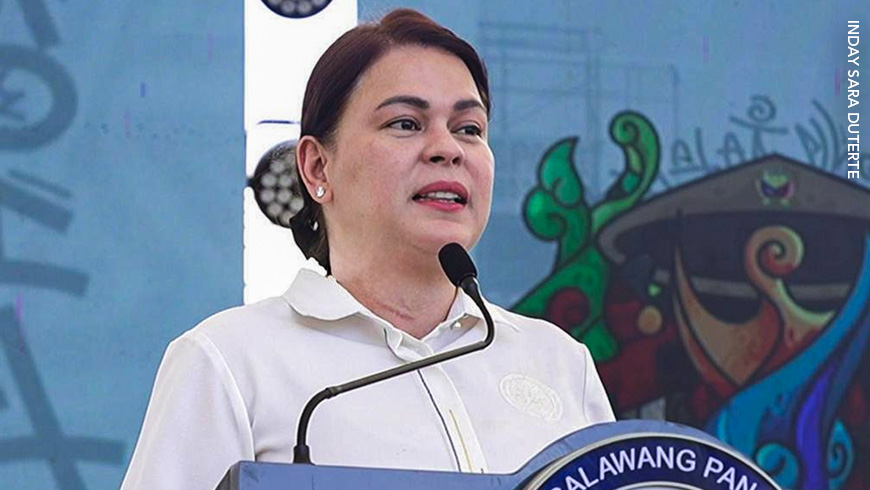
MANILA, Philippines — As the nation asks why no one has been imprisoned yet in connection with the flood control project scandals despite mounting evidence of corruption, Vice President Sara Duterte could no longer hold back her commentary on the continuing corruption in government.
The Vice President criticized the alleged lack of accountability of some officials despite discovered anomalies in budgets from previous years.
According to VP Duterte, government agencies have long known who is behind the budget irregularities, but until now, no one has been punished for them.
"Nalalaman natin hindi lang pala 'yung 2025 budget ang mayroong problema - 2024, as early as 2023 ay mayroon nang nakitang mga anomalya doon sa budget. So alam na natin na mayroong problema sa budget. Alam na natin kung sino yung mga tao na may kagagawan noong anomalya, korapsyon sa ating budget pero hanggang ngayon ay wala pa rin nananagot. Puro lang ating investigation."
["We know it's not just the 2025 budget that has problems — 2024, as early as 2023, anomalies were already found in the budget. So we already know there's a problem with the budget. We already know who the people are behind these anomalies and corruption in our budget, but until now, no one has been held accountable. It's all just investigations,"] Duterte stated.
The Vice President also revealed that irregularities were found not only in the 2025 budget but also in the 2024 and 2023 budgets, suggesting a pattern of systematic corruption spanning multiple fiscal years rather than isolated incidents.
Her pointed remarks come as multiple flood control project cases undergo investigation, with officials identified and evidence documented, yet no significant arrests or convictions have materialized.
This criticism reflects growing public frustration over the seemingly endless cycle of investigations that fail to result in the actual imprisonment of those responsible.
Duterte's comments highlight the fundamental question many Filipinos are asking: If the government knows who is responsible for the flood control project corruption and other budget anomalies, with evidence spanning multiple years, why hasn't anyone been jailed?
The flood control scandals alone involve hundreds of millions of pesos in questionable transactions, with contractors, government officials, and lawmakers implicated in the schemes. Despite this apparent evidence and the identification of those allegedly responsible, the judicial process has yet to deliver the accountability that both officials and citizens demand.
With three years of documented budget anomalies now under scrutiny, fifteen flood control cases in various stages of investigation, and the Ombudsman preparing to file charges while others have already fled abroad, the Philippine justice system faces a credibility crisis.
The pattern has become predictable. Scandal breaks, investigations launch, names surface, hearings convene, then silence.
Meanwhile, the accused remain FREE, some even LEAVING the country unimpeded despite being persons of interest.
For a nation where public infrastructure funds meant to protect communities from flooding instead of lining private pockets, the frustration remains.
The question that haunts every new revelation is no longer just about who is guilty, but whether the system itself is capable of delivering justice, or if investigations have become the endpoint rather than the beginning of accountability.

MANILA, Philippines — The Office of the Ombudsman has identified the first batch of officials to be charged before the Sandiganbayan in connection with the widespread corruption involving flood control projects, with resigned Ako Bicol Party-list Representative Zaldy Co leading the list.
Fifteen flood control scandal cases are currently under preliminary investigation, with five being handled by the Department of Justice and ten by the Office of the Ombudsman.
Ombudsman Crispin "Boying" Remulla announced that more than ten personalities will face initial malversation charges at the Sandiganbayan, primarily related to an anomalous flood control project in Oriental Mindoro worth nearly 290 million pesos.
"Mauunang ifafile ang kaso ni Elizaldy Co at yung ibang opisyal ng DPWH Region 4B at bumubuo ng kumpanyang Sunwest."
["The case against Elizaldy Co and other DPWH Region 4B officials, along with those comprising Sunwest, will be filed first,"] Remulla stated.
The controversial project was handled by Sunwest Construction, owned by Co.
According to Remulla, clear evidence shows that Co and DPWH Region 4B officials orchestrated the anomalies, as their signatures appear on contracts indicating they received payment despite the project remaining unfinished.
Ombudsman's preliminary investigation panel has already reached a resolution despite Co's failure to submit a counter-affidavit.
"Kasi nga he refused to receive the subpoena. Kaya considered waived na yan, may due process yan. Binigyan ng pagkakataon sumagot alam naman natin na umalis sya at tumakas sya at di bumabalik at ayaw tanggapin ang subpoena na binigay sa kanila, kaya for resolution na yan."
["He refused to receive the subpoena. That's considered waived already. There was due process. He was given the opportunity to respond, but we know he left and fled, hasn't returned, and refused to accept the subpoena given to them, so this is ready for resolution,"] Remulla explained.
While the panel will determine the exact filing date, Remulla expressed confidence that charges will be filed with the Office of the Special Prosecutor at the Sandiganbayan this week or next.
Once charged, authorities can begin the process of bringing the resigned lawmaker back to the Philippines.
"Malamang dyan na ang pagsisimula ng cancel ng passport pag naisampa sa sandiganbayan kailangan ng court order para makansela ang passport."
["Most likely, that's when the passport cancellation process will begin. Once filed with the Sandiganbayan, we'll need a court order to cancel the passport,"] Remulla said.
The Ombudsman also hasn't ruled out the possibility of extradition, requesting a country to surrender Co for prosecution, as he is reportedly hiding in Europe.
"Extradition is a process that we can use, ano naman yan e nainiwala ako kaya lagi yan. Ang goodwill naman natin bilang mga Pilipino napakalaki sa buong mundo. Pag Pilipino ang nakusap malamang makinig sila."
["Extradition is a process we can use. I believe it's always possible. Our goodwill as Filipinos is significant worldwide. When Filipinos speak, they'll likely listen,"] Remulla added.
Meanwhile, Remulla dismissed recent claims by Co's lawyer that the Ombudsman had already convicted Co before giving him a chance to respond to the allegations. The Ombudsman clarified that no prejudgment occurred, only prosecution.
"Prejudging is a wrong term because our job is to prosecute people not to be judges. Hindi kami ang huwes dito. Kami po ang tagahabol ng mga gumawa ng kabalastugan at winalanghiya ang sistema ng bastos yun ang trabaho natin dito."
["Prejudging is the wrong term because our job is to prosecute people, not to be judges. We're not the judges here. We're the ones pursuing those who committed wrongdoing and disrespected the system. That's our job here,"] Remulla emphasized.
The Ombudsman's office continues preparing various cases against other individuals implicated in the flood control scandal, including former Bulacan District Engineer Henry Alcantara, Brice Hernandez, contractor couple Sarah and Curlee Discaya, and several others who have emerged as suspects in the widespread corruption scheme. - via Evan Alvarez
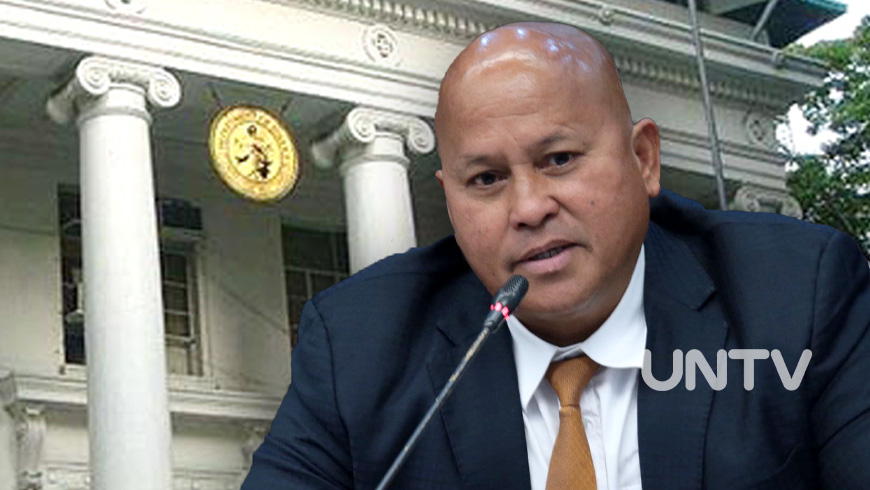
MANILA, Philippines — The Department of Justice is studying two legal mechanisms to comply with a potential International Criminal Court arrest warrant against Senator Ronald "Bato" Dela Rosa, despite the Philippines' withdrawal from the Rome Statute preventing direct enforcement.
While the ICC cannot compel the Philippines to recognize its arrest warrants following the country's 2019 withdrawal from the Rome Statute, legal experts say alternative procedures exist for executing ICC arrests, though these processes would take considerably longer.
The DOJ is examining both extradition and surrender as possible responses should an arrest warrant be issued against the senator, who faces allegations related to crimes against humanity during his tenure as Philippine National Police chief.
"Kapag extradition it takes quite some time coz we still have to go through with trial whereas sa surrender it would be immediate."
["When it comes to extradition, it takes quite some time because we still have to go through a trial, whereas surrender would be immediate,"] explained Prosecutor General Richard Anthony Fadullon.
Under the extradition process, an extradition court would need to examine whether the request has legal basis, including determining if the alleged offense was committed, if the person named in the warrant is correctly identified, and whether the offense qualifies as extraditable under the Supreme Court's Rules on Extradition Proceedings.
This judicial review could extend for several months.
Chief State Counsel Dennis Arvin Chan outlined the procedural requirements:
"There will be a request for extradition coming through the Department of Foreign Affairs. It will be transmitted to the DOJ for evaluation, and we will file it with the proper trial court."
A concerned citizen filed a petition with the Supreme Court yesterday, urging the high court to prevent the Senate from sheltering Dela Rosa should an arrest warrant be issued.
Petitioner John Barry Tayam argued that parliamentary immunity has limitations:
"Ang exempted lang naman sa arrest kung yong crime mo ay punishable ng 6 years and below pero kung ikaw kasi ay nakasuhan kasi tulad niyan crimes against humanity ‘yong hatol niyan umaabot hanggang 30 years."
["The only exemptions from arrest are for crimes punishable by six years and below. But if you're charged with crimes against humanity, the penalty reaches up to 30 years."]
DOJ has indicated it would implement any arrest warrant once formally issued, though officials acknowledge the complex legal landscape created by the Philippines' non-cooperation stance with the ICC.
The surrender option gained attention following its use in cases involving former President Rodrigo Duterte, offering a potentially faster alternative to lengthy extradition proceedings.
However, both mechanisms would require coordination through the Department of Foreign Affairs as the initial receiving agency for any ICC request.
The situation highlights the ongoing tension between the Philippines' withdrawal from the ICC and international justice mechanisms, as authorities navigate legal obligations while maintaining the country's sovereignty position.
The DOJ's preparations suggest the government is taking seriously the possibility of international legal action, despite the jurisdictional complexities involved. - via Dante Amento
