


%201.svg)


Emergency Hotline:
(+63) 2 911 – 8688




Manila – President Ferdinand R. Marcos Jr. on August 11 submitted a proposed PHP7.2 trillion national budget for 2027 to Congress, describing it as a "prudent investment focused on the future" that will sustain economic growth while maintaining fiscal responsibility.
In his budget message to the 20th Congress, Marcos said the spending plan, up 6% from this year's PHP6.793 trillion budget, was designed to strengthen the country's ability to respond to global challenges while pursuing what he called resilient growth.
"Amid continuing global uncertainties, including geopolitical tensions, persistent inflationary pressures, and volatile energy prices, we remain steadfast in pursuing growth that is both resilient and fiscally responsible," PBBM said.
The proposed budget, equivalent to 21.7% of gross domestic product, comes as the government projects a PHP1.69 trillion deficit for 2027, or roughly 5.1 percent of GDP. It also follows first quarter GDP growth of just 2.8% this year, the slowest pace in five years, which led economic managers to lower their growth targets for 2027 and beyond.
The submission also comes against the backdrop of an ongoing flood control corruption probe that has exposed alleged collusion among executive officials, lawmakers, and contractors over infrastructure funds. DBM Secretary Kim Robert de Leon has said agency proposals underwent one of the toughest vetting processes in recent years partly in response to the scandal.
Some fiscal officials have voiced concern about what happens to the budget once it reaches Congress. Former finance secretary Benjamin Diokno, now a member of the Monetary Board, said lawmakers have in past years expanded the executive's proposed budget during deliberations, which he described as a source of corruption.
He specifically flagged the Local Government Support Fund as a program that has functioned like pork barrel spending, and urged Marcos to use his line item veto power to keep the final budget clean.
Marcos noted that the final NEP was lower than the PHP11.69 trillion in total funding requests initially submitted by government agencies, saying he had directed agencies to focus on measurable outcomes and eliminate inefficient spending.
"Throughout the budget preparation process, I directed all agencies to focus on measurable outcomes, align their proposals with our development agenda, eliminate unnecessary or inefficient expenditures, and ensure that every peso produces meaningful and lasting value," the President said.
The President said the budget remains anchored on the Philippine Development Plan 2023 to 2028 and Ambisyon Natin 2040, framing it as part of broader institutional reforms rather than simply funding existing programs.
"Beyond funding government programs, this budget seeks to modernize public institutions, improve productivity, strengthen competitiveness, attract greater investments, create quality jobs, and enhance the government's ability to deliver faster, more responsive, and citizen centered public services," he said.
The proposal now heads to the House of Representatives, where Speaker Bodjie Dy III has said lawmakers will subject it to rigorous scrutiny before drafting the General Appropriations Bill.
It is Marcos's last full budget submission before the 2028 elections.
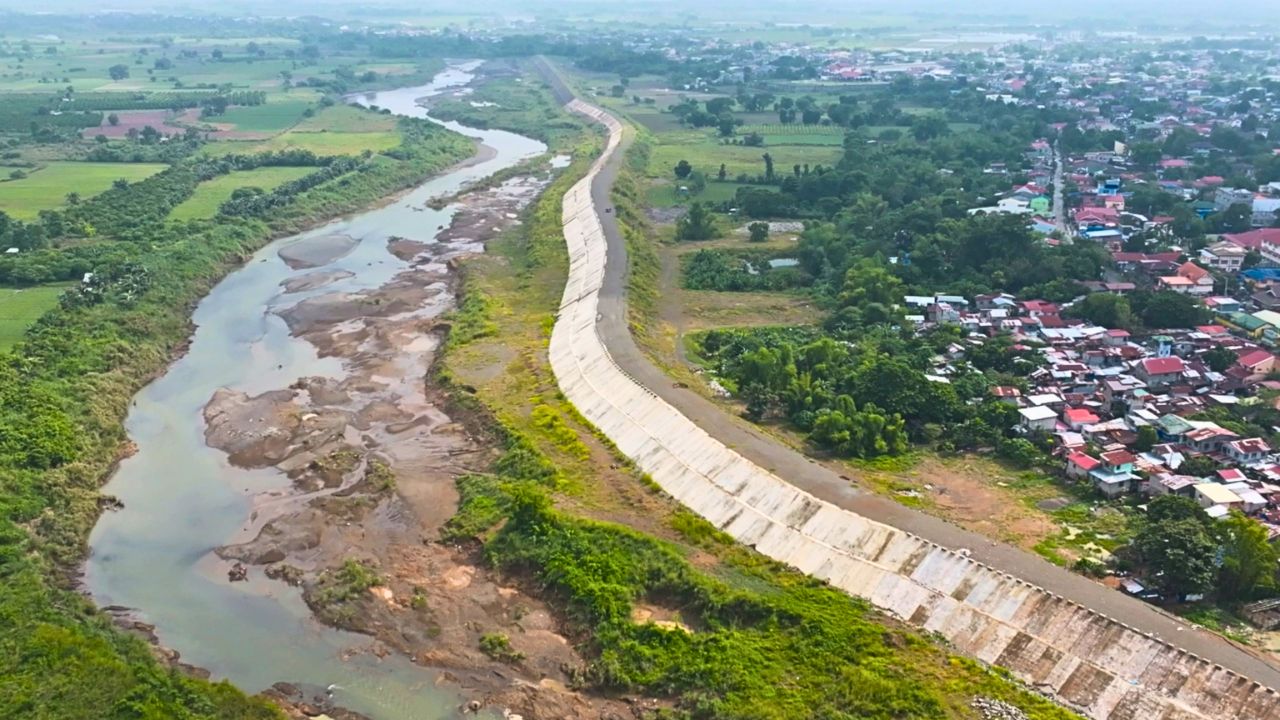
Manila, Philippines – The House of Representatives is tightening the screws on next year's flood control budget, vowing a stricter review of fund allocation for anti-flood projects in 2027 as the Executive Branch prepares to hand over the National Expenditure Program for the coming fiscal year.
The move comes amid renewed public scrutiny of flood control spending, following recent flooding across Metro Manila and the provinces driven by successive typhoons and an intensified habagat.
"Kailangan ito bantayan but it does not mean to say na ihihinto natin kasi mas malaking dagok ito. Mado-double-whammy, nagkaroon na nga ng problema sa flood control before. Kung ihinto mo ng tuluyan yung programang yan, paano naman yung good projects, paano naman yung mga communities that we need to protect?
[This needs to be watched closely, but that doesn't mean we stop it altogether, because that would be a bigger blow. It would be a double whammy — we already had problems with flood control before. If you stop the program entirely, what happens to the good projects, what happens to the communities that we need to protect?]" said House Deputy Speaker Janette Garin of Iloilo's 1st District.
House leadership members are bracing for heated debate on the matter once the Executive Branch formally submits the 2027 National Expenditure Program to the chamber.
House Deputy Speaker Paolo Ortega V of La Union's 1st District said any project seeking funding will have to survive a rigorous vetting process that traces all the way back to the local level.
"Pero siyempre ang budget po pagdedebatehan at kaya nga po nandiyan po yung mga representatives, nandiyan yung mga galing po sa local, mas alam po nila kung ano yung nangyayari kasi may proseso po yan eh mula barangay, city, probinsya, hanggang sa national po, dinaanan po ng prosesyo yan. Pag hindi po kumpleto yung validation, saka wala po yung coordinates, hindi po talaga papasa yan at magkakaroon po ng additional funding, kasi dumaan po siya sa matinding vetting.
[But of course the budget will be debated, and that's why the representatives are there — those who come from the local level know better what's happening, because there's a process that goes from the barangay, city, province, all the way to the national level. If the validation isn't complete, or there are no coordinates, it really won't pass and won't get additional funding, because it goes through strict vetting.]" Ortega said.
Garin echoed that funding will not be handed out freely, stressing that the House and its Committee on Appropriations will set clear parameters before releasing allocations.
"Definitely magkakaroon yan ng parameters. So andun naman yung justification, of course, we leave it to the leadership of the House and the leadership of the Committee on Appropriations.
[Definitely there will be parameters. So the justification is there, of course, we leave it to the leadership of the House and the leadership of the Committee on Appropriations.]" Garin said.
Both lawmakers made clear that strict vetting and requirements will steer flood control funding toward the areas most exposed to flooding and landslides — not spread thin across the board.
They also disclosed that the Department of Budget and Management, the Department of Public Works and Highways, and local government units have already begun coordinating on the matter.
Public Works and Highways Secretary Vince Dizon confirmed that the proposed national budget for next year will carry dedicated flood management and flood mitigation projects, as the Marcos administration pushes forward with a PHP7.2-trillion budget proposal for 2027.

Communities submerged in floodwater and hit by landslides due to heavy rains brought by the southwest monsoon, or habagat, were discussed one by one during a situation briefing held on Monday.
The briefing was attended by Executive Secretary Ralph Recto, Department of Social Welfare and Development (DSWD) Secretary Rex Gatchalian, Department of the Interior and Local Government (DILG) Secretary Jonvic Remulla, Department of Public Works and Highways (DPWH) Secretary Vince Dizon, and other Cabinet members.
President Ferdinand Marcos Jr. gave strict orders to the DSWD to ensure that aid reaches all those affected by the flooding caused by habagat.
"The President also ordered that all affected residents, especially those in far-flung areas, be reached immediately," said Palace Press Officer Undersecretary Claire Castro.
The President also wants assistance extended to residents who have already returned to their homes from evacuation centers.
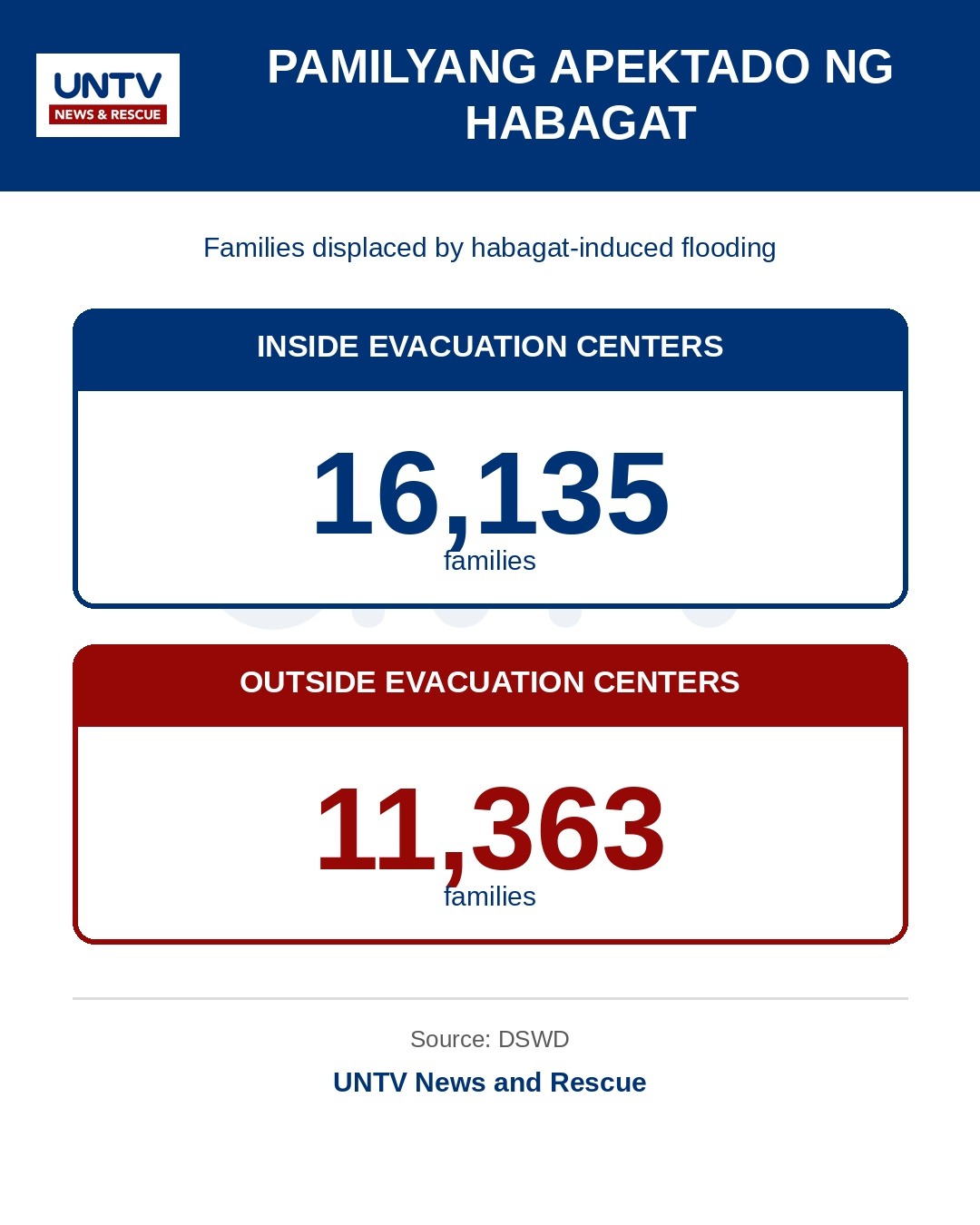
According to DSWD Secretary Rex Gatchalian, 16,135 families remain in evacuation centers, while 11,363 have already returned to their homes.
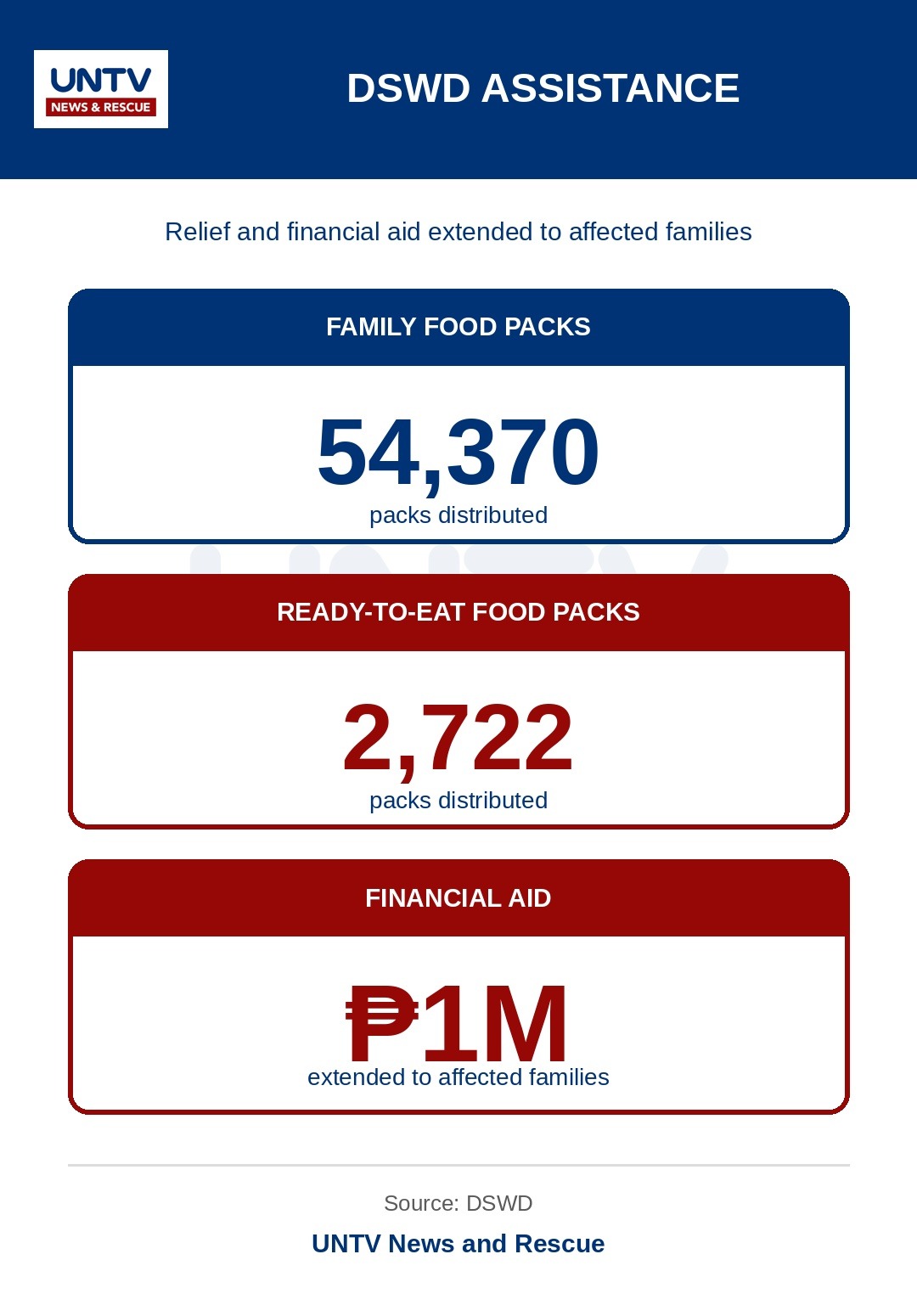
The agency has distributed 54,370 family food packs and more than 2,000 ready-to-eat food packs, on top of nearly one million pesos in financial aid already given out.
The DSWD assured that its stockpiled supplies are sufficient to assist those in need. According to the secretary, 4.9 million family food packs and more than 245,000 non-food items are on standby.
"So, we are ready. This is the largest stockpile the country has since we started doing this system. You can check last year hindi ganiyan kalaki iyan, we keep on growing it alinsunod na rin sa utos ng ating Pangulo to make sure that we preposition before typhoon, earthquake, volcano or any type of disaster happens," Gatchalian said.
Meanwhile, DPWH Secretary Vince Dizon said the President directed him to continue anti-flood projects, including the large-scale clearing of waterways and ensuring that pumping stations, particularly in Metro Manila, are in good working condition.
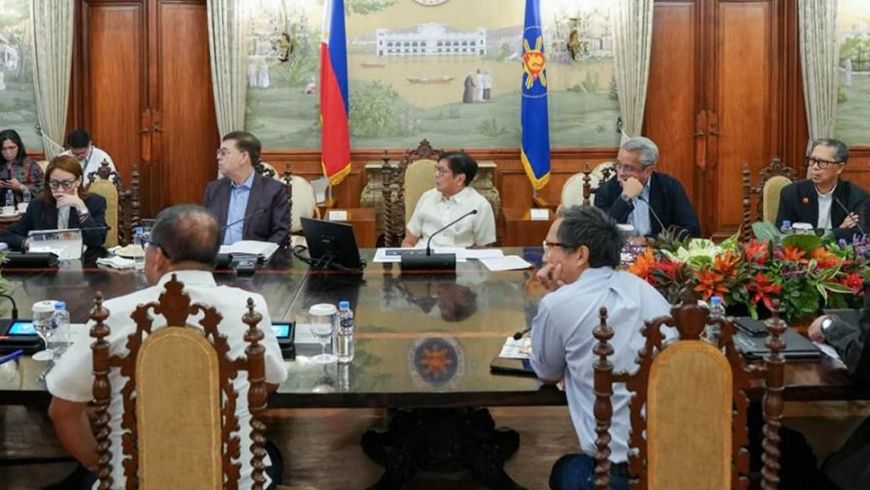
Manila, Philippines – President Ferdinand R. Marcos Jr. called on several government officials for a situation briefing at Malacañang on Monday to discuss the impact of the southwest monsoon, or habagat, Tropical Storm Luis, and Typhoon Maymay, and ordered agencies to ensure that all affected residents are reached, particularly those in far-flung areas.
Even before the briefing, PBBM had already issued a directive on the government's response to the effects of habagat. According to Palace Press Officer Undersecretary Claire Castro, Marcos ordered agencies to act swiftly against illnesses brought on by the nonstop rains.
The Department of Health has since warned of the threat of leptospirosis. The Palace reminded the public that consultation and medicine are free at all health centers.
The DSWD and local government units have extended a total of PHP39.37 million in assistance, while 3,841 personnel have been deployed for search and rescue operations.
An additional 4,392 personnel, 943 pieces of equipment, and 14 air and sea assets are on standby for immediate response.
A total of 54,370 family food packs have been distributed so far, while nearly five million more food packs and PHP1.61 billion in standby funds are ready nationwide.
PBBM also ordered the intensification of measures against flooding, including flood control projects, dredging operations, the installation of high-density polyethylene (HDPE) pipes, and the continued operation of pumping stations, under a whole-of-nation approach.
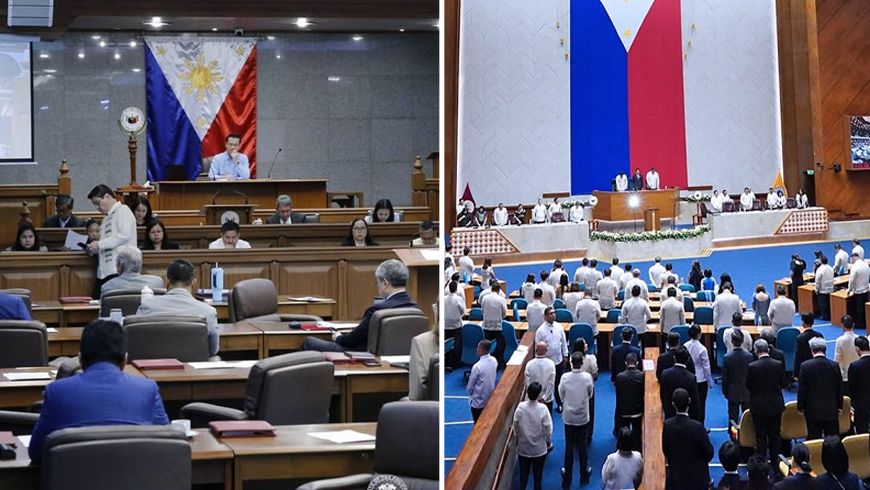
Manila, Philippines - The Senate and the House of Representatives shifted to a work-from-home setup on Monday, August 10, as heavy rains and flooding brought by the southwest monsoon, or habagat, continued to batter Metro Manila and nearby provinces.
Senate President Sherwin Gatchalian ordered the impeachment trial of Vice President Sara Duterte and the chamber's plenary session postponed to Tuesday, August 11. Senate Secretary Renato Bantug Jr. said in an advisory that the trial and session "are cancelled and shall resume tomorrow, Tuesday, 11 August 2026."
The House likewise moved its session to Tuesday.
The Senate's move followed Malacañang's Memorandum Circular No. 123, which directed government offices in Metro Manila and several provinces to implement work-from-home arrangements on August 10 due to the continuous heavy rainfall.
According to PAGASA, rain is expected to persist over Luzon and the western part of Visayas.
