%201.svg)


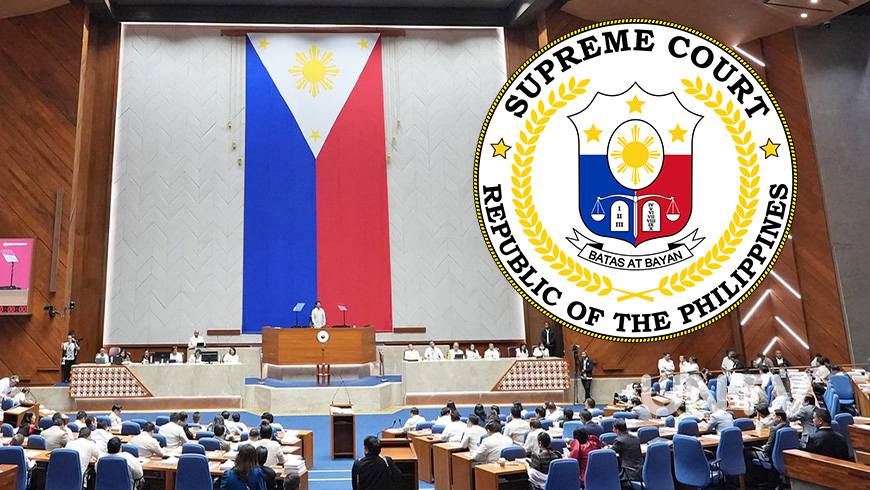
The Supreme Court has directed Congress to enact a law prohibiting political dynasties, ruling that the constitutional mandate cannot be left unimplemented indefinitely.
In a unanimous decision reached during its August 26 session, the Court held that Congress has a mandatory duty under Article II, Section 26 of the 1987 Constitution to define and prohibit political dynasties. It also found that Congress’ failure to pass such a law for 39 years amounted to grave abuse of discretion.
The ruling stemmed from consolidated petitions for certiorari and mandamus challenging Congress’ prolonged failure to pass a law defining and prohibiting political dynasties.
Despite Congress being a co-equal branch of government, the Supreme Court said the prolonged failure to comply with the constitutional mandate is a highly exceptional case warranting a mandamus order.
The Court directed Congress to enact the appropriate anti-political dynasty law “at the earliest opportunity” and with utmost urgency.
Article II, Section 26 of the Constitution provides that the State shall guarantee equal access to opportunities for public service and prohibit political dynasties “as may be defined by law.”
The Supreme Court said the provision is not merely an aspiration but a constitutional command. It stressed that the word “shall” imposes a mandatory duty on the State to guarantee equal access to public service and prohibit political dynasties.
The Court also clarified that the phrase “as may be defined by law” does not give Congress the option whether to prohibit political dynasties. Instead, it gives Congress the authority to define what constitutes a political dynasty and determine the scope of the prohibition.
The Supreme Court took judicial notice of the numerous anti-political dynasty bills filed but left unacted upon since the ratification of the 1987 Constitution.
It also considered studies on the prevalence of political dynasties and their relationship with socioeconomic conditions in the country.
The Court noted that political dynasties remain widespread and have extended even into the party-list system.
Although the Constitution does not specify a deadline for Congress to pass an anti-political dynasty law, the Supreme Court held that the absence of a fixed timetable does not allow lawmakers to postpone their constitutional duty indefinitely.