%201.svg)


NAGOYA, Japan — A massive underground flood-control system beneath Nagoya has drawn attention online after record-breaking rainfall flooded parts of the Japanese city.
The infrastructure was recently featured on the Architecture Facebook page, which highlighted how Japan has invested in large underground facilities to prepare cities for extreme rainfall.
Nagoya recorded 104.5 millimeters of rain within one hour on September 8, the highest one-hour rainfall recorded in the city since weather observations began in 1890. The previous record was 97 millimeters during the destructive Tokai heavy rain in 2000.
The downpour flooded roads and homes and disrupted transportation, including city buses, subway services, and the Tokaido Shinkansen. Around 3,500 residents also sought shelter during the severe weather.
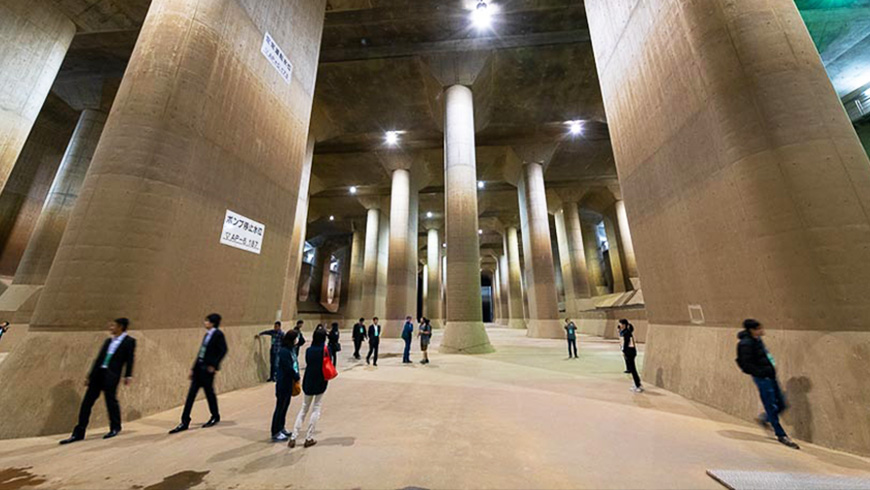
But approximately 50 meters below Nagoya is one of the city’s largest pieces of flood-control infrastructure, the Nagoya Central Rainwater Regulation Reservoir.
According to Nagoya City’s Waterworks and Sewerage Bureau, the underground tunnel stretches about five kilometers, has an internal diameter of 5.75 meters, and can hold approximately 104,000 cubic meters of rainwater, roughly equivalent to 416 school swimming pools.
Instead of allowing all the rainwater to immediately flow into already strained drains and waterways, the reservoir is designed to temporarily hold large volumes underground and reduce the risk of severe surface flooding.
As of July 2026, Nagoya said partition walls installed inside the completed reservoir had allowed it to secure around 100,000 cubic meters of temporary rainwater-storage capacity.
The system is part of a wider effort to strengthen flood protection around Nagoya Station and surrounding districts. The city aims to substantially prevent above-floor flooding even during rainfall approaching 100 millimeters per hour in targeted areas.
However, the viral description circulating online needs some context.
The reservoir’s wider drainage network is not yet fully completed. Construction continues on the Sannobashi rainwater trunk line that will connect the reservoir to the Hirokawa Pump Station, with completion targeted by the end of fiscal year 2028.
The Hirokawa Pump Station itself has already been completed. Its designed drainage capacity is about 13 cubic meters per second, with rainwater discharged into the Nakagawa Canal not 50 tons per second directly into the ocean, as some online descriptions suggest.
Nagoya’s experience also shows that underground infrastructure does not eliminate flooding altogether. The September storm still caused widespread disruptions despite the city’s extensive flood-control measures.
What the system demonstrates is something less dramatic but more important: flood resilience is built before the rain arrives.
Years of investment in underground storage, pumping facilities and drainage networks can give densely populated cities additional capacity when ordinary systems are overwhelmed by increasingly intense rainfall.












.png)


.png)



.jpg)