%201.svg)


The Amihan (Northeast Monsoon) season is over. With this, the Department of Science and Technology - Philippine Atmospheric, Geophysical and Astronomical Services Administration (DOST-PAGASA) officially declares the start of the dry season on March 23, 2026.
The relevance of the heat index to heat-related illness
This season, intense heat is expected, and PAGASA is closely monitoring the heat index, or “damang init,” across various regions in the Philippines.
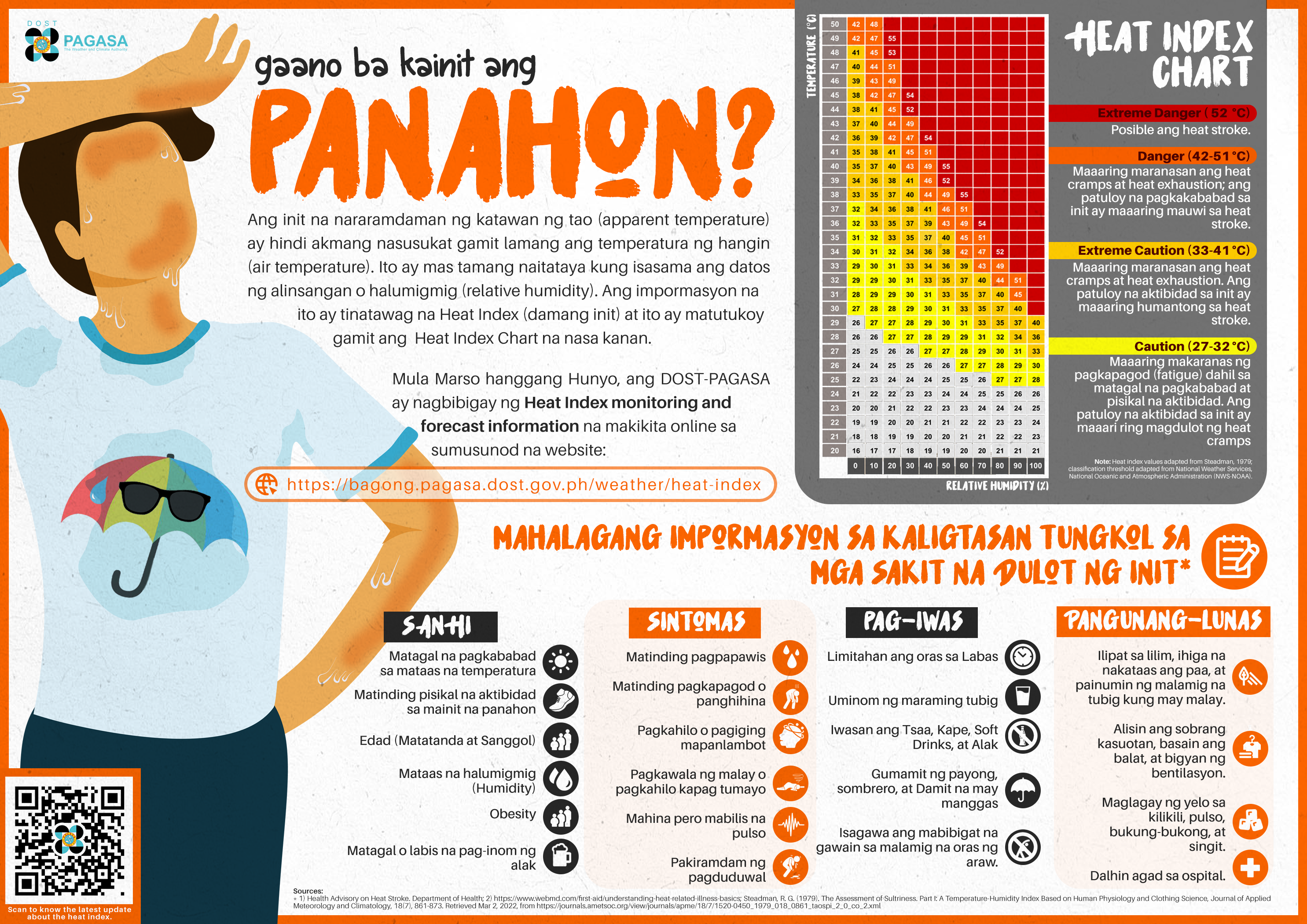
The heat index varies by location and is classified as extreme danger, danger, extreme caution, or caution.
These are the classifications and the possible heat-related illnesses that one may experience under prolonged heat exposure, according to PAGASA.
- Extreme danger - 52° C: Heat stroke is possible.
- Danger - 42 to 51° C: Heat cramps and exhaustion are possible. Prolonged exposure to heat increases the risk of heat stroke.
- Extreme caution - 34 to 41°C: Individuals may experience heat cramps and exhaustion; continuous activities in the heat may lead to heat stroke.
- Caution - 27 to 32°C: Individuals may experience fatigue under prolonged exposure or activity in the heat. Heat cramps are also possible.
The 3 common heat-related illness
Heat-related illnesses such as heat stroke, heat cramps, and heat exhaustion are common during warm and dry season.
In an interview with Emergency Medicine Specialist Dr. Amado Flores III in a station’s program, Doctors on TV, he noted that patients with hypertension, diabetes, urinary or kidney problems, mental conditions, and those who are taking medications that may increase body temperature may be prone to heat-related illness.
Heat cramps
Medical experts defined heat cramps as a mild form of heat illness. Dr. Flores III explains that heat exposure increases sweating, which causes the body to lose salt. Low salt levels, specifically the potassium, can trigger muscle pain or cramps.
Heat cramps may lead to heat exhaustion if a patient doesn’t replenish electrolytes or continues their activity in the heat.
Heat Exhaustion
Heat exhaustion happens when a patient is exposed to intense heat. The body temperature is high but lower than 40°C (104°F).
The symptoms include:
- Muscle cramps
- Heavy sweating
- Cold clammy skin
- Tired or weak
- Headache
- Dizziness
- Feeling thirsty
- Nausea or vomiting
- Fast and weak pulse
- Fasr, deep breathing
If the condition remains untreated, it may lead to heat stroke.
Heat stroke
Heatstroke occurs when an individual has prolonged exposure to or physical activity under intense heat. In this condition, the patient’s body temperature climbs to 40°C (104°F).
Heat exhaustion can be a cause of this condition.
“Untreated heat exhaustion (a moderate form of heat-related illness) can lead to heat stroke,” according to the Cleveland Clinic
But the clinic clarifies that heatstroke may occur without warning signs.
Same with the heat exhaustion, a patient may experience dizziness, vomiting, and weakness, with heatstroke, it also affects the brain function.
“Heat exhaustion and heat stroke share similar symptoms — like dizziness, nausea and weakness. But a key difference is that heat stroke causes brain dysfunction (encephalopathy). This means you experience changes to your thinking and behavior — like confusion, agitation and aggression,” the clinic explains
Dr. Amado Flores III confirmed that heatstroke affects the mental state of the patient once the warning signs are present.
“Ang pinakawarning sign talaga sa heatstroke is a changes in behavior or mental status ng pasyente,” he said
The following symptoms of heatstroke include:
- Body temperature climbs to 40°C
- Confusion or delirium
- Weakness
- Dizziness or fainting
- Nausea and vomiting
- Blurred vision
- Slurred speech
- Dry or sweaty skin
This condition needs emergency care. Medical experts advise seeking immediate assistance or calling 911 to prevent further complications.
With this, PAGASA reminds the public to stay hydrated, avoid outdoor exposure or activities during peak heat hours, and wear light-colored clothing for a comfortable experience.
References:
DOST PAGASA (n.d.). Heat Index
Cleveland Clinic (2023). Heat cramps
https://my.clevelandclinic.org/health/diseases/24866-heat-cramps
Mayo Clinic Staff (2024). Heat cramps
https://www.mayoclinic.org/first-aid/first-aid-heat-cramps/basics/art-20056669
Cleveland Clinic (2024). Heat exhaustion
https://my.clevelandclinic.org/health/diseases/21480-heat-exhaustion
Mayo Clinic Staff (2023). Heat exhaustion
https://www.mayoclinic.org/diseases-conditions/heat-exhaustion/symptoms-causes/syc-20373250
Cleveland Clinic (2024). Heat stroke
https://my.clevelandclinic.org/health/diseases/21812-heatstroke
Mayo Clinic Staff (2024). Heat stroke
https://www.mayoclinic.org/diseases-conditions/heat-stroke/symptoms-causes/syc-20353581
RELATED VIDEO: