%201.svg)


Blood as a selfless gift
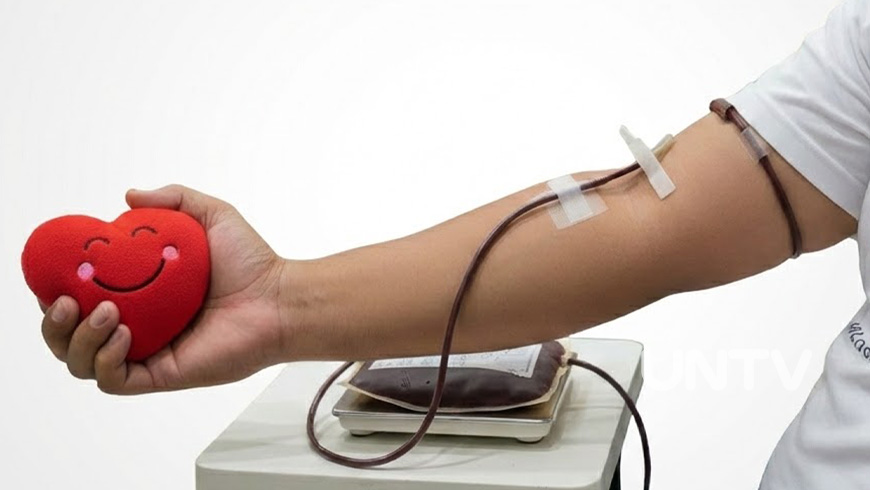
The World Health Organization (WHO) defines blood as the "gift of life", the most precious present you can give to another person.
A single donation can be separated into three vital components: the red blood cells, platelets, and plasma, potentially allowing a single donor to save more lives.
“Blood is the most precious gift that anyone can give to another person – the gift of life. A decision to donate your blood can save a life, or even several if your blood is separated into its components – red cells, platelets and plasma – which can be used individually for patients with specific conditions,” WHO stated.
Blood cannot be synthetically formed in laboratories
Despite medical advancements, the blood cannot be synthetically manufactured in laboratories.
As UNTV-BPMI President Kuya Daniel Razon said, “Ang dugo ay hindi nagagawa sa laboratoryo,”.
[“The blood cannot be formed in laboratories,”]
This statement is supported by different medical institutions.
The Mayo Clinic asserts that “there is no substitute for human blood. All transfusions use blood from donors.”
The Makati Medical Center also explained that there are 10 pints of blood in the human body. In a single donation, you’ll lose 1 pint of your blood, but it can be restored in the next days.
The human body has the capacity to produce new blood cells after blood donation.
“The human body has the capacity to compensate with the new fluid volume. Further, the bone marrow is stimulated to produce new blood cells which in turn makes the blood forming organs function more effectively.” according to the statement of the Philippine Red Cross
Blood donation lowers the health risk for donors
If blood donation can save more patients’ lives, blood donors may also experience the health benefits through this philanthropic effort.
These are the following key benefits according to Makati Medical Center and St. Luke’s Medical Center:
1. Iron Regulation
Blood donation helps maintain balanced iron levels in the human body.
A blood donor can lose 225 mg to 250mg of iron, which is good to save your body from iron overload.
Individuals with iron overload can be prone to chronic diseases like liver cirrhosis, cancer, and heart attack because the excess iron tightens your blood vessels in the heart and liver.
2. Lowers Cholesterol Level
Blood donation also lowers cholesterol level as it removes an excess amount of lipids and fatty substances from the blood.
3. Burning Calories
Our body uses energy in red blood cell restoration, which burns 600-640 calories per donation.
Regular blood donors are allowed to donate every three months.
The health benefits may apply to both first-timers and regular donors.