


%201.svg)


Emergency Hotline:
(+63) 2 911 – 8688


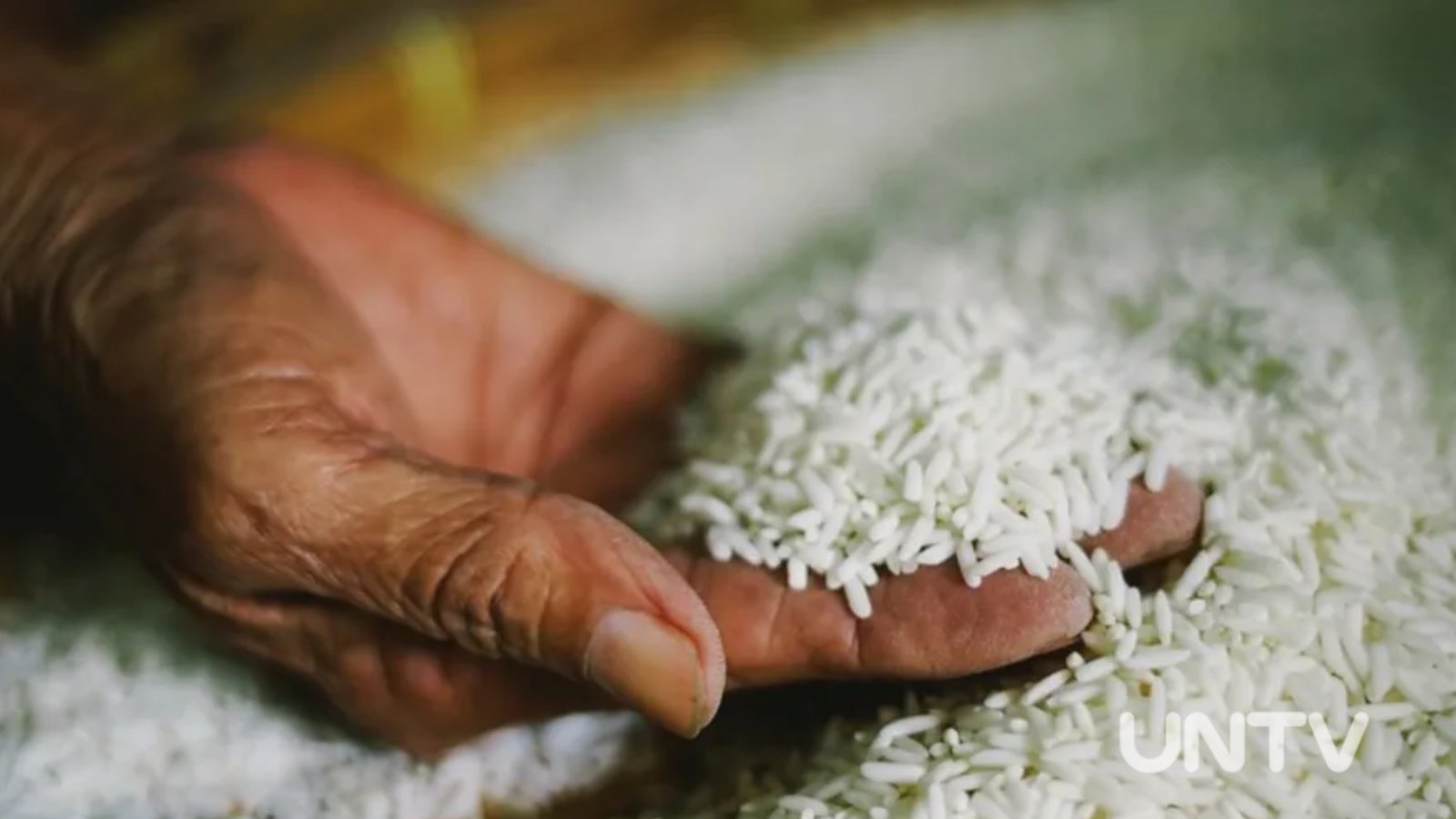

The Department of Agriculture (DA) assured on Thursday, May 14, the immediate implementation of a ₱50.00/kg price ceiling on imported rice with 5% broken grains, following President Ferdinand Marcos Jr.’s issuance of the Executive Order (EO) No. 118 on Wednesday, which imposes a 30-day price cap on imported rice. The agency also said it will strengthen enforcement against profiteering and price manipulation.
According to DA Secretary Francisco Tiu Laurel Jr., the price cap is expected to help ease the impact of rising food inflation caused by the oil price surges linked to the ongoing international conflicts.
Data from the Philippine Statistics Authority (PSA) showed that food inflation rose to 6.1 percent in April from 2.1 percent in March.
EO No. 118 cited Republic Act No. 7851 or the Price Act, which allows the government to impose price ceilings on essential commodities during periods of price hikes, hoarding, profiteering, and market manipulation. It also referenced Republic Act No. 12022 or the Anti-Agricultural Economic Sabotage Act of 2024, which penalizes illegal activities such as hoarding, cartelization, smuggling, and profiteering involving agricultural commodities. Furthermore, it cited Executive Order No. 110 declaring a state of national emergency due to the ongoing Middle East conflict, noting that global instability has affected supply chains and commodity prices.
The EO will take effect immediately after its publication in the Official Gazette or in a newspaper for general circulation.
According to Laurel, the National Price Coordinating Council will evaluate the price ceiling within two weeks after its implementation. He added that any possible adjustments, extensions, and removal of the cap may be recommended depending on the market conditions.
Based on DA Bantay Presyo report released on Wednesday, premium imported rice in Metro Manila is priced at around ₱50.00 to ₱65.00 per kilogram, while the price of imported well-milled rice sells from ₱48.00 to ₱50.00 per kilogram, and imported regular-milled rice ranges at ₱42.00 to ₱43.00 per kilogram.

The National Grid Corporation of the Philippines (NGCP) released an advisory maintaining Red and Yellow alerts over Luzon grids today, May 14, due to power supply and power reserves shortages.
Areas under red alert may experience power outages beginning at 4:00 p.m. and lasts until 10:00 p.m., while Yellow alert is from 3:00 p.m. to 4:00 p.m. and 10:00 p.m. to 11:00 p.m.
As explained by the NGCP, a red alert status is issued when there is an insufficient power supply to meet the consumers’ demand and transmission grid’s regulating requirement, while a yellow alert status is issued when the operating margin is insufficient to meet the transmission grid’s contingency requirement.
In its advisory, NGCP said 21 plants are on forced outage since January 2026, while one plant has been unavailable since 2019, three since 2015, and two since 2014.
Meanwhile, 14 power plants were operating on derated capacities or below their maximum power, resulting in a total unavailable capacity of 4,242.5 megawatts.
As a result, according to Manila Electric Company (Meralco), the country’s largest electricity distributor, nearly a million (920,000) of their customers are affected and experiencing power outages during peak hours.
In response, the NGCP has been continuously encouraging the public to conserve electricity through its “Tag-init Tipid Tips”, which includes:
These measures may help regulate electricity consumption and reduce the risk of power shortages and outages, especially during peak hours.

A lava collapse at Mayon Volcano in Albay Province generated a pyroclastic density current (PDC) on its southwestern slopes (Mi-si Gully) at 11:22 a.m. on Wednesday, May 13, according to the Philippine Institute of Volcanology and Seismology (PHIVOLCS). The agency said the activity produced a volcanic plume that reached about 4,000 meters above mean sea level and lasted until around 11:37 a.m.
PHIVOLCS explained that PDCs are fast-moving, extremely hot mixtures of volcanic gas, ash, and rock fragments that flow down volcanic slopes or spread outward from a vent.
In addition, 35 volcanic earthquakes were recorded over the past 24 hours from 12 a.m. on May 12 to 12 a.m. on May 13, including 26 volcanic tremors lasting around 7 to 84 minutes, along with 350 rockfalls, and 7 PDC signals.
The volcano has remained under Alert Level 3 since January 6, indicating a high level of volcanic unrest and continued possibility of hazardous eruptions. Entry into a 6-kilometer-radius Permanent Danger Zone (PDZ) and flying any aircraft near the volcano are still strictly prohibited.
On May 5, the Office of Civil Defense (OCD) reported that 55,590 families, or 199,367 individuals, have been affected by the ongoing activity of Mayon Volcano across 124 barangays in the province, according to OCD deputy spokesperson Diego Mariano.
Of these, 1,444 families or 5,459 individuals are currently staying at the evacuation centers, while 26 families of 85 individuals are receiving assistance outside the evacuation centers.
Amid continuous volcanic unrest from Mayon, the Department of Social Welfare and Development (DSWD) released P4.47 million in emergency cash assistance to 437 affected farmers in the province on Wednesday. Each farmer received P10,230 through the Emergency Cash Transfer (ECT) program, according to the administrative aide of the DSWD Disaster Response Management Division, Fancia Domingo. Beneficiaries are from the villages of Mabinit, Bogña, Matanag, Buyuan, Padang, and Pinaric.
On the same day, the Department of Agriculture in Bicol (DA-5) began distributing aid under the Presidential Assistance for Farmers and Fisherfolk (PAFF) program, providing P2,325 in cash assistance to 2,890 beneficiaries from the province's municipalities. According to DA-5 Bicol agricultural program coordinating officer, Florentino Obalde Jr., the beneficiaries include 1,717 farmers, from Bacacay, 333 from Malilipot, and 840 from Santo Domingo. He added that by the end of May, more than 38,000 farmers are expected to be aided by the program.
Residents in affected areas are advised to stay informed and follow safety precautions.

The recent report on the Hantavirus outbreak abroad had raised an alert among Filipinos. While no confirmed local cases have been reported so far, the Department of Health (DOH) said it is closely monitoring potential risks and strengthening preparedness efforts.
DOH spokesperson Undersecretary Albert Domingo said that the DOH has been monitoring the situation and preparing for the possibilities involving the virus. He added that laboratories are being checked and that PCR machines that were previously used during the COVID-19 pandemic may also be used for hantavirus testing.
Domingo said three local institutions—including the Research Institute of Tropical Medicine and the National Kidney and Transplant Institute (NKTI)—are equipped with electron microscopes that can help identify the virus while awaiting PCR primers specific to the hantavirus strain.
The DOH is also coordinating with the Bureau of Quarantine (BOQ), which has been monitoring the situation. According to Domingo, BOQ Director Albert Salvador Jr. said the bureau is coordinating directly with its counterparts abroad through the International Health Regulations (IHR).
Hantavirus is a zoonotic virus that naturally infects rodents—rats, squirrels, guinea pigs, hamsters, and more—and is sometimes transmitted to humans through contact with infected rodents, their urine, droppings, saliva, or bites. Although it remains uncommon, human-to-human transmission has been recorded only for the Andes virus (ANDV), a hantavirus found in South America.
According to the World Health Organization, there are eight confirmed cases of hantavirus as of May 8, including three deaths, and one patient is admitted to intensive care. Six of the cases were laboratory-confirmed as hantavirus infections, with all identified as ANDV.
The WHO believes that the outbreak may have originated with a Dutch couple on board the MV Hondius, who both later died due to their infections. WHO Director-General Dr. Tedros Adhanom Ghebreyesus said during a May 7 briefing that the couple had traveled through Argentina, Chile, and Uruguay for a bird-watching trip before boarding the ship. It included visits to areas where "the species of rat that's known to carry hantavirus was present," he said.
It was reported that there are 38 Filipinos, of whom 24 are stewards or hotel workers and 14 are deck and engine staff, aboard the MV Hondius. The Department of Migrant Workers (DMW) Secretary Hans Leo Cacdac said that they are to undergo a 42-day quarantine in the Netherlands.
As of this moment, the ship has anchored in Tenerife, Spain.
While the overall number of cases remains low, and the focus is on monitoring and health precautionary measures for those potentially exposed to the virus, it is important to understand its symptoms.
In humans, symptoms of hantavirus typically begin between one and eight weeks after exposure, depending on the type of virus. According to the WHO, the usual indications of infection include:
In more severe cases, hantavirus may progress to Hantavirus Cardiopulmonary Syndrome (HCPS), leading to the worsening of symptoms, including cough, shortness of breath, accumulation of fluid in the lungs, and shock. While the advanced stage of the disease, Hemorrhagic Fever with Renal Syndrome (HFRS), may lead to low blood pressure, bleeding disorders, and kidney failure.
Given the nature of the hantavirus infection, health experts continue to stress that prevention and early avoidance of exposure are key to reducing risk, with DOH reminding all Filipino households of some preventive measures to avoid the hantavirus, including using a wet rag when cleaning, especially in rodent-infested houses, and never leaving food outside that may attract rodents. He also emphasized the need for cleanliness to prevent the spread of the virus.
Additionally, Philippine authorities are now being strict with the implementation of border screening measures at the airports and seaports to prevent hantavirus from entering the country. The DOH said passengers are required to complete a health declaration through the eGovPH app before entering the country, where they must declare their travel history and report any symptoms they are experiencing. Passengers who are experiencing hantavirus symptoms and are from the flagged countries will be immediately brought to a BOQ office for assessment.
While health authorities are taking measures to prevent the virus from entering the country, the public is encouraged to do its part by staying informed, maintaining proper sanitation and cleanliness, and seeking early medical consultation if symptoms develop after a possible exposure to the infection.

For many people, staying up late to do certain things—whether it be scrolling through their phones, finishing work, or simply dealing with a clouded mind filled with endless thoughts—has become part of their daily lives. Think about the times someone says, “just one more episode,” while binge-watching a favorite Korean drama, spending hours scrolling through social media, or cramming an essay due before the night ends. These situations may sound familiar to many. Yet what seems like a harmless habit may actually be damaging the body.
According to the National Institute of Neurological Disorders and Stroke (NIH), getting quality sleep at the right time is as vital to survival as food and water. It plays a crucial role in one’s daily life. When people sleep less, it affects how they function, often resulting in poor concentration and alertness.
The amount of sleep a person needs depends on various factors, one of which is age. Experts from Mayo Clinic provided guidelines for the recommended daily amount of sleep, categorized by age groups. Infants need 12 to 16 hours of sleep, while toddlers aged 1-2 need about 11 to 14 hours. Children aged 3-5 require 10 to 13 hours, and those aged 6-12 need 9 to 12 hours. 8 to 10 hours of sleep is recommended for teenagers aged 13-18, while adults should have at least 7 hours each night.
World Sleep Day Celebration reminds us of the importance of getting enough quality sleep daily and the consequences of neglecting it. Here are 10 effects of unhealthy sleeping habits:
NIH stated that lack of sleep is associated with many chronic health problems, including heart disease, kidney disease, high blood pressure, diabetes, stroke, obesity, and depression.
On the same data from NIH, it was revealed that sleep deprivation increases the risk of accidents, causing serious injuries and even death. Habitual lack of sleep may lead to microsleeping—an uncontrollable, brief moment of sleep happening when a person is normally awake—causing lapses in attention that can easily lead to accidents.
Cleveland Clinic explained that insufficient sleep harms the body’s natural defenses against infections. Not having enough sleep makes it hard for the immune system to function properly.
According to the Cleveland Clinic, people who do not sleep enough experience changes in their immune system, including a higher pain sensitivity. They may feel discomfort more easily than normal, more intensely, or both.
Experts from the Cleveland Clinic also discussed how inadequate sleep negatively impacts one’s mental health. People who often lack sleep are at higher risk of having symptoms of anxiety and depression, as it is hard for them to express and feel their emotions.
According to Healthline, one effect of sleep deprivation is having problems with focus and learning new things. It can impair a person’s memory, attention, and the brain’s ability to process information.
Sleep helps regulate two of the body’s hormones: leptin, which controls the feeling of fullness, and ghrelin, which controls the feeling of hunger. When someone has an insufficient amount of sleep, these hormones are reduced, often causing overeating, as explained by Healthline.
The same experts from Healthline stated that lack of sleep can make you moody, more irritable, quick-tempered, and emotional. These mood shifts can affect your work performance, relationships, and overall well-being.
A 2023 study showed that people who consistently get enough quality sleep have healthier skin compared to those who do not. Even short-term sleep deprivation reduces skin hydration and elasticity, speeding up visible signs of ageing.
Persistent poor sleep has been linked to a shorter lifespan. The American College of Cardiology found that persistent poor sleep reduces life expectancy by an average of 4.7 years for women and 2.4 years for men.
Evidently, the consequences of sleep deprivation reach far beyond feeling tired the next day—these effects of unhealthy sleeping habits accumulate over time and impact nearly every aspect of one’s life.
In sleep, the usual “quality over quantity” does not apply—humans need both. Getting enough restorative sleep is essential for the body’s overall well-being, affecting almost everything from mind clarity to life longevity. This World Sleep Day, give your mind and body their well-deserved rest and take the first step forward to building healthier sleeping habits and a balanced lifestyle.
Sleep is not a luxury; it is a necessity.
