


%201.svg)


Emergency Hotline:
(+63) 2 911 – 8688



The Department of Energy (DOE) assured the public that the country's oil supply is expected to last until May, particularly if government agencies continue their fuel conservation efforts.
The DOE also confirmed that electric companies have sufficient power supply to meet the anticipated increase in demand as the dry season sets in.
Energy Secretary Sharon Garin said there will be no power supply problems in the country despite the ongoing difficulty in sourcing oil from the Middle East. She noted that most power plants in the Philippines do not rely on petroleum products.
"If there's ever any curtailment or blackout in off-grid areas, it is not because of lack of supply. We have checked over the weekend and the past few days how much supply they have, and they have sufficient supply for one to two months. Instead of diesel, we are also highly relying on coal," Garin said.
The secretary added that aside from domestic coal mining operations, the DOE has also ensured that coal importation will not face any disruptions.
Meanwhile, the DOE confirmed that the country's petroleum supply remains adequate. The agency attributed this to conservation measures observed by approximately 90 percent of government agencies, which helped extend the petroleum product supply through May.
Patrick Aquino, Director of the DOE Energy Utilization Management Bureau, said the shift to work-from-home arrangements and compressed work weeks has yielded measurable results.
"We can confirm that when our agencies shifted to work from home and compressed work week, and observed these practices, we have seen that they can generate more than ten percent savings. I think the target of the directive under Memorandum Circular 114 is closer to twenty percent," Aquino said.
The DOE also reported that there are no longer any gasoline stations reported to be running out of fuel products to sell.
The department added that it continues to coordinate with the Philippine National Police to prevent oil hoarding, and that anyone caught engaging in the practice will be apprehended.

When the price of almost everything goes up at once, people start looking at their daily habits differently. Rising fuel prices, higher electricity bills, and more expensive goods at the market — this is the reality many Filipinos are waking up to every day, and the pressure to find ways to stretch every peso has never been more urgent.
Interestingly, some Filipinos have managed to cut their transportation costs down to almost nothing — not through any special trick, but because they traded their commute for a walk or a run. For many, the shift started long before the price hikes, driven by a desire to get fit or live more actively. What they did not know then was that they were also quietly preparing themselves for exactly this kind of economic pressure.
Walking or running to your destination means zero fuel cost, zero fare, and zero parking fee. For anyone covering short to medium distances daily, those savings add up to hundreds of pesos a month — money that could go toward groceries, bills, or whatever the budget is currently short on.
And the financial relief does not stop at transportation. Less driving also means less wear and tear on vehicles, lower maintenance costs, and a smaller carbon footprint to boot.
But conservation goes beyond transportation. The same principle applies to electricity, water, and even food.
Turning off lights in empty rooms, unplugging appliances on standby, and reducing unnecessary energy use at home can meaningfully cut monthly bills, a relief that matters when inflation is chipping away at purchasing power from every direction.
The shift in habits is also being driven by policy. The government's adoption of a compressed workweek and work-from-home arrangements has already shown measurable results — the Department of Energy reported that agencies observing these practices managed to cut energy consumption by more than 10 percent. Fewer working days in the office means fewer commutes, less fuel burned, and lower demand on the power grid. It is a small structural change with a surprisingly large ripple effect.
At the same time, commuters who still rely on public transportation are feeling the squeeze from another direction. The Land Transportation Franchising and Regulatory Board (LTFRB) has approved fare increases for PUVs today, adding yet another layer of financial pressure on daily commuters.
For many, the math is becoming harder to ignore when fares go up and fuel prices follow, choosing to walk or run to work stops being a lifestyle option and starts being a practical necessity.
Experts have long said that the best buffer against an energy crisis is not just supply, it is demand management. When people consume less, prices stabilize more easily.
When communities adopt conservation as a norm rather than a last resort, the economy becomes more resilient from the ground up. The Department of Energy has already seen this in action, and the ripple effect of collective, conscious effort is real.
The people who saw this coming and adjusted early did not just save money. They built a habit that will serve them long after prices eventually settle.
For everyone else, the window to start is still open, and with fares rising, fuel prices climbing, and the cost of daily life showing no signs of easing, there has never been a better time to put on a pair of sneakers and head out the door.

Iran has declared that the Strait of Hormuz remains open to all countries except the United States and its allies, as Washington continues to seek international support for securing the critical shipping lane.
Iranian Foreign Affairs Minister Seyed Abbas Araghchi said only vessels from the US, Israel, and their allies are being denied passage through the strait. He added that several countries have already directly coordinated with Iran and have been granted passage by the Islamic Revolutionary Guard, including China and India.
The declaration came as US President Donald Trump called on other nations to send warships to help keep the strait open for free navigation. Among the countries Trump is counting on are China, France, South Korea, Japan, and the United Kingdom. He noted that China, in particular, relies heavily on the Strait of Hormuz, sourcing around 90 percent of its oil through the waterway.
Trump also appealed to NATO member states, saying the request is minor compared to the military support the US has provided to the alliance, particularly in defending Ukraine.
However, as of this writing, no country has given a positive response to Trump's call.
French President Emmanuel Macron said he has spoken with Iranian President Masoud Pezeshkian to push for an end to the conflict. German Foreign Minister Johann Wadephul said that as long as Iran is not ready for a diplomatic solution, the international community can only wait. British Prime Minister Keir Starmer confirmed he has spoken with Trump, though no details of their discussion have been disclosed.
US Secretary of Energy Chris Wright expressed frustration, saying other world leaders do not appear to see the threat posed by Iran the same way Trump does.
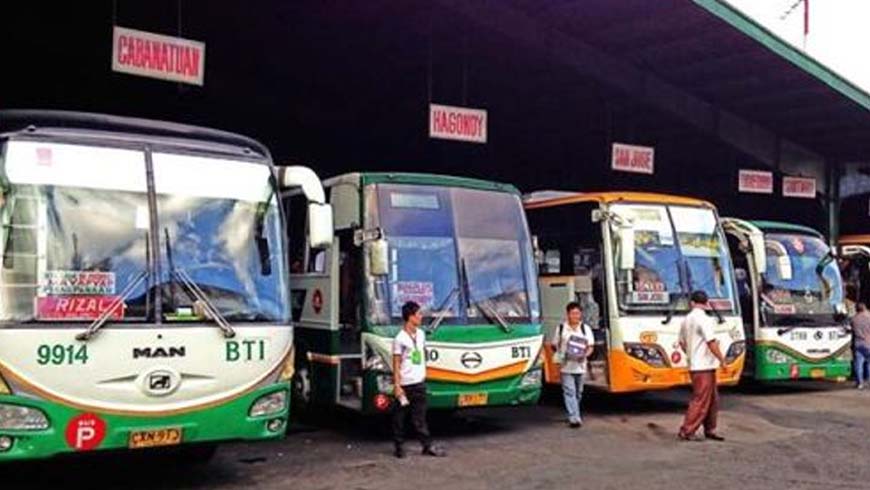
The Land Transportation Franchising and Regulatory Board (LTFRB) has implemented a fare increase for provincial air-conditioned buses effective Saturday, March 14.
The agency said an additional 35 centavos per kilometer has been added to the existing rate of P2.45 per kilometer for air-conditioned provincial buses.
The LTFRB clarified that the 20-percent discount for vulnerable sectors, including students and senior citizens, remains in place. The base fare for ordinary buses is set at P588.
The agency also reminded the public to expect slight changes in fare amounts depending on the distance traveled and the type of bus.

Senator Paolo "Bam" Aquino IV stressed on Monday, March 16, the need for better and immediate reporting of bullying cases in schools amid data showing that incidents are being underreported, with zero cases historically cited as a sign of good performance.
The issue was raised during the hearing of the Senate Committee on Basic Education, where data from the Second Congressional Commission on Education (EDCOM 2) showed that bullying cases remain underreported as the Department of Education (DepEd) faces a severe lack of guidance counselors in public schools.
"If bullying is penalized, there are three possible sanctions: reprimand, suspension, and expulsion. If cases are underreported, then the bullies also face no penalty. If it is not reported, there will be no consequences for them," Aquino said.
The senator, who chairs the panel, noted that the prevalence of bullying has earned the Philippines the tag of "Bullying Capital of the World." According to the Southeast Asia Primary Learning Metrics (SEA-PLM), around 50% of Grade 5 students in the Philippines experienced bullying at least once a month as of 2024. Data from the Programme for International Student Assessment (PISA) further shows that one in three Filipino students report experiencing bullying in school, with about 43 percent of girls and 53 percent of boys reporting repeated incidents within a month.
Aquino also cited findings from EDCOM linking bullying to lower literacy levels, poorer academic performance, and higher rates of absenteeism, all of which can lead to lasting trauma among students.
A viral bullying incident in Narvacan, Ilocos Sur was also raised during the hearing, in which a female student was pushed, struck with a backpack, kicked, and punched in the head until she was left crying. The incident reportedly occurred during lunch break and was only discovered three days after it happened, when footage spread on social media.
The Department of Education Region 1 said it is now studying the possible filing of administrative cases against the school head and teachers involved. The regional director noted the negligence of school officials, citing their policy that a bullying case must be reported at least three hours after discovery.
Senator Erwin Tulfo called on DepEd and relevant authorities, including the police and local social welfare offices, to stop relying on reactionary measures and instead adopt a proactive approach to curbing school bullying. He also pointed out that under the Implementing Rules and Regulations of the Anti-Bullying Law, a complaint is required before an investigation can begin, and pushed for an easier, anonymous reporting system accessible to students.
Atty. Razzel Requesto, Officer-in-Charge of DepEd's Bureau of Learner Support Services-Youth Formation Division, clarified that existing IRR provisions allow bystander reports and permit teachers to initiate preliminary fact-finding steps without waiting for a formal complaint. She also said that over the past five months, DepEd has observed an increasing trend in bullying reports following a new department order encouraging disclosure.
Senator Raffy Tulfo, meanwhile, made several recommendations to strengthen the implementation of the Anti-Bullying Act of 2013. These include stricter penalties for schools that fail to act, installation of CCTV cameras in all classrooms, mandatory training and seminars for teachers and parents, mandatory counseling and psychological support, strengthening of Good Manners and Right Conduct (GMRC) education, increased school security through a Memorandum of Agreement between DepEd and the Department of the Interior and Local Government for roving police officers, and an effective anonymous reporting system for students.
Senator Win Gatchalian also flagged the shortage of guidance counselors nationwide and recommended that administrative sanctions be imposed on schools without functional Child Protection Committees. He also cited CCTV cameras in common areas and school entrances as a proven deterrent, noting that schools with cameras showed significantly lower bullying incidents.
For 2026, the government has allocated Php2.9 billion for a school-based mental health program and an additional Php2 billion to hire 10,000 school counselor associates nationwide.
Aquino closed by warning that if the Philippines remains the bullying capital by next year, it would mean the government has failed its children, and called for all preventive measures to be scaled up without delay.
