


%201.svg)


Emergency Hotline:
(+63) 2 911 – 8688


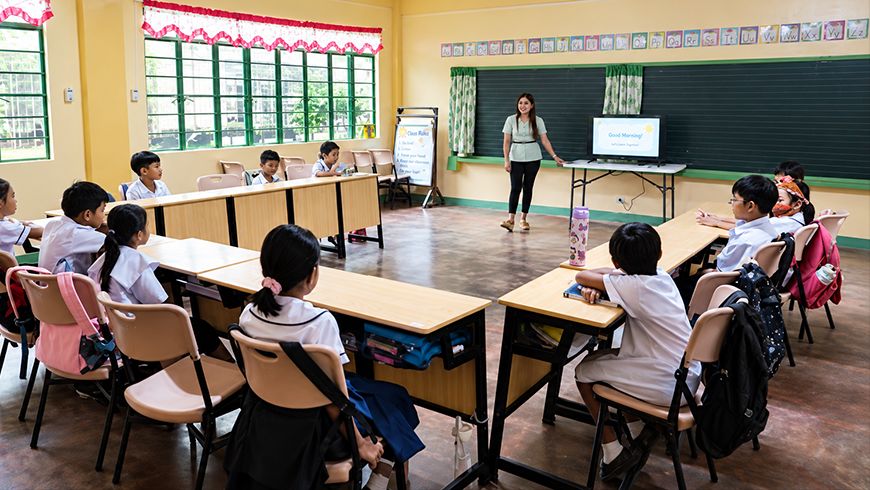

MANILA — Education Secretary Sonny Angara called on teachers to strengthen their emotional support for learners following the recent shooting at Banga National High School in South Cotabato.
Angara urged educators to act as “compassionate foster parents” in schools, particularly for students who may feel isolated, overlooked, or lack emotional support at home.
“For those who are very susceptible to influence from whatever they see online, and those who are looking for validation from their families but perhaps do not receive it, let us give them that as their foster parents at school,” Angara said.
The call came after the September 18 shooting at Banga National High School, where three students, including the identified shooter, died. DepEd has since been coordinating with law enforcement while providing mental health and psychosocial support to those affected.
Angara described the incident as a “wake-up call” for the Department of Education and said schools must recognize the challenges currently confronting young people.
“We can overcome this. But we must acknowledge that there is a mental health epidemic among our youth today, and we must look to the roots of this and understand it,” he said.
Among the approaches encouraged by Angara are simple measures such as learning students’ names, understanding their struggles, regularly checking on their well-being, and spending more time connecting with them.
DepEd is also reviewing existing measures to give teachers more opportunities to engage with learners beyond academic concerns.
“We acknowledge the academic gains made by our teachers, but in terms of addressing the emotional problems of our children, we still have crucial work to do,” Angara said.
The Philippines posted higher average scores in mathematics, reading, and science in the 2025 Programme for International Student Assessment compared with both 2022 and 2018, according to the Organisation for Economic Co-operation and Development.
Alongside its focus on learner well-being, DepEd has strengthened security measures in public schools.
Existing policies require routine bag inspections using authorized non-contact methods such as scanners, handheld metal detectors, or search sticks. Schools have also strengthened CCTV use, visitor management, emergency drills, and coordination with police and local authorities.
DepEd has also imposed restrictions on mobile phone use in schools and urged parents and guardians to closely monitor their children’s smartphone and social media activities at home.
The department is expanding its Kaagapay Program, which formally involves parents, guardians, and caregivers in supporting learner well-being, values formation, positive discipline, and bullying prevention.
Under the program, parent engagement sessions are designed to help families better recognize socio-emotional needs, behavioral concerns, bullying, and early signs of distress among children.
Angara said ensuring the safety and well-being of learners remains a priority as DepEd strengthens both school security and support systems for students.
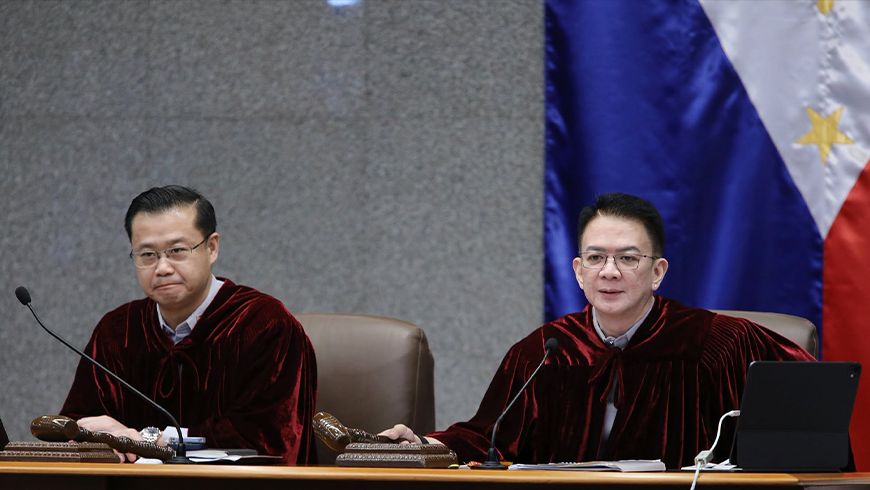
MANILA — Senator-judges are scheduled to vote Wednesday, September 23, on the number of votes required to convict Vice President Sara Duterte as her impeachment trial enters its 29th day.
Before Tuesday’s proceedings were adjourned, presiding officer Sen. Francis “Chiz” Escudero said no witness would be presented Wednesday because the prosecution and defense would instead deliver oral arguments on the disputed voting threshold.
Each side will be given 15 minutes to present its position. Senator-judges may then question the parties before voting on Sen. Erwin Tulfo’s appeal and motion for reconsideration of Escudero’s earlier ruling.
House Lead Prosecutor and Batangas Rep. Gerville Luistro said Mamamayang Liberal Party-list Rep. Leila de Lima will present the prosecution’s arguments.
Lead defense counsel Sheila Sison, meanwhile, had not disclosed as of Tuesday who would argue for Duterte’s defense.
The issue stems from Escudero’s ruling on the first day of the trial on July 6 that 16 votes are required to convict Duterte, based on the constitutional provision stating that no impeached official may be convicted without the concurrence of two-thirds of all members of the Senate.
Tulfo later sought reconsideration of that ruling, questioning whether the two-thirds requirement should be computed from all 24 senators or only from senator-judges able to participate in the trial.
Tulfo has said his motion is not intended to lower the constitutional threshold but to clarify whether senators who cannot participate should still be counted in determining the required number of votes.
The issue has become significant because several senators have not been participating in the proceedings.
Sens. Jinggoy Estrada and Rodante Marcoleta are detained in connection with separate plunder cases, Sen. Ronald “Bato” dela Rosa has been absent amid an International Criminal Court arrest warrant, while Sen. Loren Legarda is on medical leave.
On September 16, the impeachment court heard the positions of four retired Supreme Court magistrates invited as amici curiae, or friends of the court.
Former Chief Justices Hilario Davide Jr., Artemio Panganiban and Reynato Puno said the 16-vote requirement is not necessarily fixed and argued that the computation should take into account which senators are legally qualified or able to participate in deciding the case.
Former Associate Justice Adolfo Azcuna took a different position, saying all sitting senators should remain part of the denominator as long as they continue to be members of the Senate.
Azcuna said only death, resignation or removal from office would reduce the Senate membership used in computing the two-thirds requirement.
The impeachment court is scheduled to resume today, September 23, Wednesday, for the oral arguments before senator-judges consider Tulfo’s motion on the conviction threshold.
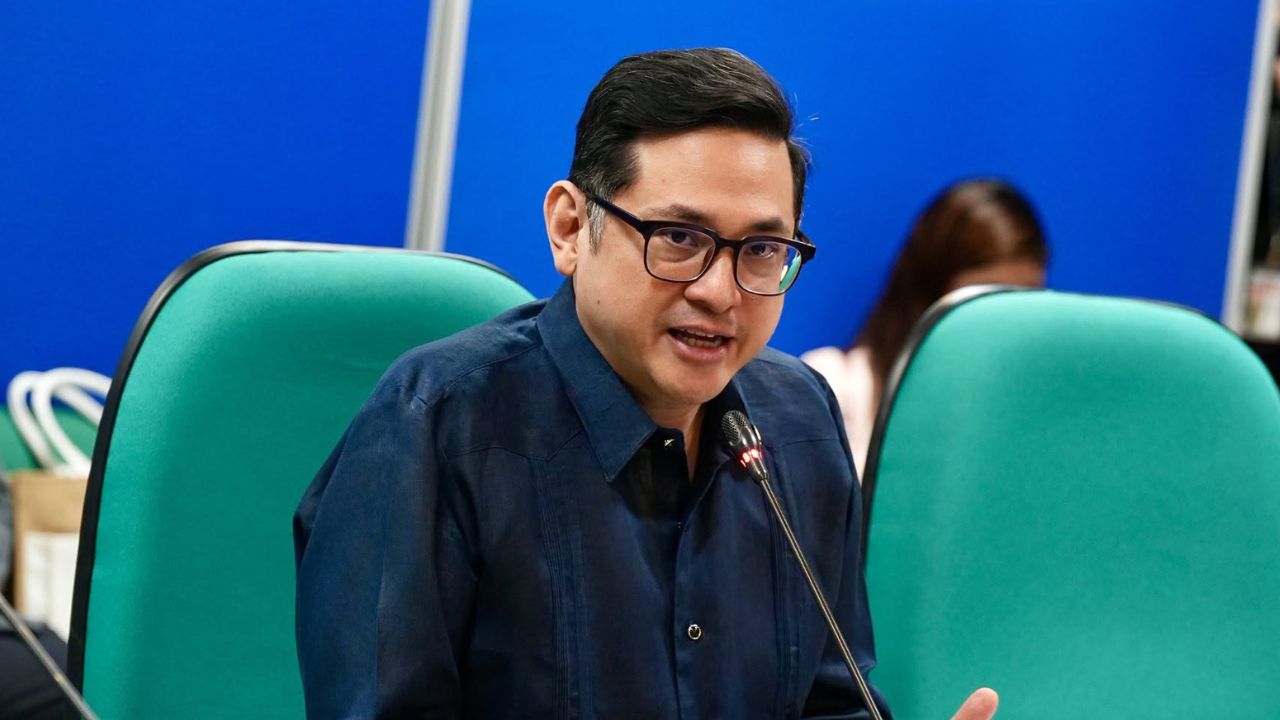
MANILA — The Senate on Monday approved Senate Bill No. 2426, or the proposed Comprehensive School Safety Act, on third and final reading with 17 affirmative votes and no negative votes.
The measure seeks to establish a national framework aimed at strengthening the protection of learners and school personnel from violence, emergencies, and other safety threats.
Sen. Bam Aquino, chair of the Senate Committee on Basic Education, sponsored Senate Bill No. 2426 in plenary on August 26 under Committee Report No. 89. Sens. Raffy Tulfo, Risa Hontiveros, Mark Villar, Christopher “Bong” Go, and Robinhood Padilla were listed as co-sponsors of the measure.
Under the proposed law, the Department of Education, in coordination with other government agencies and local government units, would lead the establishment and regular updating of a National Comprehensive School Safety Framework covering the prevention of, response to, and recovery from threats and incidents affecting schools.
Schools would be required to develop and annually update their own School Safety Plans based on local conditions and risks.
The measure also provides for a School Safety Handbook containing school policies, emergency procedures and learner support services, as well as a code of conduct identifying prohibited behavior and corresponding disciplinary or restorative interventions.
Other provisions include risk assessments, safety training, emergency procedures and drills, as well as psychosocial and mental health support for learners, families, and school personnel affected by violence or emergencies.
The proposal also covers measures aimed at strengthening campus security and preparedness, including visitor management, security screening, threat assessment, and coordination among schools, law enforcement agencies, and local communities.
The proposed Comprehensive School Safety Act was initially focused on strengthening anti-bullying measures but was expanded to cover other forms of violence, school security, emergency preparedness, and emerging threats affecting learners, according to Aquino.
The bill has gained added attention following a series of violent incidents in schools.
On September 18, three students, including the student identified by authorities as the shooter, died while several others were injured in a shooting at Banga National High School in South Cotabato. President Ferdinand Marcos Jr. ordered a thorough investigation into the incident, including how a minor obtained and brought a firearm inside the school.
The South Cotabato incident followed fatal school shootings in Tacloban City in June and Zamboanga City in August, which had already prompted lawmakers to accelerate deliberations on measures addressing school violence and student safety.
Aquino earlier said the proposed framework should go beyond conventional security measures and involve parents, teachers, students, school officials, law enforcement, and other members of the community in preventing and responding to threats.

MANILA — On the 27th day of Vice President Sara Duterte’s impeachment trial on September 21, Securities and Exchange Commission records presented before the Senate impeachment court showed that she remained listed as a director and 20-percent shareholder of Metro City Chow Foods Corp. from 2022 through 2025.
SEC Company Registration and Monitoring Department Director Gerardo Del Rosario testified that Duterte’s name appeared in the company’s General Information Sheets, or GIS, as both a stockholder and member of its board of directors during the period.
“Ayan po sa GIS nila from 2022-2024, si VP Sara Duterte ay member pa rin po ng Board of Directors,” Del Rosario told the impeachment court.
He added that Duterte remained listed as a member of the board in the company’s 2025 GIS.
Del Rosario was presented as a prosecution witness under Article II of the impeachment complaint, which accuses Duterte of failing to fully disclose her and her spouse’s assets, liabilities and net worth and of continuing business interests during her tenure as vice president. The defense disputes the allegations.
Records discussed during the hearing showed Duterte subscribed to PHP50,000 worth of shares in Metro City Chow Foods Corp., representing a 20-percent stake.
She initially paid PHP12,500 against the subscription, while company records from 2022 through 2024 reflected the full PHP50,000 as paid.
Presiding officer Sen. Francis “Chiz” Escudero later noted that an amended 2025 GIS again listed Duterte’s paid-up amount at PHP12,500.
Del Rosario said the amount reflected what appeared in the amended filing but did not explain why the figure had changed.
The prosecution also questioned Del Rosario about whether the company had declared dividends that could have generated income for its shareholders.
Del Rosario testified that the records presented showed no dividend declaration in cash, stock or property.
Escudero clarified that corporate earnings do not become income of a shareholder unless dividends are formally declared. Del Rosario agreed.
The SEC official also explained that a shareholder serving as a director may receive a reasonable per diem, while a shareholder working for a company may receive a salary. No salary or per diem paid to Duterte was identified during that portion of the testimony.
Private prosecutor Erwin Matib said the prosecution is examining Duterte and her husband Manases Carpio’s corporate interests, company earnings and dividend records to determine whether the businesses generated legitimate income that could account for changes in Duterte’s declared net worth.
The prosecution is also comparing SEC filings with Duterte’s Statements of Assets, Liabilities and Net Worth.
During Day 27, Duterte’s defense objected to portions of the prosecution’s presentation and challenged an SEC-prepared summary of her shareholdings, arguing that some figures referred to corporate transactions rather than Duterte personally.

MANILA — No Filipinos were reported hurt or affected following drone and ballistic missile attacks targeting Riyadh and other areas in Saudi Arabia on September 18 and 19, according to the Department of Migrant Workers.
The DMW said Monday it is closely monitoring Filipinos across Saudi Arabia through its Migrant Workers Offices, in coordination with the Philippine Embassy and Consulate.
“The Embassy and Consulate are ready to assist overseas Filipino workers who may need help,” the agency said.
The attacks took place Friday night and early Saturday amid renewed hostilities involving Yemen’s Houthi forces and Saudi Arabia. Houthi military spokesperson Yahya Saree said the group carried out operations targeting what he described as sensitive sites in Riyadh and Saudi Aramco facilities in Yanbu. He said the attacks were in retaliation for strikes on Yemen’s capital, Sanaa.
Saudi Arabia, meanwhile, said its air defenses intercepted and destroyed a ballistic missile launched toward Riyadh at dawn on September 19.
Maj. Gen. Turki Al-Malki, spokesperson for the Coalition to Restore Legitimacy in Yemen, said the Royal Saudi Air Defense Forces destroyed the missile before it reached its target. Saudi authorities also reported that air defenses thwarted Houthi attempts targeting Bish, Taif, Farasan and Yanbu.
The DMW advised Filipinos in Saudi Arabia to remain vigilant and follow safety instructions and advisories issued by local authorities.
OFWs and their families who need immediate assistance may contact the DMW hotline at 1348 from Metro Manila, 02-1348 from outside Metro Manila, or +632-1348 from overseas.
Filipinos in Saudi Arabia may also seek assistance through the Migrant Workers Offices in Riyadh, Jeddah and Alkhobar. The DMW said the offices, together with Philippine diplomatic posts, remain ready to respond to OFWs who may need assistance.
The agency said it will continue monitoring developments in Saudi Arabia and issue further updates as information becomes available.
