


%201.svg)


Emergency Hotline:
(+63) 2 911 – 8688




MANILA – The Department of Foreign Affairs (DFA) has asked APO Production Unit Inc. to postpone a proposed increase in the Philippine passport fee until the planned rollout of the next-generation passport in June 2028.
APO, which produces Philippine passports, proposed increasing the current passport fee from ₱950 to ₱1,500 beginning January 2027, according to Foreign Affairs Secretary Ma. Theresa Lazaro.
Lazaro said the DFA instead asked APO to defer the adjustment so that any increase could coincide with the introduction of the next-generation Philippine passport.
The DFA has tentatively targeted June 2028 for the rollout of the new passport. The redesigned booklet is expected to comply with International Civil Aviation Organization standards and feature enhanced security measures, additional pages for its 10-year validity, and updated contactless chip technology.
Lazaro said APO's request for a higher fee came after the current rate had remained unchanged for more than a decade.
She also cited the extension of Philippine passport validity from five years to 10 years, which reduced the frequency at which passport holders need to renew their travel documents.
The DFA secretary said implementing a fee increase in January 2027 could complicate another adjustment when the next-generation passport is introduced.
Under the implementing rules of Republic Act No. 11983, or the New Philippine Passport Act, passport and travel document fees may not be increased more than once every three years.
The next-generation passport program is already part of the DFA's preparations for 2027. The department earlier said the new booklet would include additional pages, enhanced security features and the latest contactless chip technology.
For now, the proposed increase from ₱950 to ₱1,500 has not yet taken effect, with the DFA seeking to move its implementation to the planned June 2028 rollout.
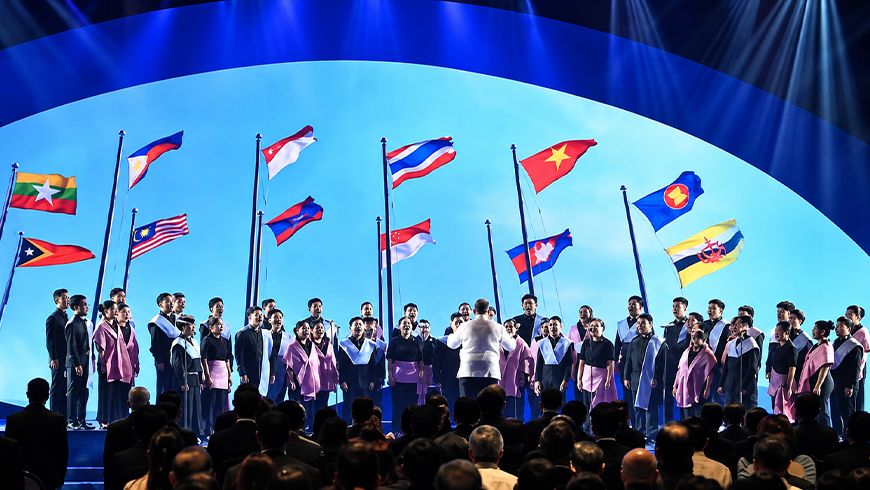
MANILA — President Ferdinand Marcos Jr. has declared November 16 to 18, 2026 as special non-working days throughout the National Capital Region in connection with the 49th ASEAN Summit and Related Summits.
The declaration was made through Proclamation No. 1447, signed on September 17 by Acting Executive Secretary Ralph Recto by authority of the President.
The three-day declaration covers Monday, November 16, through Wednesday, November 18.
According to the proclamation, the special non-working days are intended to help ease traffic congestion in Metro Manila and allow the government to ensure the safety and security of participants attending the ASEAN-related meetings.
The Philippines is serving as ASEAN chair in 2026 and is hosting a series of regional meetings involving ASEAN member states and partner countries.
Government and ASEAN calendars also list several ASEAN-related activities in Metro Manila in November, including the 16th ASEAN Maritime Forum on November 17 and the 14th Expanded ASEAN Maritime Forum on November 18.
The declaration applies to the entire National Capital Region.

MANILA – Qualified Government Service Insurance System (GSIS) pensioners may apply for loans of up to ₱500,000 for residential solar energy systems beginning September 30.
GSIS President and General Manager Wick Veloso said the Ginhawa Solar Energy Loan (GSEL) will be made available to eligible retirees through the GSIS Touch mobile application.
Under the program, qualified borrowers may secure up to ₱500,000, payable over five years at 5 percent annual interest with no service fee.
“Sa pagbubukas ng GSEL sa ating mga pensionado, binibigyan natin sila ng karagdagang financial option na maaaring makatulong na mapababa ang kanilang gastusin sa kuryente,” Veloso said.
GSIS launched GSEL for qualified active government workers in March. Official GSIS guidelines provide financing for residential solar panels, equipment, and installation costs, subject to the program’s requirements.
The expansion is among the benefits being highlighted for government retirees as GSIS recognizes pensioners for their years of public service.
Other changes previously implemented by GSIS include an increase in the funeral benefit from ₱30,000 to ₱50,000 for qualified claims involving deaths occurring on or after July 13, 2026.
GSIS has also removed the previous cap on survivorship pensions, allowing qualified surviving spouses to receive the full benefit equivalent to 50 percent of the deceased member or pensioner’s basic monthly pension.
The pension fund also abolished its previous cohabitation rule, meaning a survivorship pension is no longer stopped solely because a beneficiary lives with another partner. Remarriage remains a ground for terminating the benefit.
Meanwhile, nearly ₱20 billion had been returned as of September 21 through the original and enhanced Balik Ginhawa programs, covering almost 1.6 million loan contracts involving more than 700,000 qualified members and pensioners.
GSIS earlier reported that Balik Ginhawa had returned ₱19 billion to more than 700,000 members as of August 31, covering nearly 1.3 million loan contracts.
Qualified retirees may also access existing GSIS services such as pension and emergency loans, insurance and housing programs, as well as digital services through GSIS Touch.
Veloso said GSIS will continue adjusting its programs to provide financial and social protection to retirees beyond their monthly pensions.
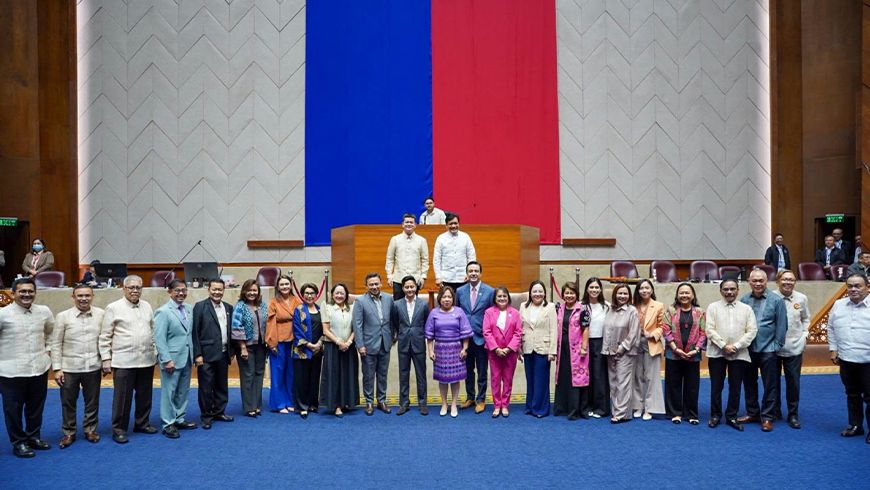
MANILA — The Department of Education welcomed the House of Representatives’ approval of its proposed ₱975.96-billion budget for 2027, as the agency continues to seek additional funding for school safety, learning recovery, mental health support, teacher hiring, and classroom construction.
Education Secretary Sonny Angara thanked lawmakers for supporting efforts to restore or augment funding for critical programs that were not included in the original 2027 National Expenditure Program.
“We deeply appreciate the House of Representatives’ strong commitment to education and the leadership of President Ferdinand R. Marcos Jr. in advancing the country’s education agenda,” Angara said.
The ₱975.96-billion allocation forms part of the proposed 2027 national budget being deliberated by the House. House records show that DepEd and its attached agencies were scheduled for plenary deliberations on September 22 under House Bill No. 10858, the proposed 2027 General Appropriations Bill.
DepEd earlier asked Congress for an additional ₱145.19 billion to support critical programs that were not accommodated in the original National Expenditure Program. These include learning recovery, additional personnel, school security, classroom construction, and other learner support programs.
Davao de Oro 1st District Rep. Maria Carmen Zamora, who sponsored DepEd’s budget in the House, expressed support for supplementing funding after the department submitted its list of priority programs.
“This support will help us protect learners, support teachers, accelerate learning recovery and improve learning outcomes across the country,” Angara said.
Among the areas for which DepEd has sought additional funding is school safety and security, which gained further attention following the September 18 shooting at Banga National High School in South Cotabato.
DepEd’s supplemental request includes funding for security personnel, metal detectors and scanners, and perimeter fences. The department earlier sought about ₱8.68 billion for school security measures.
“Schools must be sacred, safe spaces where parents feel confident sending their children every day,” Angara said, adding that additional resources could strengthen physical safeguards and psychosocial support in schools.
DepEd is also seeking additional funding for the Academic Recovery and Accessible Learning or ARAL Program, which provides targeted interventions for learners struggling with reading and other foundational skills.
According to DepEd, the number of struggling readers nationwide declined from 6.7 million to 2.2 million during School Year 2025–2026. The figures were based on the department’s literacy assessments conducted during the school year.
The agency previously said ARAL received no allocation in the original proposed 2027 NEP and sought about ₱15.98 billion to continue the program, including support for tutors, learning materials, remediation activities and the ARAL Summer Program.
Other programs included in DepEd’s request for additional funding cover the expansion of the School-Based Feeding Program, recruitment and promotion of teachers and support personnel, construction and repair of classrooms, mental health services, and programs for learners under Special Needs Education, Madrasah Education and Indigenous Peoples Education.
The ₱975.96-billion DepEd allocation remains part of the proposed 2027 national budget, which must still complete the congressional budget process before enactment.
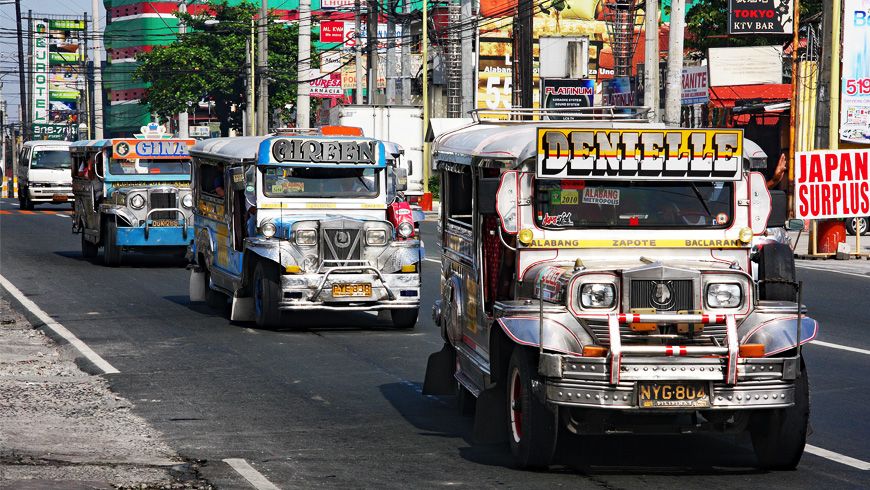
MANILA — The Department of Transportation (DOTr) is looking at additional subsidies and assistance for public transport operators and drivers as fuel prices continue to rise, while a possible fare increase remains under review.
Acting Transportation Secretary Giovanni Lopez said Tuesday that the government is implementing measures aimed at easing the impact of higher fuel costs on drivers and operators without immediately passing the burden on to commuters.
Among the existing measures cited by Lopez are fuel discounts and toll assistance.
The fuel discount for traditional and modernized jeepneys and UV Express units was previously increased from PHP10 to PHP12 per liter. Lopez said the DOTr is studying whether the program can be extended and expanded to other modes of public transportation.
“Sa ating mga bus operators at drivers, una po, kami po, ako po ay personal na humihingi ng inyong pasensya, paumanhin at konsiderasyon,” Lopez said, adding that the government is pursuing initiatives to assist both the transport sector and commuters.
The Land Transportation Franchising and Regulatory Board (LTFRB), meanwhile, continues to evaluate pending petitions for fare adjustments.
LTFRB acting Chairperson Greg Pua Jr. said the agency is expected to submit its recommendation to the DOTr by October. The agency said it would first assess the impact of a wage increase scheduled to take effect on September 25.
Lopez said the government is considering available subsidies and other interventions before resorting to an increase in public transport fares.
He also cited inflation as one of the factors that must be considered in deciding on fare adjustments.
The Philippine Statistics Authority reported that headline inflation stood at 6.1 percent in August 2026, slightly lower than 6.2 percent in July.
Lopez said an increase in transportation fares could also affect the prices of services and goods.
“So we're trying to say po, sasaluhin po ito ng gobyerno, pipigain natin hanggang sa kaya natin, mga subsidiya, mga iba't ibang inisyatibo,” he said.
He added that the DOTr hopes a fare increase would remain a last resort while government assistance programs are being implemented.
In evaluating the pending fare petitions, the LTFRB said it would consider commuters’ capacity to shoulder higher fares, available government assistance for transport workers, and the possible effect of an increase on inflation.
