


%201.svg)


Emergency Hotline:
(+63) 2 911 – 8688


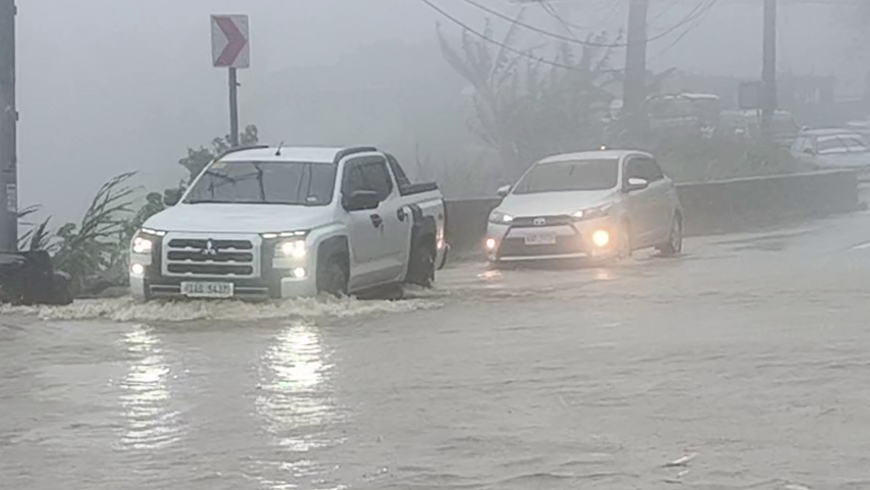

Typhoon Maymay brought heavy rainfall to a large part of Luzon before weakening into a low pressure area.
The typhoon made landfall in the town of Magsingal, Ilocos Sur, in the early hours of yesterday morning. It brought strong winds and heavy rain that caused flooding in several areas of the province.
Due to the flooding, several roads became impassable, including the Poblacion–Cayus Road and the Banoen–Malideg Creek Road in Quirino, Ilocos Sur. A wooden bridge in Barangay Tungay was also swept away by strong water currents, making the area impassable.
Authorities closely monitored the water level of the Abra River due to the continuous rainfall brought by the typhoon.
In Barangay Pangpangdan, Sto. Domingo, Ilocos Sur, several trees were toppled and the roofs of some houses were damaged.
In Cagayan, some schools were flooded, causing the suspension of classes and other activities.
According to the National Disaster Risk Reduction and Management Council (NDRRMC), more than 6,900 individuals have been evacuated and are currently taking shelter in evacuation centers after several regions were affected by flooding.
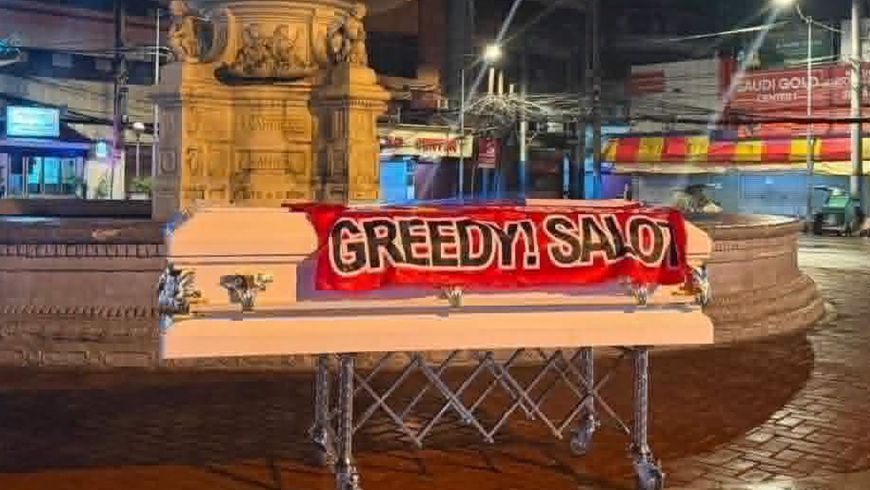
The Department of Foreign Affairs (DFA) assured the public and foreign nationals in the Philippines on Friday, August 7, 2026, following the discovery of several abandoned caskets bearing hate messages in various parts of Metro Manila.
In a statement, the DFA said such acts, including those directed at foreign nationals and officials, should not be tolerated.
"While the Philippines upholds the right to freedom of expression, the DFA emphasizes that this right does not extend to threats of violence or acts that endanger the safety and security of others," the agency said, adding that such incidents do not reflect the Philippine government's approach to conducting its foreign relations, nor how Filipinos express criticism or dissatisfaction, even on sensitive political matters.
The DFA also reaffirmed its commitment to its duties regarding the safety and security of foreign nationals and officials in the country.
The DFA's statement came after the National Capital Region Police Office (NCRPO) confirmed reports on the discovery of abandoned caskets in several areas in Metro Manila earlier that day.
In its statement, the NCRPO said initial investigation revealed that five caskets were intentionally abandoned in Sta. Cruz, Manila; Brgy. 54, Caloocan City; Brgy. South Triangle, Quezon City; Brgy. Sta. Teresita, Quezon City; and Gil Puyat Avenue, Makati City.
The caskets were deliberately left by perpetrators wearing masks on board white and gray vans between 2:00 and 4:00 in the morning of August 7, 2026, and contained anti-CPP-NPA and anti-China messages.
Among the specific sites, one casket was found near the Carriedo Fountain in Sta. Cruz, Manila, while others turned up along Timog Avenue and at the Welcome Rotonda area in Quezon City, aside from the sites in Caloocan and Makati. Banners attached to the caskets recovered in Quezon City carried the messages "Chinese Communist Party (CCP) greedy!
Salot" and "Greedy salot," while a separate casket bore photos of two unidentified individuals. Responding police units who inspected the caskets found that they contained only crumpled paper.
PNP Chief, Police General Jose Melencio Nartatez Jr., has ordered a comprehensive probe to determine the facts and circumstances surrounding the incidents. He said the PNP is aware of the circulating videos and social media posts on the abandoned caskets, and that concerned police units are validating each reported incident while coordinating with local government units and other agencies concerned.
NCRPO investigators are now on the ground conducting thorough backtracking and forward tracking of CCTV footage to identify the masked individuals behind the incidents.
Police units across Metro Manila have also been placed on heightened vigilance, with the NCRPO urging the public to remain calm, avoid spreading unverified information, and report any suspicious activity.
"This cowardly act will not be left unpunished. NCRPO will ensure that the identity of those who are behind these acts will be uncovered and criminal cases will be filed upon completion of the investigation," the NCRPO said.
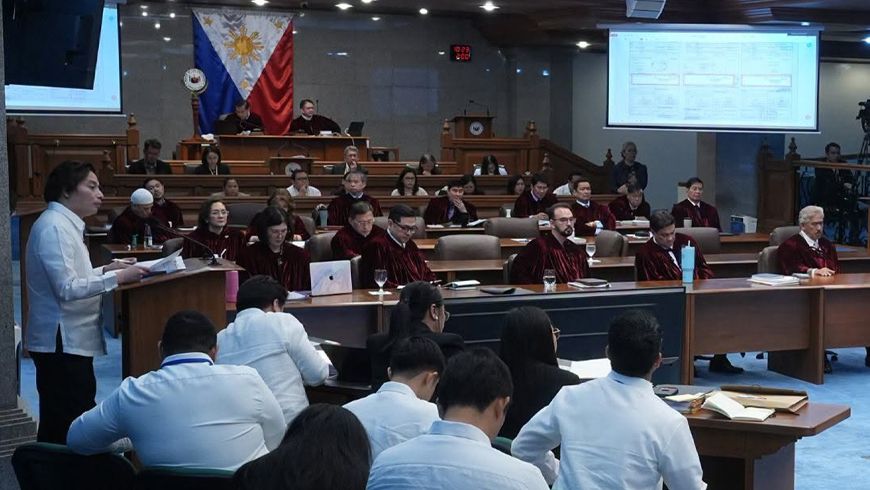
As the impeachment trial of Vice President Sara Duterte continues, viewers following the proceedings are likely to encounter a steady stream of legal and courtroom terminology, from Latin phrases invoked by lawyers to specific audit terms tied to the confidential funds issue at the heart of the case.
Here's a rundown of the terms you'll keep hearing, explained.
1. Presiding Officer
- The Chief Justice or the Senate President who leads and manages the conduct of the impeachment trial.
Source: 1987 Philippine Constitution, Art. XI, Sec. 3(6)
2. House Prosecution Panel
- The group of House of Representatives members who act as prosecutors, presenting evidence and arguments to prove the impeachment charges.
Source: Rules of Procedure in Impeachment Trials, Senate of the Philippines
3. Defense Counsel
- The lawyer or legal team representing the impeachable official, tasked with countering the charges and evidence presented by the prosecution.
Source: Rules of Procedure in Impeachment Trials, Senate of the Philippines
4. Subpoena duces tecum
- A court order requiring a person to appear and bring specific documents or records relevant to the case.
Source: Rules of Court, Rule 21, Sec. 1
5. Subpoena ad testificandum
- A court order requiring a person to appear and testify as a witness, without necessarily bringing documents.
Source: Rules of Court, Rule 21, Sec. 1
6. Ratio decidendi
- The core legal reasoning or principle a court relies on to reach its decision, the binding part of a ruling.
Source: Black's Law Dictionary
7. Obiter dictum
- A remark or observation made by a judge in a decision that is not essential to the ruling and therefore not legally binding.
Source: Black's Law Dictionary
8. Void ab initio
- A Latin term meaning "void from the beginning", describing an act, contract, or law treated as if it never had legal effect.
Source: Black's Law Dictionary
9. Accountable officer
- A government employee or official entrusted with public funds or property and legally responsible for their proper use and disposition.
Source: Government Auditing Code of the Philippines (P.D. 1445)
10. AMLC (Anti-Money Laundering Council)
- The Philippine government body tasked with implementing the Anti-Money Laundering Act, including investigating suspicious financial transactions.
Source: Republic Act No. 9160, as amended
11. Arresto mayor
- A penalty under the Revised Penal Code involving imprisonment ranging from one month and one day to six months.
Source: Revised Penal Code, Art. 27
12. Bank secrecy
- A Philippine law that generally protects the confidentiality of bank deposits, with limited legal exceptions such as court orders in specific cases.
Source: Republic Act No. 1405 (Bank Secrecy Law)
13. Cross-examination
- Questioning of a witness by the opposing party after their initial testimony, used to test, clarify, or challenge their earlier statements.
Source: Rules of Court, Rule 132, Sec. 6
14. Culpable violation of the Constitution
- A willful and intentional breach of the Constitution, not an honest mistake or error in judgment, and one of the grounds for impeachment.
Source: 1987 Philippine Constitution, Art. XI, Sec. 2; UP College of Law Impeachment Primer, 2025
15. Felony
- An act or omission punishable under the Revised Penal Code, committed with deceit (dolo) or fault (culpa).
Source: Revised Penal Code, Art. 3
16. Leading (type of objection)
- An objection raised when a question suggests the desired answer to the witness, typically disallowed during direct examination.
Source: Rules of Court, Rule 132, Sec. 10
17. Objection
- A formal protest raised by a lawyer against a question, evidence, or procedure, asking the presiding officer to disallow it.
Source: Rules of Court, Rule 132
18. Overruled
- A ruling by the presiding officer denying an objection, allowing the question or evidence to stand.
Source: Rules of Court, Rule 132
19. Redirect examination
- Additional questioning of a witness by the party who originally presented them, done after cross-examination to clarify or rebut points raised.
Source: Rules of Court, Rule 132, Sec. 7
20. Sub judice / gag order
- A restriction on public commentary about a case while it is still under court or tribunal deliberation, meant to protect the integrity of proceedings.
Source: Rules of Court; Code of Professional Responsibility and Accountability
21. Sui generis
- A Latin term meaning "of its own kind" — used to describe impeachment as a unique proceeding, distinct from ordinary criminal or civil trials.
Source: Francisco v. House of Representatives, G.R. No. 160261 (2003)
22. Sustained
- A ruling by the presiding officer upholding an objection, disallowing the question or evidence in question.
Source: Rules of Court, Rule 132
23. Ultimate facts
- The essential facts that must be proven to establish a party's cause of action or defense, as opposed to minor evidentiary details.
Source: Rules of Court, Rule 8, Sec. 1
24. Perusing the document
- To read or examine a document carefully before responding or ruling, often said by a judge, senator, or lawyer before commenting on evidence, signaling a close review rather than a quick glance.
Source: Rules of Court, Rule 132 (general evidentiary practice)
25. Prima facie
- Latin for "at first glance" or "on its face" — evidence that appears sufficient to establish a fact or case unless disproven.
A "prima facie case" means there's enough basis to proceed; it is not a final finding of guilt.
Source: Black's Law Dictionary; Rules of Court, Rule 131
26. Notice of Disallowance (ND)
- A formal COA ruling that a government expense or transaction was improper. Only COA's Commission Proper can issue this — a state auditor's observations alone are not final.
Source: 2009 Revised Rules of Procedure of the Commission on Audit
27. Audit Observation Memorandum (AOM)
- A preliminary document noting issues found during an audit. It is different from a formal finding; it flags something for review, not a conclusion of wrongdoing.
Source: COA Circular No. 2009-006
28. Materiality
- Whether a piece of evidence or fact is significant enough to affect the outcome of the case.
Senator-judges may assess if certain documents or testimony are "material" to the impeachment articles.
Source: Rules of Court, Rule 128, Sec. 4
29. Articles of Impeachment
- The formal, written charges against the official being impeached.
Each article represents a specific allegation VP Duterte must answer to during trial.
Source: 1987 Philippine Constitution, Art. XI, Sec. 3
30. Burden of proof
- The obligation to prove a claim or allegation.
This typically rests on the prosecution (House panel) to prove the allegations against VP Duterte.
Source: Rules of Court, Rule 131, Sec. 1
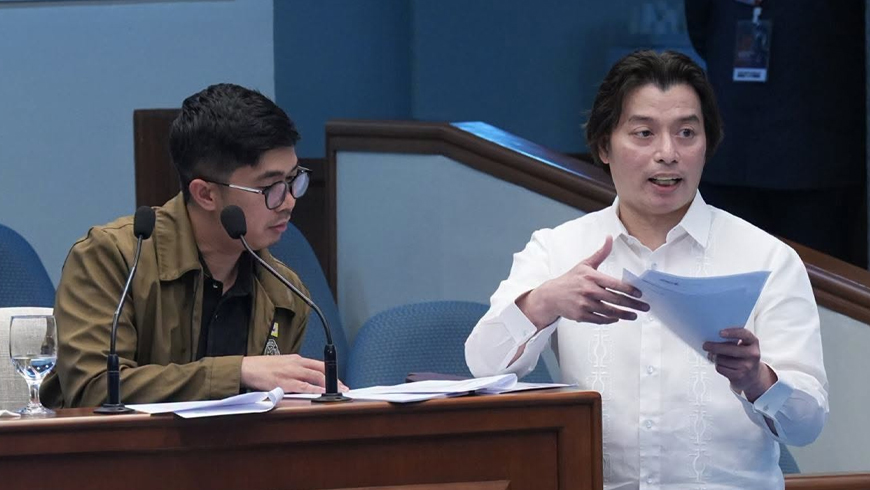
There is no provision under Commission on Audit (COA) rules that prohibits the disbursement of P125 million in confidential funds within an 11-day period, a former state auditor testified during the impeachment trial of Vice President Sara Duterte on Tuesday, August 4.
A former state auditor at the COA's Intelligence and Confidential Funds Audit Office (ICFAO) Atty. Roderick Wamil made the statement under cross-examination by the defense panel, which has sought to challenge the prosecution's characterization of how confidential funds were spent by the Office of the Vice President (OVP).
Wamil said Joint Circular 2015-01, which governs the use of confidential and intelligence funds, contains no specific rule against releasing a large sum of money over a short span of days. He explained that the circular's only requirement is that a cash advance correspond to the recipient agency's needs for a period of up to three months — with no provision setting a minimum number of days over which the funds must be spent.
Because no such rule exists, Wamil said, the 11-day disbursement was not flagged as an audit finding. It was instead noted only as an observation in the Audit Observation Memorandum (AOM), a preliminary document distinct from a formal finding of irregularity.
The defense also pointed out that COA's own findings did not include any conclusive determination of misappropriation or pocketing of the confidential funds in question - an argument aimed at countering claims that the disbursement pattern itself was evidence of anomaly.
Wamil further clarified the limits of his own findings as a state auditor, confirming that observations and recommendations at his level are not final. Under COA procedure, only the Commission Proper - COA's highest decision-making body - has the authority to rule on Notices of Disallowance, which formally determine whether a disbursement was improper.
The testimony adds to a series of exchanges in recent hearings in which the defense has used COA documents and testimony to argue that scrutiny of the OVP's confidential funds has, so far, stopped short of establishing wrongdoing - a key point of contention as the impeachment trial proceeds.
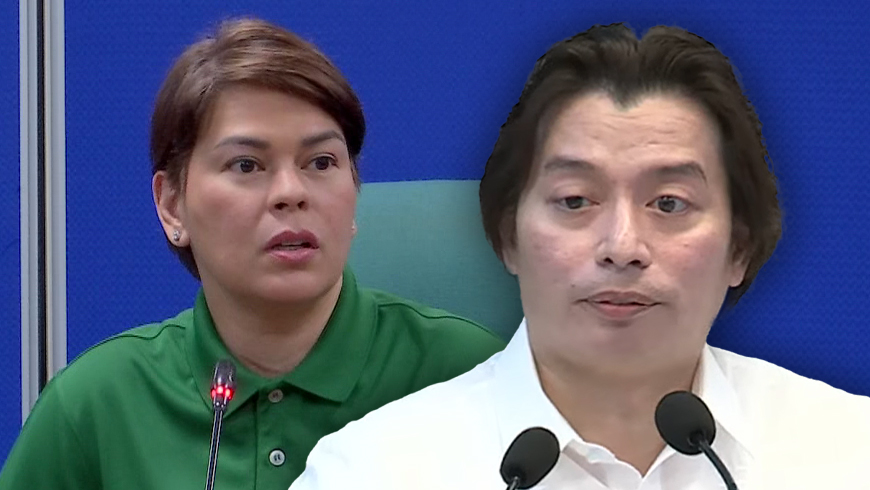
Vice President Sara Duterte is not the only official to have received confidential funds in the Office of the Vice President (OVP), the defense panel argued as the impeachment trial resumed, presenting a 2014 government document to support its claim.
Defense counsel Atty. Michael Poa presented before the impeachment court a Special Allotment Release Order (SARO) dated December 22, 2014, from the Department of Budget and Management, showing an allocation of confidential funds for the OVP during the term of then-Vice President Jejomar Binay.
Poa said the document was presented to correct what he described as a misleading impression circulating on social media that Duterte was the first vice president to receive confidential funds.
"I am showing you a document and this document is from the Department of Budget and Management entitled Special Allotment Release Order... dated December 22, 2014," Poa told former Commission on Audit (COA) state auditor Atty. Roderick Wamil during cross-examination. "And the purpose is to cover confidential activities for fiscal year 2014."
Wamil, who served at the COA's Intelligence and Confidential Funds Audit Office (ICFAO) from 2014 to 2024, confirmed he was already assigned to the office at the time the SARO was issued.
Poa also pointed out that Duterte was not yet vice president during the period covered by the document, referring to the Binay administration's OVP.
Wamil, in response, raised the question of whether the funds had in fact been liquidated, to which Poa clarified that liquidation was not the issue in question.
"That's actually a question for ICFAO, because all I'm showing you is that the Office of the Vice President already had confidential funds in 2014, issued December 22, 2014," Poa said.
Wamil ultimately acknowledged that, based on the document shown to him, confidential funds had indeed been allocated to the OVP that year.
The exchange comes after Wamil earlier testified that during his time at COA-ICFAO, it was only under Duterte's term as vice president that he was able to audit confidential funds of both the OVP and the Department of Education.
Following the exchange, Poa apologized to Binay's camp in case anyone was offended by the line of questioning, saying the defense's intent was solely to clarify the issue and prevent what he called misleading information about the history of confidential funds in the OVP.
