


%201.svg)


Emergency Hotline:
(+63) 2 911 – 8688


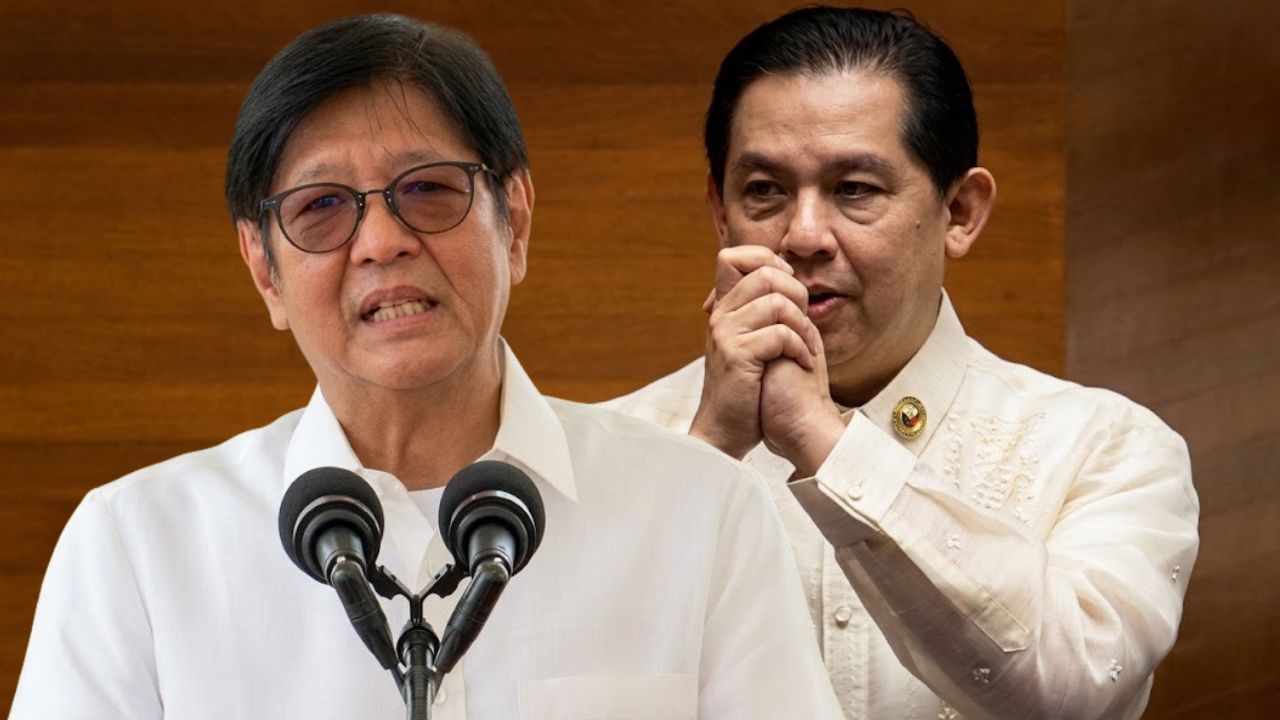

President Ferdinand Marcos Jr. has rejected claims that the arrest of his cousin, former House Speaker Martin Romualdez, was staged or part of a political drama, saying such accusations were attacks against his administration rather than criticism of the judicial process.
Speaking to reporters on Sunday after attending the 18th BRICS Summit in India, Marcos was asked about allegations that Romualdez was receiving special treatment following his arrest.
The President dismissed the claims, saying critics were looking for ways to undermine him and his administration.
Marcos said the accusations should not be confused with legitimate commentary on the court proceedings involving Romualdez, stressing that the case should be handled through the proper judicial process.
Romualdez was arrested on September 7 after the Sandiganbayan issued a warrant in connection with a P7.44-billion plunder case filed by the Office of the Ombudsman. The case involves allegations that Romualdez and his co-accused received billions of pesos in kickbacks linked to flood control and other government projects from 2022 to 2025.
The arrest warrant was served while Romualdez was confined at Cardinal Santos Medical Center in San Juan City. Police subsequently placed him under custody and submitted his booking documents and other records to the Sandiganbayan.
Romualdez has denied wrongdoing. His camp has said he intends to face the charges and has sought due process, while maintaining that he should not receive either special treatment or unfair treatment because of his relationship with the President.
The Sandiganbayan has stressed that the issuance of an arrest warrant only means the court found probable cause to proceed with the case and does not constitute a finding of guilt. Romualdez and his co-accused remain presumed innocent unless proven guilty beyond reasonable doubt.
Marcos has repeatedly maintained that individuals implicated in alleged corruption should be held accountable regardless of their political or family connections while also being afforded due process.
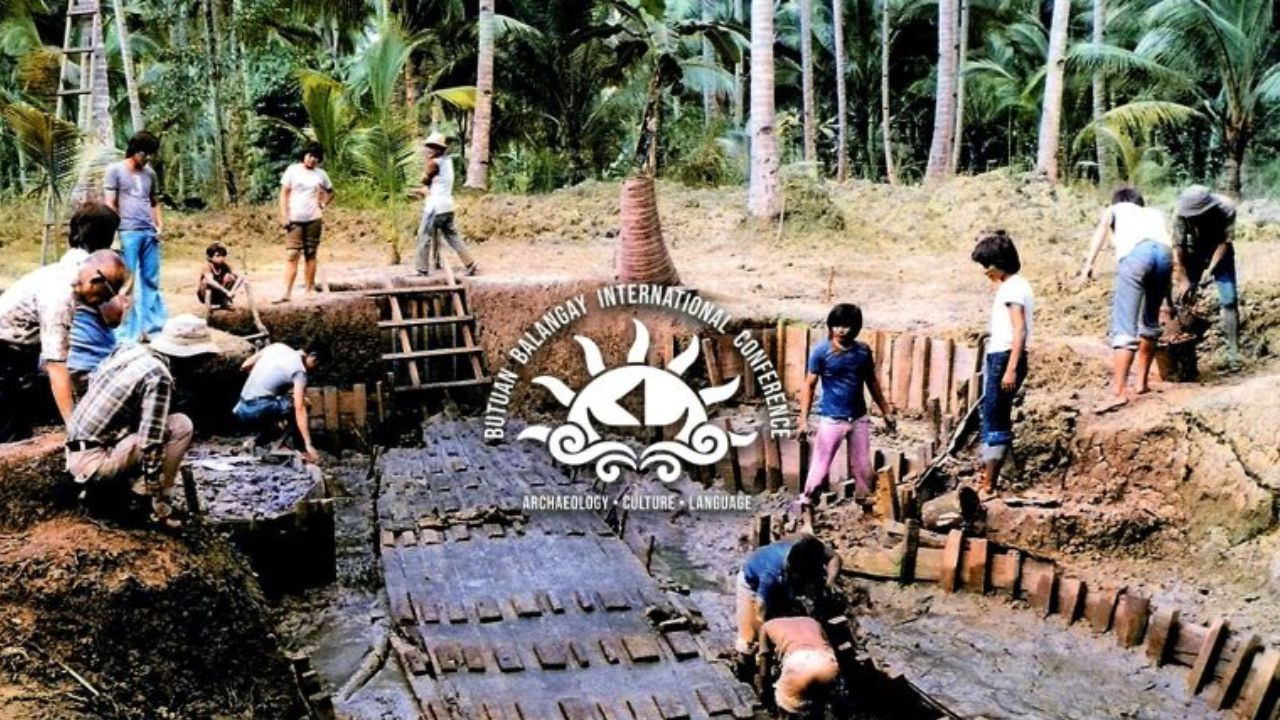
BUTUAN CITY — What began as an effort to drain water in Butuan in the 1970s led to one of the Philippines’ most important archaeological discoveries.
Now, 50 years after the first balangay excavation, archaeologists are digging again in Barangay Libertad, and more ancient boat remains may have surfaced.
The National Museum of the Philippines said the original archaeological finds in Butuan were discovered accidentally in the 1970s when the City Engineering Office was draining water trapped inside an artificial river system. Subsequent excavations revealed the remains of the ancient Butuan boats.
The first balangay was excavated in Libertad in 1976.
The wooden vessels, individually dated between 689 and 988 CE, provided physical evidence of sophisticated boatbuilding and maritime activity in the area more than a thousand years ago. Archaeological finds, including imported ceramics, also show that ancient Butuan was connected to trade networks involving China and other parts of Southeast Asia, centuries before the modern Philippine nation-state.
Today, archaeologists have returned to the same part of Butuan.
During recent confirmatory excavations at two sites in Barangay Libertad, National Museum researchers documented wooden remains displaying characteristics associated with the historic Butuan boats.
At the privately owned Torralba site, archaeologists uncovered three wooden planks. One contained lugs, or projections carved into the wood that were used in the construction of the ancient vessels.
At another excavation area known as the Toyota site, archaeologists exposed about 10 meters of wooden planking containing features such as dowel holes and scarf joints associated with Butuan boat construction.
The discoveries raise the possibility that archaeologists have found another ancient vessel.
But the National Museum has not yet officially declared it a newly discovered balangay.
Nero Austero of the National Museum’s Maritime and Underwater Cultural Heritage Division said researchers must first determine whether the newly documented remains correspond to boats mentioned in older records or represent a vessel that had never been formally recorded.
Researchers are reviewing previous reports, photographs and archaeological records before determining whether the remains could eventually be identified as another numbered Butuan boat.
The uncertainty reflects the complicated archaeological history of the area. Historical accounts refer to as many as 11 Butuan boats, while documentation of some of the sites remains incomplete.
What is already clear is the significance of the location itself.
The ancient boats were discovered in a former riverine environment in Libertad alongside other archaeological materials. Their construction demonstrates advanced plank-built and edge-pegged boatbuilding techniques used by communities that traveled, traded and maintained links across maritime Southeast Asia.
The National Museum now manages the Butuan Boat Site Museum in Libertad, where the excavation site of Butuan Boat 1 and artifacts connected to the discoveries are preserved.
Half a century after workers accidentally uncovered traces of Butuan’s past while dealing with water, the same ground is again giving archaeologists clues about the people who once navigated those waters.
Whether the latest remains become another officially recognized balangay is still under study.
But they reinforce what decades of archaeology have already established: long before the Philippines existed as a modern nation, Butuan was already part of a thriving maritime world.
NAGOYA, Japan — A massive underground flood-control system beneath Nagoya has drawn attention online after record-breaking rainfall flooded parts of the Japanese city.
The infrastructure was recently featured on the Architecture Facebook page, which highlighted how Japan has invested in large underground facilities to prepare cities for extreme rainfall.
Nagoya recorded 104.5 millimeters of rain within one hour on September 8, the highest one-hour rainfall recorded in the city since weather observations began in 1890. The previous record was 97 millimeters during the destructive Tokai heavy rain in 2000.
The downpour flooded roads and homes and disrupted transportation, including city buses, subway services, and the Tokaido Shinkansen. Around 3,500 residents also sought shelter during the severe weather.
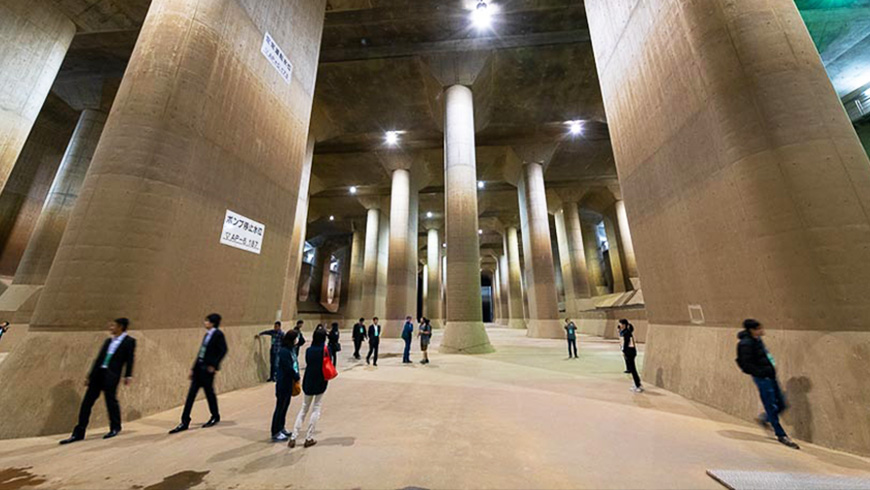
But approximately 50 meters below Nagoya is one of the city’s largest pieces of flood-control infrastructure, the Nagoya Central Rainwater Regulation Reservoir.
According to Nagoya City’s Waterworks and Sewerage Bureau, the underground tunnel stretches about five kilometers, has an internal diameter of 5.75 meters, and can hold approximately 104,000 cubic meters of rainwater, roughly equivalent to 416 school swimming pools.
Instead of allowing all the rainwater to immediately flow into already strained drains and waterways, the reservoir is designed to temporarily hold large volumes underground and reduce the risk of severe surface flooding.
As of July 2026, Nagoya said partition walls installed inside the completed reservoir had allowed it to secure around 100,000 cubic meters of temporary rainwater-storage capacity.
The system is part of a wider effort to strengthen flood protection around Nagoya Station and surrounding districts. The city aims to substantially prevent above-floor flooding even during rainfall approaching 100 millimeters per hour in targeted areas.
However, the viral description circulating online needs some context.
The reservoir’s wider drainage network is not yet fully completed. Construction continues on the Sannobashi rainwater trunk line that will connect the reservoir to the Hirokawa Pump Station, with completion targeted by the end of fiscal year 2028.
The Hirokawa Pump Station itself has already been completed. Its designed drainage capacity is about 13 cubic meters per second, with rainwater discharged into the Nakagawa Canal not 50 tons per second directly into the ocean, as some online descriptions suggest.
Nagoya’s experience also shows that underground infrastructure does not eliminate flooding altogether. The September storm still caused widespread disruptions despite the city’s extensive flood-control measures.
What the system demonstrates is something less dramatic but more important: flood resilience is built before the rain arrives.
Years of investment in underground storage, pumping facilities and drainage networks can give densely populated cities additional capacity when ordinary systems are overwhelmed by increasingly intense rainfall.
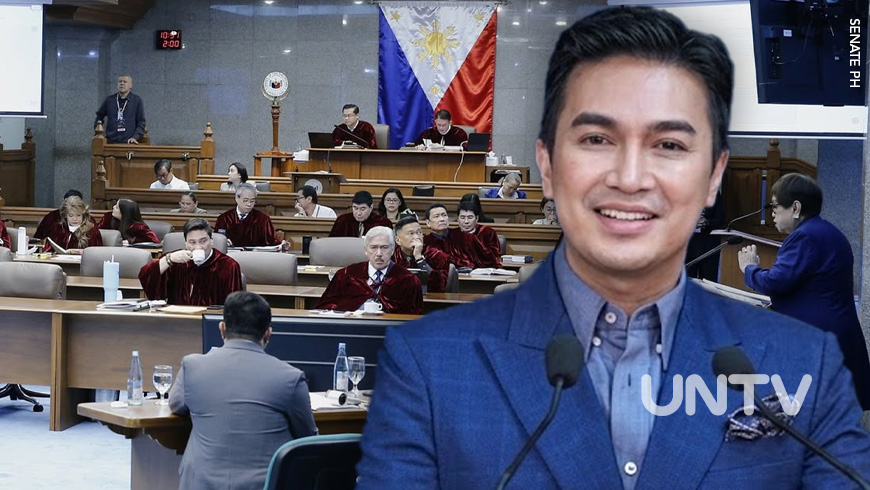
MANILA — Eleven votes would be needed to overturn the Senate impeachment court’s ruling requiring 16 votes to convict Vice President Sara Duterte if 20 senator-judges participate in the vote, Senate impeachment trial court spokesperson Atty. Reginald Tongol clarified over the weekend.
Tongol corrected his earlier statement that only 10 votes would be needed to reverse the July 6 ruling of impeachment court presiding officer Sen. Francis “Chiz” Escudero.
He initially said Escudero would not participate in the vote because the 16-vote threshold was based on the presiding officer’s own ruling.
Tongol later said Escudero and Senate Secretary and impeachment court Clerk Renato Bantug Jr. informed him that the presiding officer would also be included in the voting.
This means that if all 20 available senator-judges, including Escudero, cast their votes, a simple majority of 11 votes would be required to overturn the existing ruling.
The 16-vote threshold remains in effect unless the impeachment court decides to reverse or modify it.
Escudero earlier ruled that the constitutional requirement of two-thirds of all Senate members means 16 votes out of the 24-member Senate are required to convict Duterte.
The issue is being revisited following questions over how the voting requirement should apply when some senator-judges are unable to participate in the trial.
The impeachment court is scheduled to hear the views of former Supreme Court justices and constitutional experts serving as amici curiae, or friends of the court, on September 16.
The prosecution and defense are then scheduled to present oral arguments on the voting threshold on September 23.
The court’s eventual ruling could determine whether the existing 16-vote requirement will remain throughout Duterte’s impeachment trial.
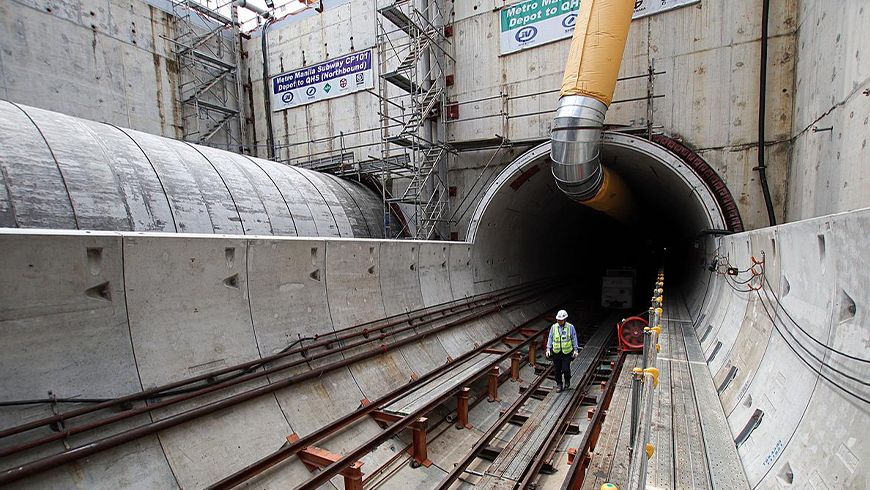
MANILA — President Ferdinand Marcos Jr. said the government is moving to accelerate public spending after delays in infrastructure projects slowed economic activity and affected job creation.
Speaking after his participation in the 18th BRICS Summit in New Delhi, India, Marcos said government spending is expected to catch up within the next few months as delayed projects move forward.
“We will be current in public spending in the next couple of months,” Marcos said.
The President attributed the slowdown mainly to the review of Department of Public Works and Highways contracts following allegations of irregularities involving infrastructure projects, particularly flood control projects.
Marcos said the government had to inspect existing contracts before proceeding with new projects, resulting in delays in bidding and implementation.
According to the President, the slowdown in public infrastructure spending also affected employment because fewer projects meant fewer jobs and less economic activity.
He said the government is now working to speed up project implementation while completing the necessary reviews.
The acceleration of public spending is intended to support economic growth, generate employment and help sustain economic activity amid continuing global uncertainties.
Marcos said infrastructure projects remain an important part of government efforts to stimulate the economy, but emphasized that project implementation must also undergo proper scrutiny following concerns over questionable contracts.
