%201.svg)


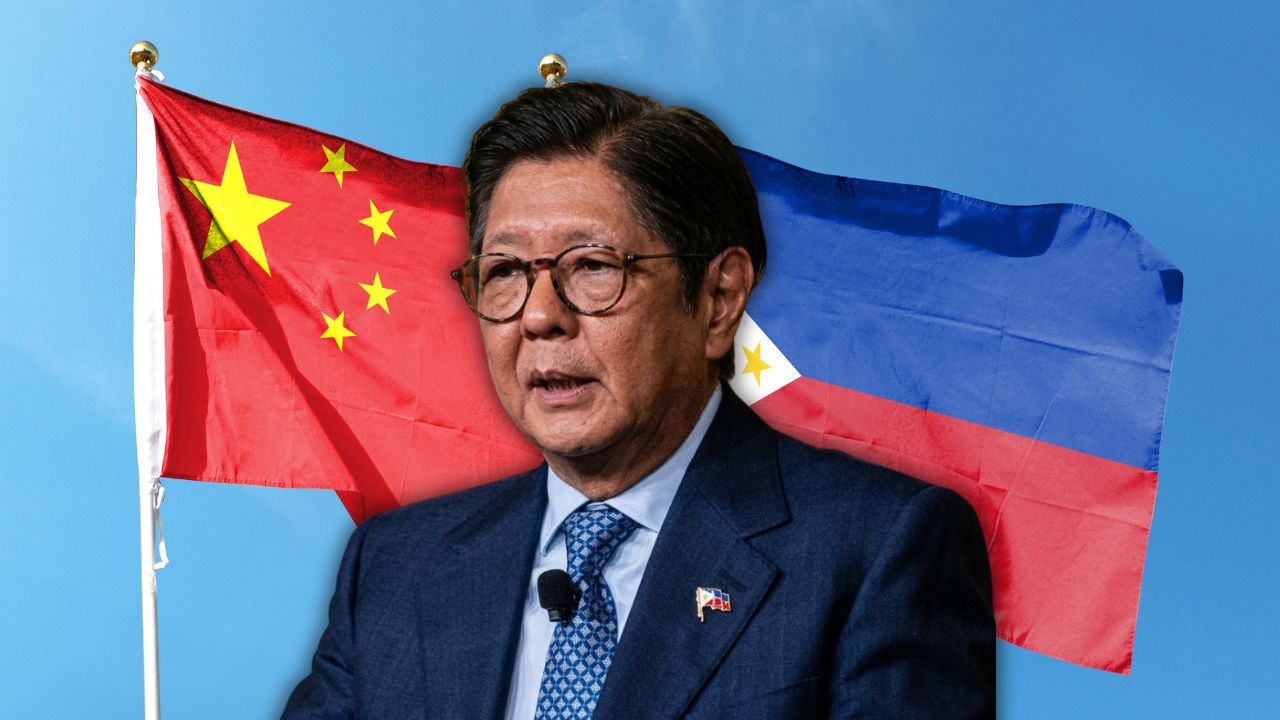
MANILA, Philippines — President Ferdinand Marcos Jr. has expressed optimism over ongoing negotiations between the Association of Southeast Asian Nations (ASEAN) and China for a Code of Conduct (COC) in the South China Sea, emphasizing the need to prevent maritime confrontations from escalating into armed conflict.
Speaking at the 24th Forbes Global CEO Conference in Singapore on Thursday, October 8, Marcos said discussions were making progress despite longstanding disagreements among the parties involved.
The President identified an unintended confrontation between military personnel or sailors as one of his greatest concerns, warning that even a single miscalculation could trigger a wider crisis.
"My greatest fear is that some seaman, some soldier, just makes a mistake. And that mistake turns into something that goes out of control," Marcos said.
He emphasized that establishing clear rules for conduct at sea is essential to reducing the risks of dangerous encounters and preventing misunderstandings between countries operating in disputed waters.
Negotiations advance despite disagreements
The proposed Code of Conduct seeks to establish guidelines governing the actions of countries in the South China Sea, where overlapping maritime claims have fueled tensions for decades.
ASEAN and China have been negotiating the agreement for years, following the adoption of the nonbinding Declaration on the Conduct of Parties in the South China Sea in 2002
While Marcos described the latest discussions as encouraging, he acknowledged that negotiators continue to face difficulties in reaching a consensus.
He noted that disagreements have extended even to the interpretation and definitions of ordinary words contained in the proposed agreement.
Despite these challenges, the President maintained that the Philippines and other ASEAN members remain committed to reaching an agreement that could help ease tensions in the region.
ASEAN and China are targeting the completion of negotiations by the end of 2026, although outstanding issues include the agreement's legal status, geographical coverage, and specific provisions.
Marcos also stressed that maintaining peace and freedom of navigation in the South China Sea is important not only to neighboring countries but also to international trade.
The waterway serves as a major route for global commerce, making regional stability a shared concern among countries that depend on maritime transportation.
Marcos reaffirms Philippine maritime rights
Beyond the negotiations, Marcos reiterated his administration's commitment to protecting the Philippines' territorial sovereignty and maritime entitlements in the West Philippine Sea.
He emphasized that defending the country's territory is part of his constitutional responsibility as President.
The Philippines' maritime rights in its exclusive economic zone are recognized under the United Nations Convention on the Law of the Sea (UNCLOS).
In 2016, an international arbitral tribunal ruled in favor of the Philippines in its maritime dispute with China, rejecting the legal basis for Beijing's claims to historic rights over resources within its expansive nine-dash line.
China has repeatedly rejected the ruling, maintaining its claims over large portions of the South China Sea.
Why the Philippines uses 'West Philippine Sea'
During the conference, Marcos also explained the country's use of the term West Philippine Sea to identify maritime areas west of the Philippine archipelago.
The President said the name reflects the Philippines' geographical position and reinforces its assertion of maritime rights in the area.
The Philippines formally adopted the designation through Administrative Order No. 29 in 2012.
The name refers to maritime areas on the western side of the Philippine archipelago, including the Luzon Sea and waters surrounding the Kalayaan Island Group and Bajo de Masinloc.
The designation does not replace the internationally recognized geographical name South China Sea for the entire body of water.
As ASEAN chair for 2026, the Philippines continues to push for the conclusion of the Code of Conduct negotiations before the end of the year.
Although an agreement has yet to be finalized, Marcos maintained that diplomatic engagement remains an important avenue for managing disputes, preventing accidental confrontations, and preserving stability in the region.