%201.svg)


More unusual names surfaced in acknowledgment receipts submitted to account for the Office of the Vice President’s confidential fund expenditures during Vice President Sara Duterte’s impeachment trial.
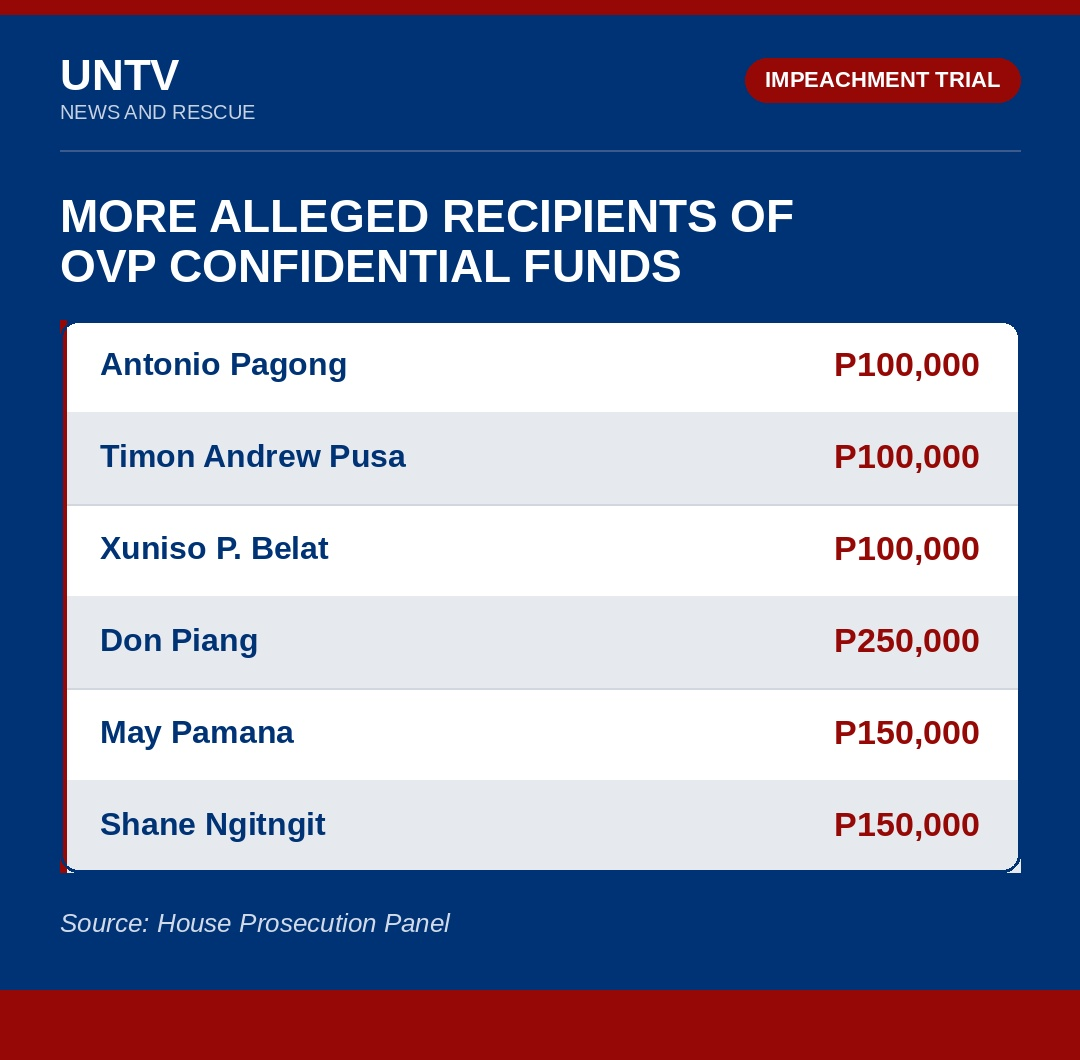
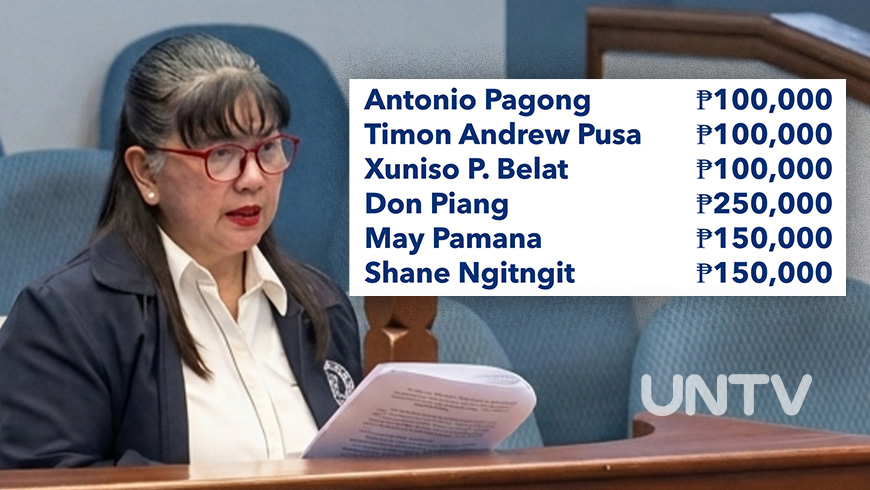
Among the names presented by the prosecution were Antonio Pagong, Timon Andrew Pusa, Xuniso P. Belat, Don Piang, May Pamana and Shane Ngitngit.
The receipts showed that Pagong, Pusa and Belat purportedly received P100,000 each. Piang was listed as receiving P250,000, while Pamana and Ngitngit were associated with P150,000 each. The stated purposes included the purchase of information, transportation and supplies for confidential operations.
Former OVP special disbursing officer Gina Acosta, however, admitted that she did not personally witness Col. Raymund Dante Lachica hand the money to the individuals named in the receipts.
Asked by private prosecutor Amando Ligutan whether she saw Lachica give P100,000 to Antonio Pagong, Acosta said she was not present during the transactions.
“Hindi ko siya nakita, Your Honor, kasi wala po ako doon sa ground. Siya po ang nag-implement,” Acosta told the impeachment court.
Acosta said her role was to release the confidential funds to Lachica, who was tasked with carrying out confidential operations. She said she relied on the documents submitted by Lachica in accounting for the funds because she was not personally involved in the operations on the ground.
The use of the surname “Lapid” in some acknowledgment receipts also drew questions from senator-judge Lito Lapid.
Lapid raised concern over whether the names appearing in the documents belonged to actual individuals or were merely aliases, noting that his own surname appeared among the recipients.
Acosta responded that the documents came from Lachica, who had been designated as the OVP security officer and tasked with implementing confidential operations.
Other names bearing the surnames Lapid and Hontiveros also appeared in acknowledgment receipts presented during the hearing.
The receipts are being scrutinized as the impeachment court examines how the OVP accounted for its confidential funds and whether the supporting documents sufficiently established how the money was spent.















.png)