%201.svg)


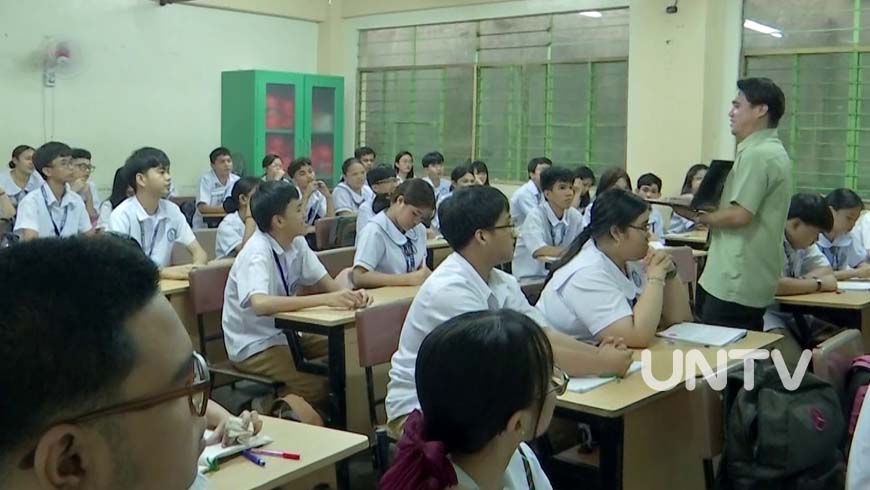
A pilot literacy assessment by the Department of Education has revealed that 87% of grade 11 learners, equivalent to 1.3 million students, cannot yet read on their own and still require constant guidance from a teacher, parent, or another person.
The findings were contained in a DepEd report submitted to the Second Congressional Commission on Education, or EDCOM 2, during a hearing of the House Committee on Basic Education, painting a troubling picture of the state of education quality in the country.
Based on the March 2026 pilot run of the Senior High School Literacy Assessment, only 12.58 percent of the 1.4 million grade 11 students are considered independent readers. The remaining 1.3 million fall under the categories of instructional and frustration readers.
Frustration readers are those who struggle to read and comprehend, while instructional readers are those who can read but still need guidance. Grade 11 students are typically between 16 and 17 years old.
"Only 12 percent of learners in the 11th grade level are independent learners or readers that are fully able to comprehend and understand as expected from their grade level what the outcome or information supposed to be," EDCOM 2 Chief Legislative Officer Atty. Simoun Salinas said.
(Tanging 12 porsyento lamang ng mga mag-aaral sa ika-11 baitang ang mga independiyenteng mag-aaral o mambabasa na ganap na kayang maunawaan at intindihin ayon sa inaasahan ng kanilang antas kung ano ang resulta o impormasyong dapat nilang malaman.)
House Committee on Basic Education Chairperson and Pasig City Rep. Roman Romulo said DepEd must address the problem through the curriculum, stressing that the issue goes beyond the proposed shift to a three-term school calendar expected to be implemented in 2026 and 2027.
"Yung curriculum ba nila, whether 3 semesters o 4 quarters, kailangang matugunan nila yung issue of quality of education, yung reading comprehension, kasi yun talaga ang issue," Romulo said.
ACT Teachers Partylist Rep. Antonio Tinio argued that the data is proof of the failure of the K to 12 program.
"Systemic yung problema, hindi pwedeng sabihing isang factor lamang ito, kundi yung buong sistema mismo at yung mga incentives at all levels, from the individual, from the teacher level, to the school level hanggang sa buong sistema, yun ang lumikha ng ganitong sitwasyon. Basically para magtuloy-tuloy ang takbo ng sistema, kailangang ipasa, pero ang resulta, kalakhan ng guma-graduate ay wala yung competencies na kailangan ng isang senior high school graduate," Tinio said.
Romulo called on DepEd to conduct a thorough internal study and discussion to address the core problem of reading comprehension, saying it is time for the department to come forward with its own concrete solutions.
"Nakita naman natin, karamihan ng suggestions ay nanggaling from policymaker, third party, so siguro it's time for DepEd to tell us, 'we appreciate po naming lahat ng ginagawa at suggestions ninyo, pero di kaya ng DepEd na maimplement lahat yan, ang kaya ng DepEd para malutas ang functional literacy.' Yun ang kailangan nating marinig," Romulo said.















.png)
.png)