


%201.svg)


Emergency Hotline:
(+63) 2 911 – 8688


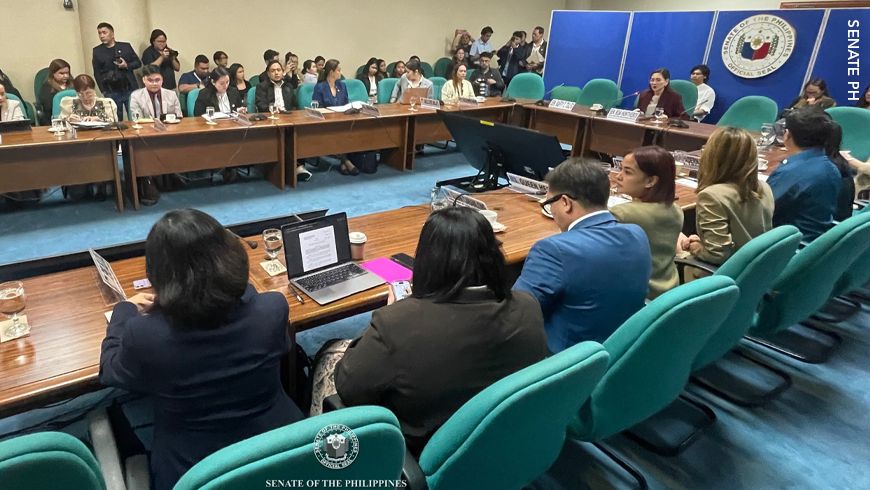

The Senate Committee on Women, Children, Family Relations, and Gender Equality, in a joint hearing with the Committee on Justice and Human Rights, tackled the Department of Education’s (DepEd) handling of sexual harassment cases involving teachers and school officials on September 5, 2025 (Thursday).
During the hearing, Senator Risa Hontiveros asked DepEd Assistant Secretary Georgina Ann H. Yang about the status of sexual harassment complaints filed against educators since the passage of the Safe Spaces Act, which lawmakers are seeking to amend.
“In 2022, there were reportedly 70 complaints of sexual harassment received by the department. Pwede po bang malaman ano na ang status ng complaints na mga iyon?” Hontiveros inquired.
Asec. Yang assured the committee that under the leadership of Secretary Sonny Angara and with Usec. Filemon Ray Javier, heading the legal services, the DepEd is actively addressing all such cases.
“Some of these (cases) have been aging na, years na inabutan pero and lahat po ay naaksyunan.” Yang said.
She emphasized that the DepEd is prepared to provide the committee with the status report on these cases as they remain committed to protecting learners not only inside schools but also online, particularly amid efforts to strengthen internet connectivity in all public schools.
“Currently, we are conducting classroom-based discussions regarding OSAEC (Online Sexual Abuse and Exploitation of Children) and CSAEM (Child Sexual Abuse and Exploitation Materials).”
Senator Hontiveros pressed further, raising the issue of complaints filed by the Samahan ng Progresibong Kabataan (SPARK) regarding incidents at the Philippine High School for the Arts (PHSA). The group claimed that despite allegations of abuse, no administrative or criminal cases were filed, allowing the alleged perpetrator to freely roam the campus grounds after resigning.
“Nananatili ‘yung tanong, hindi ba ‘yan naging failure ng PHSA sa pagprotekta sa estudyante nila?” Hontiveros asked.
The Senate hearing continues as lawmakers push for stronger accountability and reforms to safeguard students from sexual harassment and abuse in schools
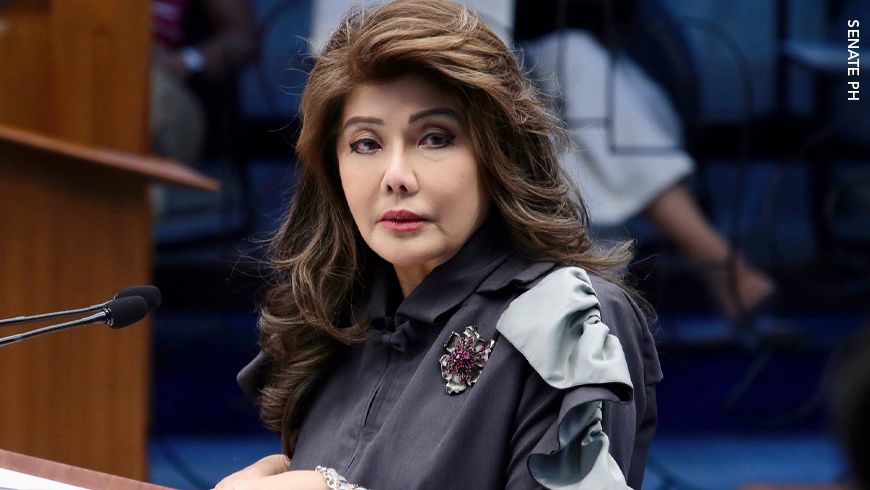
Senator Imee Marcos on Tuesday, September 2, 2025, raised serious concerns in a press briefing, claiming that the administration is pursuing a series of political maneuvers to sideline Vice President Sara Duterte and her allies ahead of the 2028 elections.
According to the presidential sister, the administration’s “Plan A” was the People’s Initiative for Charter Change (ChaCha), which she alleged failed to gain traction. “Plan B,” she said, was an impeachment attempt against the Vice President, also unsuccessful. Now, she warned that “Plan C” is underway—installing Justice Secretary Jesus Crispin “Boying” Remulla as Ombudsman to target Duterte and her supporters.
“Nagkakagulo sa Ombudsman dahil hindi sila nagtagumpay sa PI [People’s Initiative]… hindi rin sila umubra sa impeachment kaya narito na tayo ngayon. Ipipilit nila na si Boying [Remulla] ay maging Ombudsman para ipakulong si VP Inday Sara para bago maging 2027. At hindi lang si Inday Sara kundi lahat ng mga Duterte, kaalyado ng mga Duterte, at baka pati ako…” Marcos said, stressing that these efforts come while Filipinos continue to suffer from floods, corruption, and lack of government action.
Marcos revealed that she had already filed a case with the Ombudsman last May 2 after learning of what she described as the administration’s blueprint. She emphasized that she would not allow political persecution to proceed unchecked.
“Kung hindi kayo titigil sa pamumulitika, mag-asaran tayo. Hindi ko din kayo tatantanan,” she warned.
In a pointed remark, Marcos also criticized the institution’s role in politics:
“Ang OMB [Ombudsman] ay opisina, hindi parlor.”
The senator’s statements add to the growing political tension between the Duterte camp and the current administration, underscoring divisions ahead of the midterm political landscape and the upcoming 2027 elections.
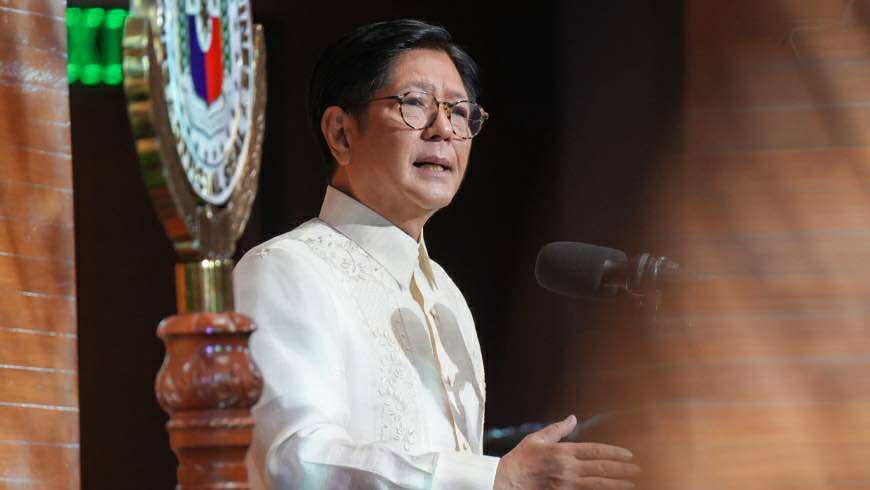
President Ferdinand “Bongbong” Marcos Jr. delivered his fourth State of the Nation Address (SONA) on July 28, 2025. And here’s the list of the promises laid out by the President;
1. Prioritizing Scholarships for 4Ps and Low-Income Families
“Ang mga anak ng benepisyaryo ng 4Ps at Listahan ay bibigyan ng prayoridad sa TESDA at college scholarships sa susunod na tatlong taon”
President Marcos promises to prioritize the families and children included in the government’s Listahanan database to stop intergenerational poverty. Providing them with easy access to the scholarship programs of the government.
2. Livelihood Support for 2.5 Million Families through Microenterprise
“We will provide training and capital so that poor families can start their own microenterprises.”
The President aims to empower Filipinos to become job creators by providing livelihood training and start-up capital, enabling them to establish small businesses in collaboration with the Department of Labor and Employment (DOLE), the Department of Trade and Industry (DTI), and the Department of Social Welfare and Development (DSWD).
3. Expansion of TESDA and Technical-Vocational Education
“Dumami ang TESDA scholarships. Sa 2024, higit sa 200,000 ang nadagdag.”
In relation to the first two promises of the President, PBBM proudly reported that more than 200,000 new TESDA scholarships were awarded in 2024, and he promised that this will continue under his administration. He also noted that Technical-Vocational Education and Training (TVET) will extend and be integrated into the Senior High School curriculum to allow the students to graduate with TESDA National Certificates (NC II or III) in fields such as Agribusiness, Electrical Installation, Caregiving, Graphic Design, and Bookkeeping.
4. Strengthening Food Security and Lowering Prices
“Ang layunin ay murang pagkain, sapat at ligtas para sa lahat.”
President Marcos recognizes the rising global inflation and its drastic effect on the Filipinos, including in his plan to urgently make basic food commodities affordable. His administration will continue to invest in cold storage and post-harvest facilities, farm-to-market roads, irrigation systems, and subsidies for farmers and fisherfolk to boost local production, reduce dependence on imported products, and ensure that the food is accessible, safe, and reasonably priced for all Filipinos.
5. Expanding Digital Connectivity Nationwide
“Connectivity is key to progress.”
PBBM acknowledges that the digital divide is a barrier to inclusive growth. He pledged to continue expanding internet connectivity not just in the urbanized areas but also in the geographically isolated and disadvantaged areas (GIDAs). To ensure that every Filipino will have access to online learning, telehealth, remote work, and digital services, regardless of location, his administration will continue to invest in fiber optics, satellite, and 5G rollout. They will forge public-private partnerships to improve digital infrastructure and equip public schools, hospitals, and barangays with stable internet.
6. Massive Infrastructure & Job Creation under Build Better More
“Walang iwanan sa pag-unlad. Kailangan mas marami pa tayong gawin.”
Under the President’s administration, the Build Better More program, he promised that the government would complete flagship infrastructure projects such as Railways (North-South Commuter Railway, Mindanao Railway), Expressways and bridges, Flood control systems, and Airports and seaports. PBBM expected that this would generate hundreds of thousands of jobs while also improving logistics, connectivity, and disaster resilience.
7. Education Reform & Learning Recovery
“May learning poverty tayo sa Math, Science, Reading… kailangan tugunan ito ngayon.”
President Marcos admitted that there are setbacks in basic education, and he sees the need for urgent curriculum reforms. The MATATAG Curriculum, together with the ARAL Program, will increase its scope to enhance the reading and mathematical abilities of students. They will provide a more intensive teacher training, develop mother-tongue-based learning materials, digital platforms for remedial and advanced learners, and strengthen Science, Technology, Engineering, and Math (STEM).
8. Peacebuilding through Amnesty and Reintegration
“We offer peace through amnesty… Let us move forward as one nation.”
President Marcos expressed his support for the previous members of rebel groups and insurgents by offering amnesty programs. As part of the Enhanced Comprehensive Local Integration Program (E-CLIP), he vowed to provide them with skills training and TESDA certification, startup livelihood kits, transitional housing, and financial assistance.
9. Strengthening Universal Health Coverage (UHC)
“Sa ilalim ng PhilHealth at UHC Law, dapat makapiling ang serbisyong medikal ng bawat Pilipino.”
President Marcos emphasizes that every Filipino needs to receive high-quality medical services. His health agenda includes expanding PhilHealth coverage and benefits, building and upgrading barangay health stations, hiring more doctors, nurses, and barangay health workers, and partnering with LGUs to make preventive and primary care more accessible.
These are part of the national effort to fulfill the Universal Health Care Law, focusing on underserved and far-flung areas.
10. Accountability for Corruption and Misuse of Public Funds
“Hahanapin at papanagutin ang mga pumalpak at nagpabaya, lalo na sa mga proyektong tulad ng flood control, na pinaggastusan pero walang epekto.”
PBBM took a firm stance regarding government corruption and inefficiency by promising to investigate all officials and agencies that misused public funds, particularly in major infrastructure undertakings, including flood control systems.
The President recognized the public dissatisfaction, which stemmed from costly flood mitigation initiatives that failed to reduce flooding, alongside construction delays and low-quality work, and unclear budgeting and bidding operations.
“We continue to promote the installation of solar panels and adopt Net Metering systems to allow consumers to sell back excess electricity to the grid.” — Pres. Ferdinand Marcos Jr.
Net metering allows utility customers to generate their own electricity cleanly and efficiently. It allows individuals and businesses with renewable energy systems, like solar panels, to send excess electricity back to the grid and receive credit on their electricity bills.
“We are building our Digital Public Infrastructure, such as the eGov App, to streamline government services.” — Pres. Ferdinand Marcos Jr.
This refers to a tech-based system that allows people to access government services online (e.g., IDs, certificates, bills).
It saves time, reduces corruption, and makes services more accessible.
“We are reviving the iconic Love Bus as part of our clean and efficient public transport plan.” — Pres. Ferdinand Marcos Jr.
The “Love Bus” is a term for government-run buses with modern, often electric features, aimed at improving public transport. It was first introduced in the 1970s. It is part of a nostalgic rebranding to modernize and promote eco-friendly commuting.
“We are investing in cold chain facilities to preserve the quality of agricultural produce.” — Pres. Ferdinand Marcos Jr.
These are refrigerated storage and transport systems used to keep food (especially fish, meat, and vegetables) fresh from farm to market. It reduces spoilage, helping farmers and ensuring food safety.
“…simplified business registration through Green Lanes…” — Pres. Ferdinand Marcos Jr.
Green lanes fast-track channels for local and foreign businesses to register and operate. This will attract investment and boost the economy.
