


%201.svg)


Emergency Hotline:
(+63) 2 911 – 8688


MANILA—The PNP Responders locked in a convincing 67-54 victory over the Senate Defenders during the UNTV Cup Season 12 showdown at the Paco Arena on June 21.
The high-stakes triumph officially propels the Responders into the second round of elimination.
Unfortunately for the Senate Defenders, the decisive defeat marks the end of their road this season, knocking them completely out of the tournament.
Anton Tolentino anchored the Responders' explosive offense to earn the well-deserved Best Player of the Game honors.
Tolentino put on a clinical scoring display by contributing 20 points and recording 1 assist to systematically break down the Senate's defense.
His hot hand kept the Responders firmly in control throughout the match, securing their pathway to the next stage of the competition.
Reflecting on his dominant performance, Tolentino credited his support system on the floor for giving him the ultimate green light.
“Sabi ng coaches saka teammates ko, tumira lang daw ako eh. So, yun naman tumatama naman kaya awa ng Dios, shumu-shoot,” Tolentino shared.
With momentum on their side and Tolentino leading the charge, the PNP Responders confidently march forward into the next round.

QUEZON CITY—The Philippine National Police (PNP) clarified on June 22 that it has not received any official communication or court order regarding a supposed arrest warrant against Senator Rodante Marcoleta.
The statement comes after Marcoleta claimed he received information about a looming arrest tied to complaints over the alleged non-disclosure of ₱75 million in campaign donations during the 2025 midterm elections.
Speaking at a press briefing at Camp Crame in Quezon City, PNP information chief and spokesperson Col. Allen Rae Co directly addressed the speculation, stating, "As of now, the PNP has not received any official communication regarding said warrant."
The police leadership emphasized that the force operates strictly within legal parameters and will not take action based on hearsay.
In an official statement, PNP chief Gen. Jose Melencio Nartatez Jr. made it clear that the police would strictly observe legal protocols and would not implement an arrest without a direct mandate from the courts.
"The Philippine National Police has not issued any special operational directive concerning Senator Marcoleta, and we do not act on rumors or unverified information," Nartatez stressed.
Nartatez further underscored that the PNP respects the separation of powers and recognizes the exclusive authority of the judiciary in legal proceedings.
He reiterated that the police force remains a neutral enforcement body that will only move when properly deputized by a judge.
The PNP chief concluded that the organization "recognizes the exclusive authority of the courts to issue warrants and will act only when required by law."

TACLOBAN CITY—The Department of Education (DepEd) strongly condemned a horrific school shooting at San Jose National High School on June 22, which left 3 learners dead and 5 others injured.
Central Office officials immediately swarmed the campus alongside regional and division personnel to secure the premises and work directly with law enforcement.
Labeling the tragedy a "high-alert situation," the department mobilized swift emergency measures to stabilize the campus environment.
“We strongly condemn this act of violence and extend our deepest condolences to the families of the victims, as well as our earnest prayers for the swift recovery of those who were injured,” the DepEd stated.
“Our Central Office officials, alongside regional and division office personnel, are actively on the ground, coordinating closely with school authorities and law enforcement to secure the premises and ensure safety, security, and protection.” DepEd added.
To counter the immediate trauma of the attack, DepEd is partnering with fellow government agencies to provide urgent medical aid and mental health services to the survivors.
Authorities are simultaneously launching a full-scale investigation into the breach of school safety.
“To address the immediate emotional toll of this tragedy, the Department is working hand-in-hand with relevant government agencies to deploy critical medical assistance and appropriate psychosocial interventions for the affected learners and personnel,” the department highlighted, while pleading with the public to protect the privacy of the affected children during the ongoing investigation.

PASAY CITY—The Senate impeachment court officially resumed its pre-trial conference today, June 22, marking a critical step forward in the historic impeachment case against Vice President Sara Duterte.
Guided by Senate Secretary and Clerk of Court Renato N. Bantug Jr., alongside Deputy Clerks Atty. Marivic Laurel-Garcia and Atty. Maria Valentina Cruz, the session focused heavily on the formal marking of documentary evidence.
This legal groundwork directly targets Articles 1 and 2 of the active impeachment complaint filed against the Vice President.
Legal heavyweights from both sides converged at the Senate to anchor their positions for the upcoming trial.
Batangas Representative Gerville Luistro spearheaded the prosecution panel sent by the House of Representatives, while Attorney Shiela Sison led the defense team representing Vice President Duterte.
According to Bantug, all evidence marked during Monday's proceedings will be integrated into a comprehensive pre-trial order, which will soon be submitted to form the structural backbone of the full Senate impeachment court hearings.
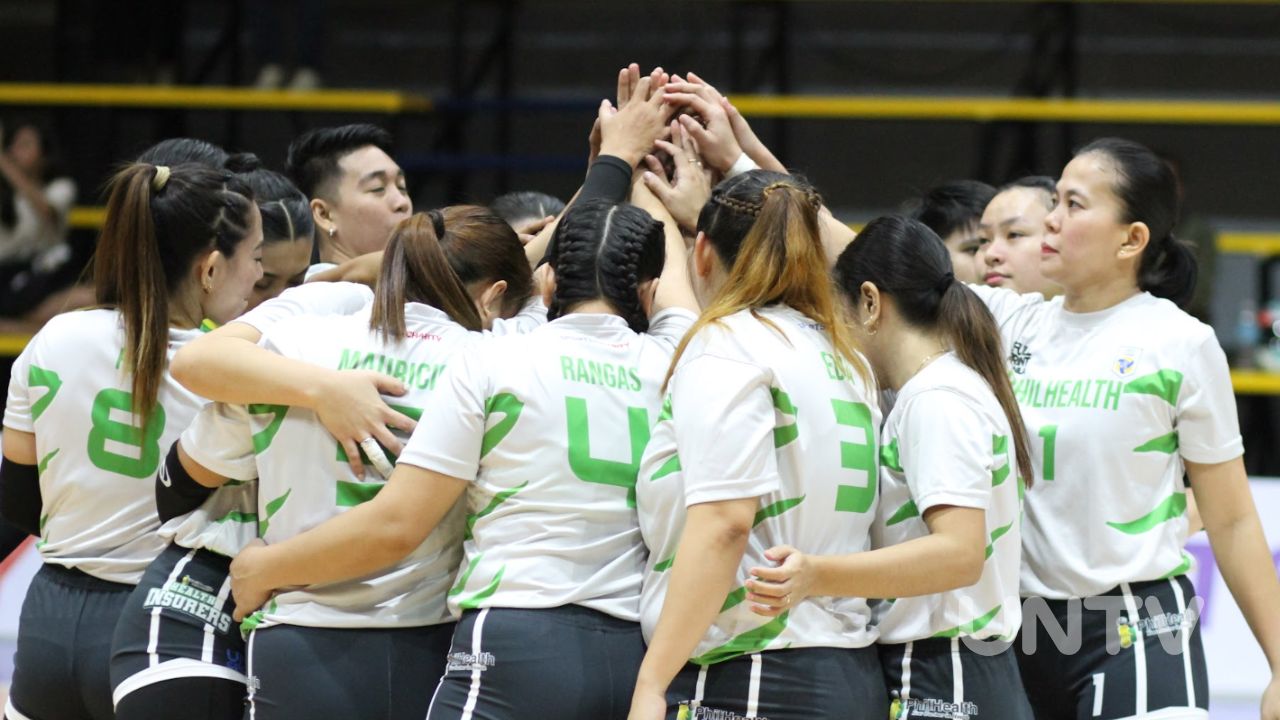
MANILA—In an absolute cardiac arrest of a match, the PhilHealth Health Insurers pulled off a monumental upset, dragging the defending champion PNP Lady Patrollers through a grueling five-set war before claiming a nerve-racking victory on June 17 at the Paco Arena.
Refusing to back down against the league’s champion, PhilHealth traded heavy blows in an exhausting see-saw battle, trading sets until a dramatic, extra-points 16-14 finish in the deciding fifth set sealed the triumph.
The final scoreline of 20-25, 25-11, 25-20, 17-25, 16-14 was a testament to a gritty squad that refused to let their championship dreams die.
At the epicenter of this historic earthquake was Criselda Rondina, who dominated the must-win game to breathe life back into PhilHealth’s campaign.
Earning Player of the Game honors, Rondina unleashed a furious 18-point performance built on 17 devastating attacks and a crucial ace.
"I believe po, the ball is round. So, lagi po kami sinasabihan ni Coach na dapat established po kami, strong mind, strong body, and strong heart. Yun po talaga yung pinanghahawakan namin kunglayout bakit nakuha po namin yung win today." Rondina shared post-game, reflecting on the team's unwavering spirit.
With this gritty win, PhilHealth breathes a sigh of relief as they improve to a 1-1 standing in the single round-robin semifinals, keeping a very decent chance of booking a historic, first-ever ticket to the Finals if they can take down BFP in their next encounter.
Meanwhile, a devastated PNP side finds themselves staring into the abyss with a disastrous 0-2 semis record.
Having fought relentlessly to reach the Finals since Season 2 of the UVL, the Lady Patrollers are now on the brink of missing the championship round for the first time in two seasons—a catastrophic fate that will become reality if they falter against COMELEC on June 24.
