


%201.svg)


Emergency Hotline:
(+63) 2 911 – 8688




The famous girl group KATSEYE is back with a wild new pop song called "Animal." Co-written by superstar Ed Sheeran, the song is all about letting go and showing your wild side.
The new song is already a massive hit, racking up 25 million views on YouTube and 9.3 million plays on YouTube Music since its release on July 27.
The song comes with a stunning music video that shows the band members switching between different styles and features a surprise appearance by famous actress Demi Moore.
Band member Megan shared her excitement, calling the song, the video, and Demi Moore "awesome." The video debuted on big screens, including MTV and billboards in Times Square.
KATSEYE is also showing extra love to their fans in the Philippines.
The group serves as global ambassadors for the popular fast-food chain in the country, and they even put the brand in their new music video.
The members also had fun trying to guess Tagalog words in a recent video feature. Filipino member Sophia said she feels very proud to see her groupmates learning about her culture.
This exciting new track starts a fresh chapter for the group called the WILD era, which they first showed off at the Coachella music festival.
Fans can watch a special movie about the group in theaters starting August 12. Their highly awaited new album, WILD, will officially come out on August 14 through HYBE and Geffen Records.

Vice President Sara Duterte released a strong statement on July 30 about the growing problem of gun violence in the Philippines.
She said that violent crime has become "alarmingly commonplace" and is a real danger that people face every day.
Duterte explained that this is a serious issue, not just fake news or internet gossip. "Gun Violence is a reality not just a clickbait," she wrote, adding that it "reflects the daily reality faced by Filipinos on the streets wondering whether they can go home safely."
The Vice President made it clear that the problem is bigger than just political talk or her family name.
She pointed out that many people are now used to seeing bad news every day because shootings, stabbings, and kidnappings happen so often.
According to Duterte, these crimes take away the peace of mind that every citizen should have. She described the problem plainly, stating, "This is not merely a 'Duterte and kill, kill, kill,'" and added, "The reality is - Filipinos do not feel safe."
To fix this, Duterte demanded that the government take quick action to protect the public and the youth.
She said that keeping people safe should be the main goal of the country, not just something people talk about briefly in the news.
"The safety of the Filipino people must be treated as a national priority not a mere single line of news item," she stated.

Vice President Sara Duterte fiercely condemned the ongoing detention of her father, former President Rodrigo Duterte, during a fiery speech in The Hague, Netherlands on July 29, 2026.
Speaking before a crowd just miles away from the International Criminal Court (ICC), the Vice President openly expressed her fury over the arrest of the former leader, who faces grave charges of crimes against humanity stemming from his administration's controversial war on drugs.
Duterte did not hold back her emotions, framing the arrest as an outright violation of Philippine sovereignty and an attack on her family.
“Ako, anak, kapamilya, syempre magagalit ako sa ginawa sa aking ama at sa isang Pilipino na ninakaw, kinuha, kinidnap doon sa Pilipinas para ihatid diyan sa ICC,” she declared, directly challenging the international court's jurisdiction over her father.
The Malacañang Palace immediately countered the Vice President’s accusations on Thursday, firmly deflecting any blame away from the current administration.
Palace press officer Claire Castro clarified that President Ferdinand Marcos Jr. had no hand in the elder Duterte's apprehension, emphasizing that the chief executive is merely upholding international legal frameworks and statutory obligations.
Castro took a direct swipe at the former president, asserting that his current legal predicament is entirely of his own making.
“Hindi ito kasalanan ni Pangulong Marcos Jr., tumutupad lang ang Pangulo sa batas. Kung meron dapat sisihin, walang iba kundi ang kanyang sariling ama. Dahil sa mga pag-amin nito na siya mismo ay pumatay at nagpapatay,” Castro stated on July 30, shifting the accountability back to the former leader's public admissions.
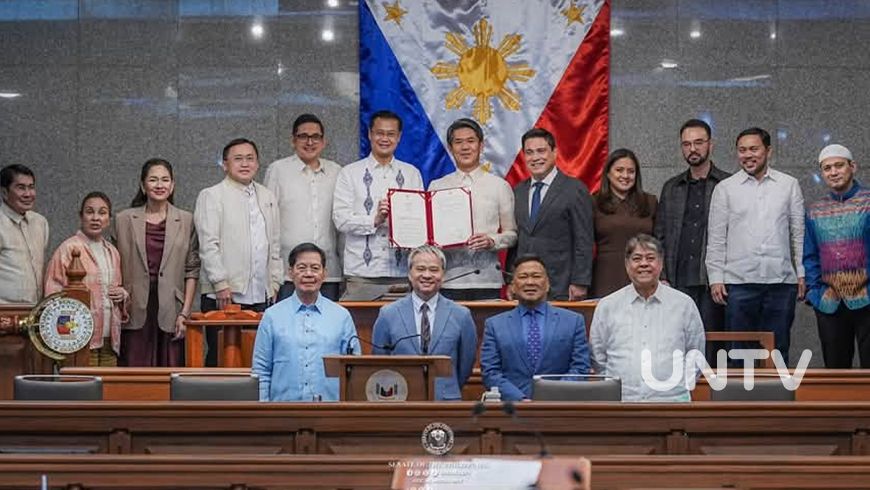
PASAY CITY—The Senate of the Philippines officially commemorated seven decades of deep diplomatic ties with Japan by unanimously adopting Resolution No. 55 on July 29, 2026.
The resolution formally recognizes the robust 70-year partnership between the two nations since they first normalized diplomatic relations on July 23, 1956.
Lawmakers lined up to praise Tokyo as a crucial ally in infrastructure, economic development, security, and disaster management.
Majority Leader Juan Miguel "Migz" F. Zubiri sponsored the resolution following an official visit to Japan, hailing the East Asian nation as one of the Philippines' most ardent supporters.
Zubiri highlighted the immense contributions of the partnership to local trade and defense, expressing high hopes for the alliance moving forward.
"I am confident that we can parlay this 70 years of friendship with this golden age of Philippines-Japan relations into a shared future of peace and prosperity," Senator Zubiri said.
Co-sponsors quickly echoed Zubiri's sentiments, emphasizing how Japan's steadfast assistance has driven the country’s economic recovery.
Deputy Majority Leader Joseph Victor "JV" Ejercito pointed out the durability of the alliance through global shifts.
“The Philippines-Japan relations have stood the test of time and circumstance…As we embark on this new chapter of this strategic partnership, we celebrate not just our shared past, but the limitless potential of our future,” Senator Ejercito stated.
Senator Christopher Lawrence “Bong” Go likewise lauded the Japan International Cooperation Agency (JICA) for delivering vital aid to Mindanao, adding,
"It is a relationship built on trust, strengthened by shared values, and sustained by our common aspiration for peace, stability, and inclusive development."
Other lawmakers underscored the peaceful and transformative nature of the bilateral relations.
Senator Robinhood Padilla drew a contrast between the alliance and ongoing global tensions, noting,
“Sa isang mundong patuloy na nahaharap sa hidwaan at hindi pagkakaunawaan, ang 70-taong pagkakaibigan ng Pilipinas at Japan ay nagpapaalala sa atin na may ibang landas na maaaring tahakin: Ang landas ng dayalogo, pagkakaisa, at kapayapaan.”
Meanwhile, Senator Loren Legarda detailed how Japanese support physically built Philippine progress through projects like the Metro Manila Subway, asserting that:
"Every railway completed, every community made safer, every opportunity created is a reminder that this partnership improves the everyday lives of our people."
Senate leadership closed the session by cementing the country's gratitude to its long-time ally.
Senate President Win Gatchalian called Japan a "very important development partner," affirming that "Seventy years of friendship is indeed a milestone, and Japan has been a very important development partner of the Philippines."
Senator Camille Villar concluded the chamber's tributes by highlighting Japan's massive role as a top source of development assistance across the archipelago, declaring, “Thank you for your friendship, your guidance, and your unwavering support in strengthening the ties between our two countries. Your service has left a lasting impact, and you will always have a home here in the Philippines.”

PASAY CITY—The Senate fast-tracked critical economic relief measures on July 29, targeting high electricity bills and the struggles of local small businesses.
During a packed plenary session, lawmakers advanced legislative proposals aimed at overhauling the national energy sector while simultaneously reinforcing micro, small, and medium enterprises (MSMEs).
This double-barreled economic push comes as a direct effort to ease the financial squeeze on ordinary citizens and stabilize the foundation of the country's commerce.
Championing the consumer front, Senator Erwin Tulfo called on his colleagues across both majority and minority blocs to dismantle long-standing energy policies that inflate utility bills.
Tulfo actively pressed for measures that examine system loss charges, strip the 12% value-added tax (VAT) from residential power consumers, and abolish the outdated Energy Tax.
He urged the chamber to build an energy sector that is transparent, competitive, and completely fair to the public.
“If we are serious about easing the burden on our people, then we must have the courage to revisit policies that have long been accepted but may no longer be fair,” Tulfo said during his privilege speech.
Complementing the energy push, Senator Bam Aquino anchored the chamber's focus on empowering MSMEs, which remarkably constitute 99% of all registered businesses in the country.
Senators stressed that protecting these small enterprises is vital to navigating the ongoing economic crisis and securing long-term financial stability.
Alongside these heavy economic debates, the Senate also wrapped up its internal business by electing new members to the minority bloc, successfully resuming the reorganization of its standing committees.
