


%201.svg)


Emergency Hotline:
(+63) 2 911 – 8688




Lionel Messi will make his final appearance for Argentina on October 6 in a farewell friendly against Benin at River Plate’s Monumental Stadium in Buenos Aires.
Argentine Football Association President Claudio Tapia announced the send-off for the 39-year-old captain, saying Messi will be given the farewell he deserves in front of supporters in his homeland.
The match will close more than two decades of international football for Messi, who announced his retirement from Argentina duty on August 31 following the 2026 FIFA World Cup.
Tapia described the occasion as the “last tango of Lionel Andres Messi.” Members of Argentina’s 2022 World Cup-winning squad and their families have also been invited to attend the farewell.
Messi ends his international career as Argentina’s record goalscorer and appearance-maker, with 125 goals in more than 200 matches. His major titles with the national team include the 2022 FIFA World Cup and the 2021 and 2024 Copa America championships.
His last competitive international goal came against Egypt in Argentina’s 3-2 victory in the round of 16 of the 2026 World Cup. Argentina went on to reach the final, where it lost 1-0 to Spain.
The Benin match will be the last of three friendlies scheduled for Argentina following the World Cup. The team will first face Bolivia at Cordoba’s Mario Kempes Stadium on September 30 before playing Burkina Faso in Buenos Aires on October 3.
The friendlies also come after FIFA imposed disciplinary sanctions on the Argentine Football Association over incidents during the World Cup.
Argentina was ordered to play its next two home matches at 50% spectator capacity, although one of the two restrictions was suspended subject to a probationary period. The sanctions stemmed from several disciplinary breaches during the tournament, including discriminatory conduct, team misconduct, security issues and the use of a sporting event for a non-sporting demonstration.
Among the incidents examined was the display of a banner asserting Argentina’s claim to the British-administered Falkland Islands following its semifinal victory over England.
With only one of the two attendance restrictions currently active, that sanction is expected to be served before Messi’s October 6 farewell.
Messi will continue his club career with Inter Miami in Major League Soccer after ending his international career with Argentina.
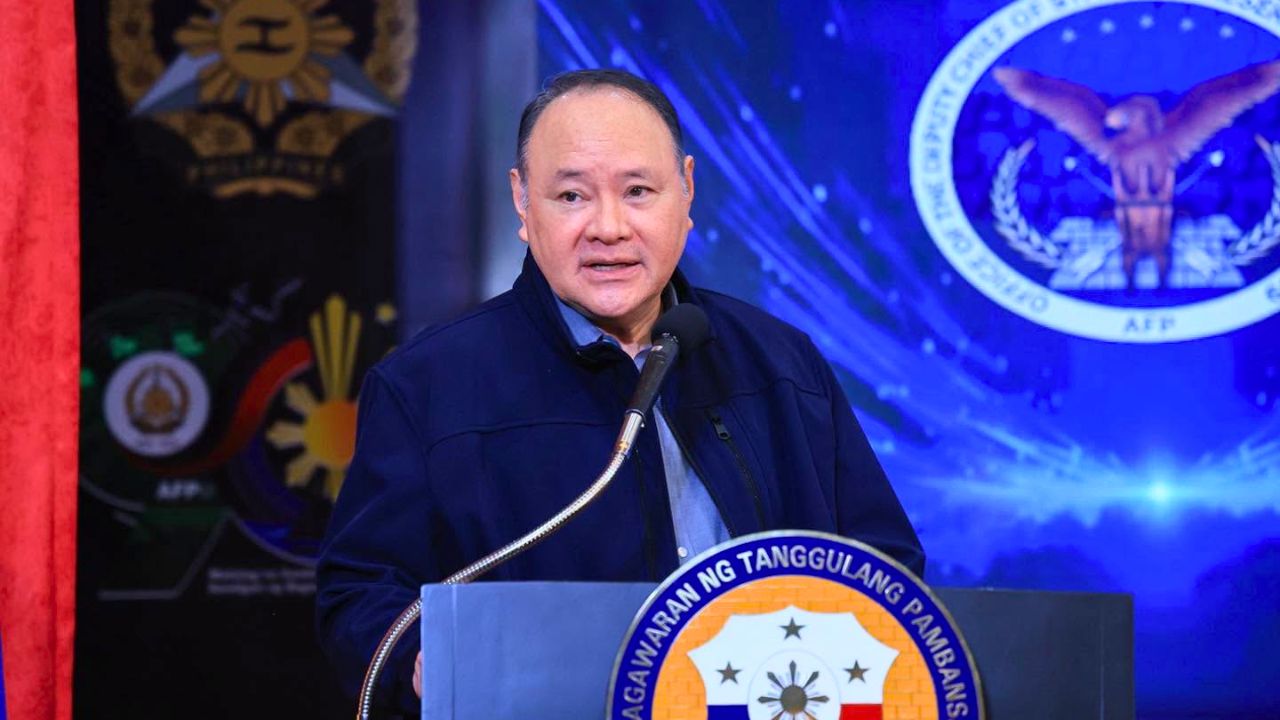
The Philippines needs to invest more in infrastructure, disaster-response mechanisms, and adaptation systems as the country faces increasingly unpredictable and severe disasters, Defense Secretary Gilberto Teodoro Jr. said.
Speaking on Wednesday, September 16, during the final day of the ASEAN Ministerial Conference on Disaster Resilience in Pasay City, Teodoro said the country must strengthen its capacity to deal with disasters and complex emergencies that can have greater impacts on communities.
He pointed to situations such as volcanic degassing combined with heavy rains from the southwest monsoon that can trigger lahar, as well as contrasting weather conditions where one part of the country experiences heavy rainfall while another suffers from drought.
Teodoro said the Philippines must move faster in developing systems and infrastructure that can improve resilience, stressing that such investments are important not only for disaster preparedness but also for broader national development.
He added that the Philippines can learn from the best practices and experiences of other countries in strengthening disaster response.
The statement came as Southeast Asian countries pushed for stronger regional cooperation on disaster preparedness during the two-day ASEAN Ministerial Conference on Disaster Resilience.
President Ferdinand R. Marcos Jr., in a message delivered by Executive Secretary Ralph Recto on Tuesday, called on ASEAN member states to improve early warning systems, strengthen preparedness, and deepen cooperation as disasters become more frequent, interconnected, and costly across the region.
The conference concluded with ASEAN member states adopting the Manila Declaration, which sets directions for regional disaster resilience efforts through 2030 and beyond. The declaration calls for stronger prevention, anticipatory action, monitoring and cooperation among member states.
ASEAN currently comprises Brunei, Cambodia, Indonesia, Laos, Malaysia, Myanmar, the Philippines, Singapore, Thailand, Timor-Leste and Vietnam.
The Philippine government has rejected China’s demand for the removal of the BRP Sierra Madre from Ayungin Shoal, maintaining that Manila never entered into any agreement requiring it to tow away the commissioned Philippine Navy vessel.
The Department of Foreign Affairs said there was no agreement between Manila and Beijing obligating the Philippines to remove the BRP Sierra Madre, rejecting the Chinese Embassy’s claim that the Philippines had repeatedly promised to do so.
The Chinese Embassy made the claim in a September 12 statement, while also accusing the Philippines of carrying out large-scale repairs and reinforcement of the vessel to maintain a permanent presence at the shoal. Philippine officials have rejected Beijing’s assertions.
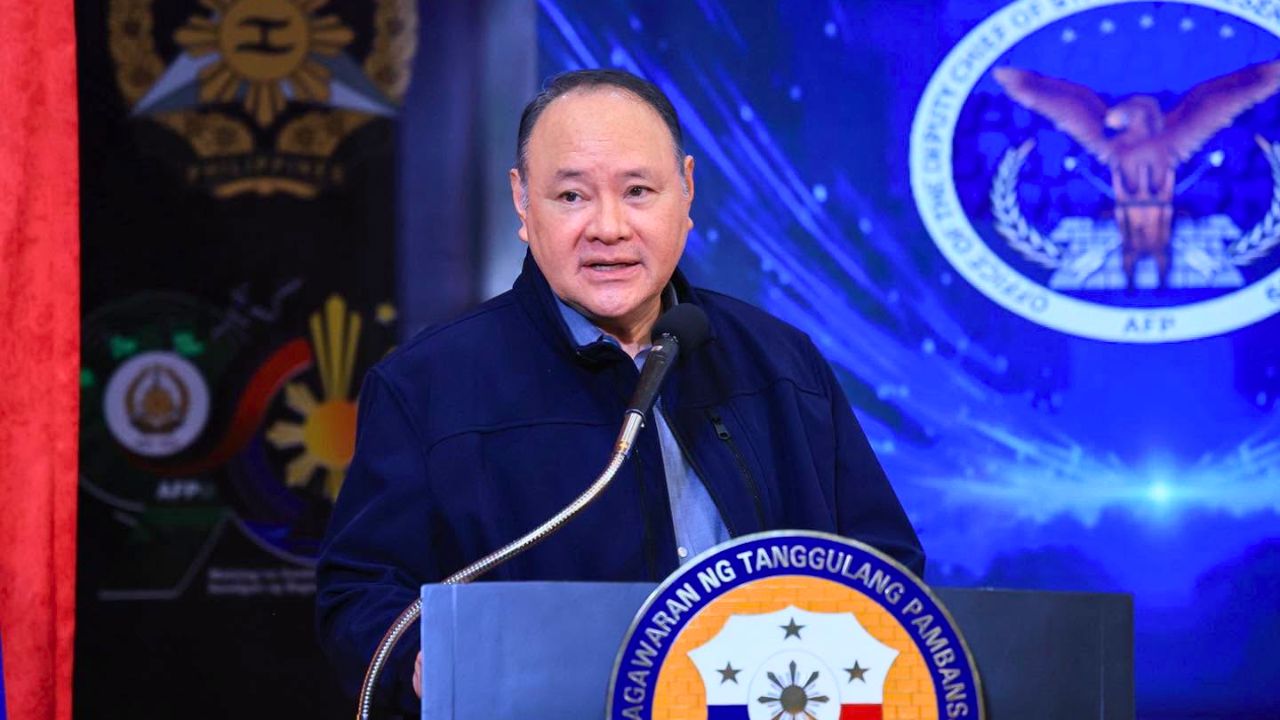
Defense Secretary Gilberto Teodoro Jr. backed the DFA’s position on Wednesday, saying China has no right to demand the vessel’s removal.
“They have no right to say that. So, it is beyond their jurisdiction and beyond any form of intervention under international law,” Teodoro said during a press briefing in Pasay City.
The DFA reaffirmed that Ayungin Shoal lies within the Philippines’ exclusive economic zone and continental shelf under the United Nations Convention on the Law of the Sea and as upheld by the 2016 South China Sea Arbitral Award.
It also maintained that Ayungin Shoal is a low-tide elevation that cannot generate maritime entitlements of its own and cannot be subject to a sovereignty claim. The DFA said China’s exercise of maritime law enforcement powers in the area infringes on Philippine sovereign rights and jurisdiction.
Teodoro said the Philippines should continue exercising the rights granted to it under UNCLOS and international law within areas where it holds sovereign rights or jurisdiction. He also said China cannot disregard UNCLOS while undertaking activities outside its provisions.
The DFA separately rejected China’s characterization of the Philippine Maritime Zones Act, saying the law is an exercise of the country’s sovereign prerogative to establish its maritime zones in accordance with UNCLOS and international law.
It also reiterated that the 2016 Arbitral Award is final and binding on both the Philippines and China, having been issued by a tribunal constituted under Annex VII of UNCLOS, to which both countries are parties.
While maintaining its legal position on Ayungin Shoal and the BRP Sierra Madre, the DFA said the Philippines remains open to dialogue and the peaceful settlement of disputes while continuing to exercise its sovereignty, sovereign rights, and jurisdiction in accordance with international law.
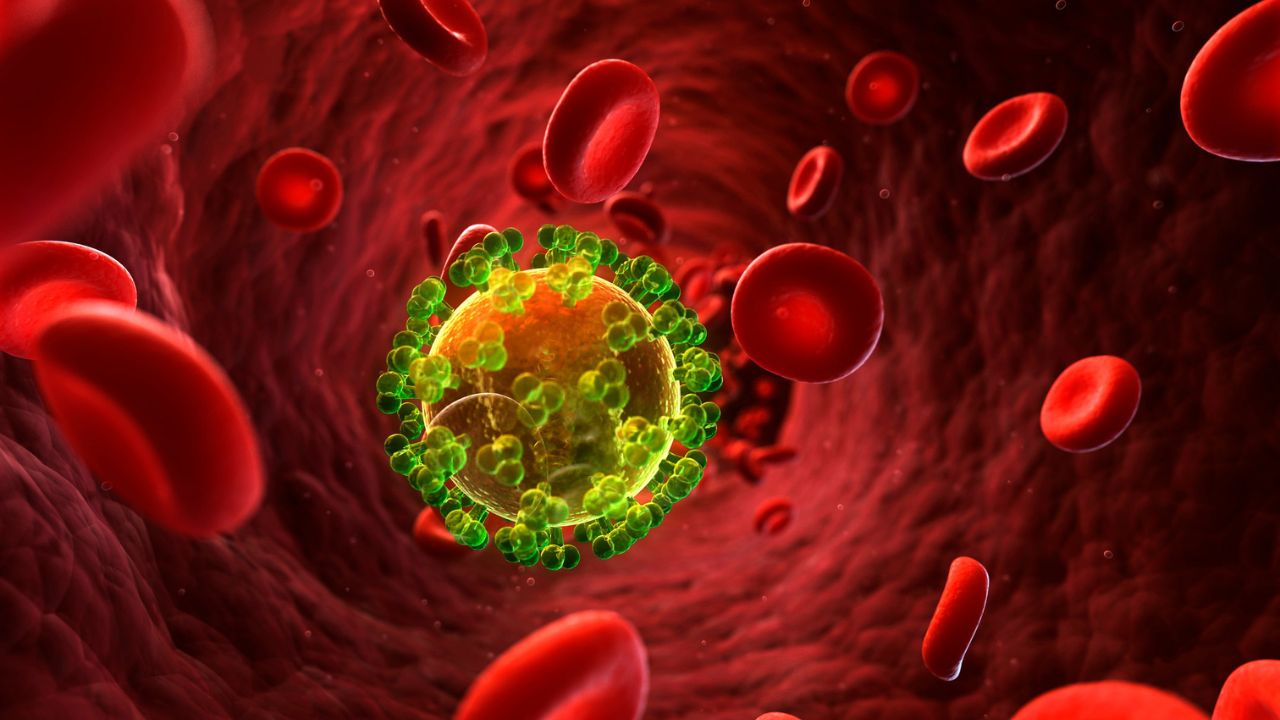
Fiji has declared a national HIV emergency as the Pacific island nation confronts a sharp rise in infections and major gaps in testing and treatment.
Health Minister Ratu Atonio Lalabalavu said the declaration was prompted by the seriousness of the epidemic and the need for a broader, coordinated response involving government, communities and health partners.
Lalabalavu said current government estimates show that one in every 60 adults in Fiji is living with HIV, compared with about one in 167 five years ago. He also said 2,060 new HIV diagnoses were recorded in 2025.
An earlier 2025 surveillance report from Fiji’s Ministry of Health and Medical Services recorded 2,016 newly diagnosed cases, a 27% increase from 1,583 in 2024. The available reports do not explain the difference between the surveillance figure and the 2,060 figure later cited by the health minister.
UNAIDS estimates that about 9,100 people were living with HIV in Fiji in 2025, with only 39% aware of their status and about 22% accessing antiretroviral treatment. The agency said new HIV infections in the country increased twelvefold between 2010 and 2025.
The epidemic has also affected children. A two-month-old baby has been identified as Fiji’s youngest known patient currently living with both HIV and tuberculosis, according to health reporting and Save the Children Fiji.
Injecting drug use has emerged as a major factor in the country’s HIV epidemic. UNAIDS said that among cases where the mode of transmission was known, more than half were linked to sexual transmission while more than 42% were associated with injecting drug use.
The problem has developed alongside Fiji’s growing illicit drug crisis and its reported use as a transit point for narcotics moving toward markets in Australia, New Zealand and parts of Asia. Health authorities have emphasized the risks associated with sharing needles and other injecting equipment.
Fiji recorded 117 HIV-related deaths in 2025, compared with 25 in 2021, according to national health data. Of the 2025 deaths, 17 involved children below age 15.
In response, the government plans to expand HIV testing, treatment and prevention services, including wider access to pre-exposure prophylaxis or PrEP and the introduction of a formal needle and syringe program for people who inject drugs.
UNAIDS has backed Fiji’s intensified response, stressing that the declaration should drive faster testing, treatment and prevention efforts while avoiding stigma and discrimination against people living with HIV.
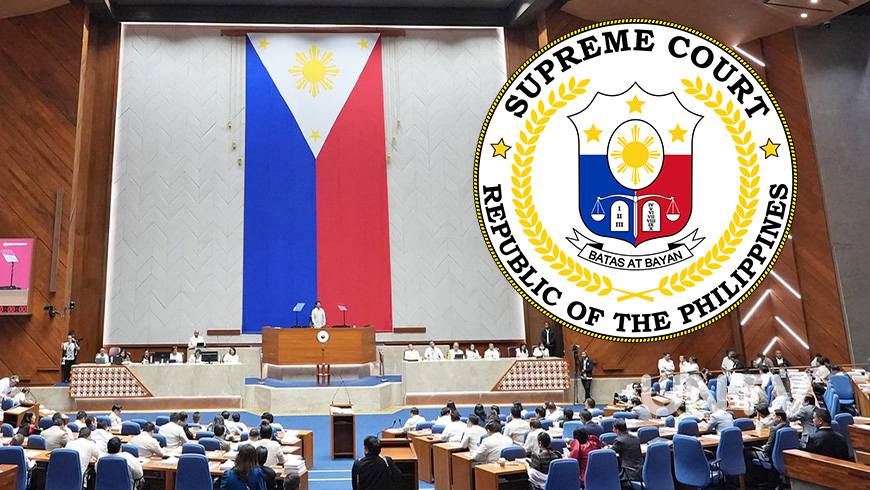
The Supreme Court has directed Congress to enact a law prohibiting political dynasties, ruling that the constitutional mandate cannot be left unimplemented indefinitely.
In a unanimous decision reached during its August 26 session, the Court held that Congress has a mandatory duty under Article II, Section 26 of the 1987 Constitution to define and prohibit political dynasties. It also found that Congress’ failure to pass such a law for 39 years amounted to grave abuse of discretion.
The ruling stemmed from consolidated petitions for certiorari and mandamus challenging Congress’ prolonged failure to pass a law defining and prohibiting political dynasties.
Despite Congress being a co-equal branch of government, the Supreme Court said the prolonged failure to comply with the constitutional mandate is a highly exceptional case warranting a mandamus order.
The Court directed Congress to enact the appropriate anti-political dynasty law “at the earliest opportunity” and with utmost urgency.
Article II, Section 26 of the Constitution provides that the State shall guarantee equal access to opportunities for public service and prohibit political dynasties “as may be defined by law.”
The Supreme Court said the provision is not merely an aspiration but a constitutional command. It stressed that the word “shall” imposes a mandatory duty on the State to guarantee equal access to public service and prohibit political dynasties.
The Court also clarified that the phrase “as may be defined by law” does not give Congress the option whether to prohibit political dynasties. Instead, it gives Congress the authority to define what constitutes a political dynasty and determine the scope of the prohibition.
The Supreme Court took judicial notice of the numerous anti-political dynasty bills filed but left unacted upon since the ratification of the 1987 Constitution.
It also considered studies on the prevalence of political dynasties and their relationship with socioeconomic conditions in the country.
The Court noted that political dynasties remain widespread and have extended even into the party-list system.
Although the Constitution does not specify a deadline for Congress to pass an anti-political dynasty law, the Supreme Court held that the absence of a fixed timetable does not allow lawmakers to postpone their constitutional duty indefinitely.
