


%201.svg)


Emergency Hotline:
(+63) 2 911 – 8688


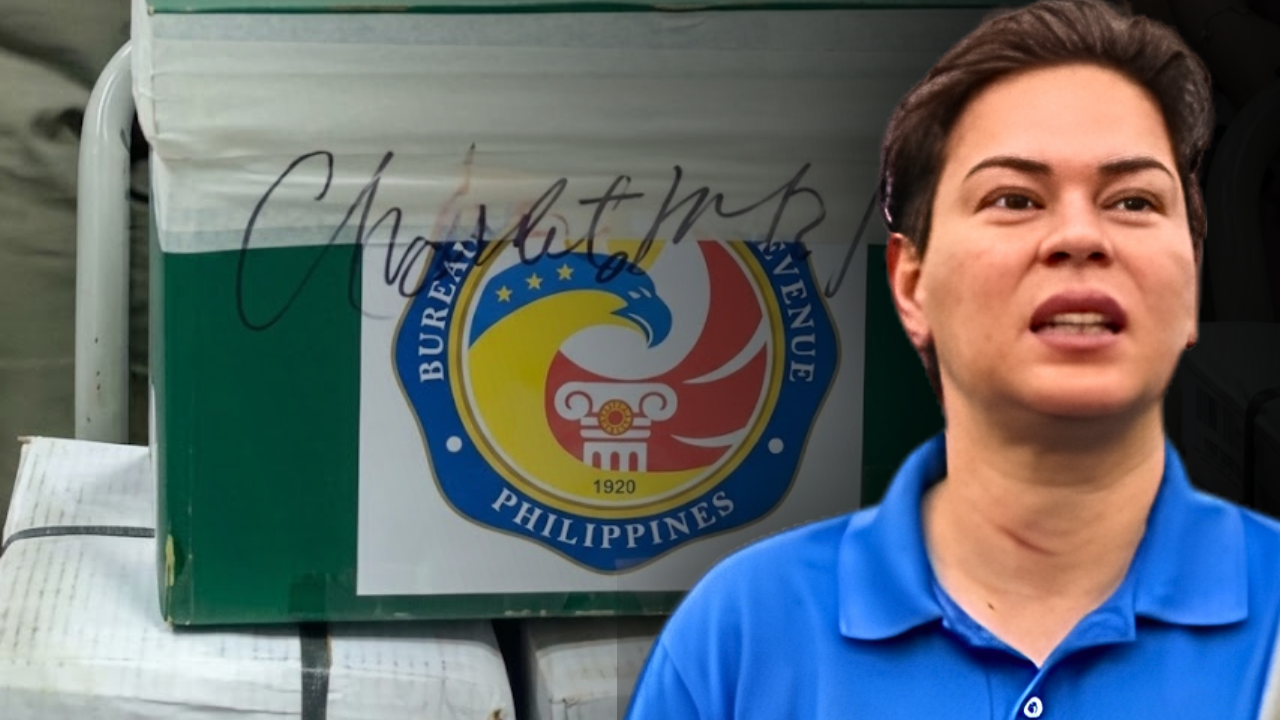

The pre-trial conference of the impeachment case against Vice President Sara Duterte was formally concluded on the evening of June 25.
However, the box from the Bureau of Internal Revenue (BIR) containing the tax records of Vice President Duterte and her husband, Atty. Manases Carpio, remained sealed and unmarked.
Senate Secretary and Clerk of Court Atty. Renato Bantug Jr. declared the conference closed after the marking of evidence related to the Articles of Impeachment was completed.
"There are being no further matters at this stage, this pre-trial conference is hereby concluded," Bantug said.
Lead House Public Prosecutor and Batangas 2nd District Representative Gerville Luistro said the prosecution had wanted the box opened to determine its exact contents.
"This is very relevant because we will be able to know to present before the impeachment court the lawful personal income of the respondent and the spouse, no, and by knowing their lawful income, eh, baka ma-justify nila yung mga acquisitions which will be seen also in the other documents of the prosecution, noh," Luistro said.
(This is very relevant because we will be able to know to present before the impeachment court the lawful personal income of the respondent and the spouse, and by knowing their lawful income, they might be able to justify their acquisitions which will be seen also in the other documents of the prosecution.)
However, the defense reportedly objected strongly to both the opening and the marking of the sealed box, invoking due process.
Luistro pushed back on the objection, saying no rights were being violated by the mere act of marking.
"But nevertheless, the defense registered their vehement objection to the opening. They invoke due process, kahit wala namang nalalabag na karapatan dito, because this is just a marking of exhibit. Ako nagtataka kung ano kayang nakakatakot sa pagmamarka ng seal box. Silyado nga ang pinamamarkahan ng prosecution because they do not want to open the box," she said.
(But nevertheless, the defense registered their vehement objection to the opening. They invoke due process, even though no right is being violated here, because this is just a marking of an exhibit. I wonder what is so frightening about marking a sealed box. It is the sealed box that the prosecution is marking, because they do not want to open the box.)
With the defense's objections on record, Luistro said the question of whether or not to open the BIR box will now be left to the impeachment court to decide.
"Ang pinamamarkahan na lang is yung sealed box, so that we will just be submitting to the impeachment court the issue of whether to open or not the BIR box. But sadly, they oppose the opening of the BIR box. They opposed as well the marking of the sealed BIR box," Luistro added.
(What is being marked now is just the sealed box, so that we will just be submitting to the impeachment court the issue of whether to open or not the BIR box. But sadly, they oppose the opening of the BIR box. They opposed as well the marking of the sealed BIR box.)
For the prosecutors, the contents of the box are considered crucial as these may contain information relevant to the allegations in the impeachment, including VP Duterte's alleged unexplained wealth.
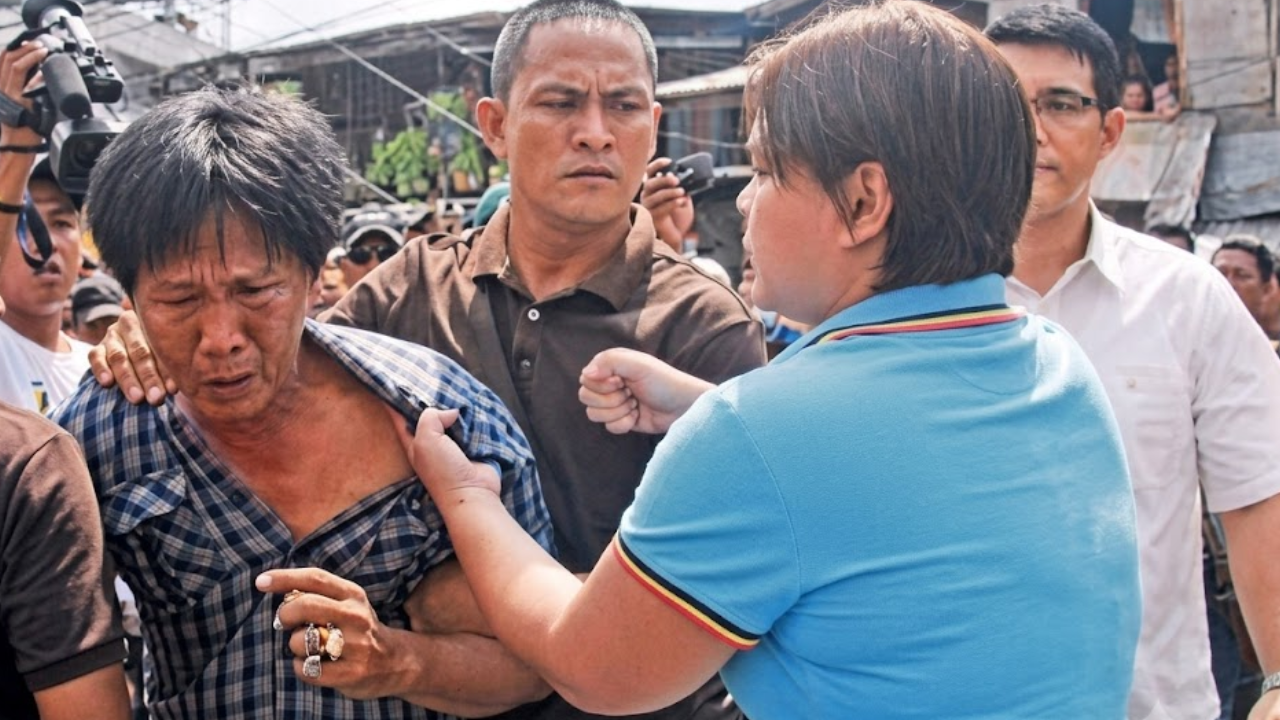
The court sheriff who was allegedly punched by Vice President Sara Duterte when she was still mayor of Davao City has been named as one of the prosecution's witnesses in her impeachment trial.
According to a copy of the prosecution team's pre-trial brief, Abe Andres is among the witnesses for the article involving serious threats against the lives of the President, the First Lady, and former House Speaker.
Andres is identified as the court sheriff who was allegedly punched by VP Duterte during a demolition operation in Davao City. His testimony is intended to establish that the respondent has a tendency to use violence.
A psychiatrist and a relative of the victim of the alleged threats have also been listed as reserve witnesses for the prosecution under the same article.
On documentary evidence, the prosecution has included as reserve evidence the list of firearms registered to VP Duterte with the Philippine National Police. This aims to prove that the respondent owns several firearms, including high-caliber ones, and has the capability and capacity to carry out the threats.
House lead impeachment prosecutor and Batangas 2nd District Rep. Gerville Luistro declined to elaborate on the details of the prosecution's witnesses, saying the public should wait for the senate impeachment court to issue its pre-trial order.
"All possible witnesses of the prosecution were listed already in our Pre-Trial Brief as who these witnesses are, let us all wait for the issuance of the Pre-Trial Order sapagkat kahit nalista yan sa PTB, kung hindi naman incorporate sa Pre-Trial Order then that will not be binding." (because even if it is listed in the PTB, if it is not incorporated in the Pre-Trial Order, then that will not be binding.)
Luistro also reiterated the importance of VP Duterte appearing before the senate impeachment court once the trial begins.
"Appearing before the impeachment court is likewise a constitutional duty which public officials must comply. This is what we meant by public office is a public trust and public officials must be accountable to the people at all times."
Should the vice president fail to appear, this would result in a not guilty plea being entered on her behalf in the impeachment case.
VP Duterte's defense counsel, Atty. Michael Poa, had previously maintained that they themselves would advise their client to appear in court when necessary.
"Kasi parati nating sinasabi na hindi humaharap si Vice President. But what we're doing now is pagharap sa mga alegasyon. What they're pushing for is a physical appearance. So, ang sa atin, kung dumating yung circumstance na kailangan niya humarap, we will be the ones who advise the clients na kailangan niya humarap. At doon natin malalaman kung haharap siya o hindi physically." (Because we always say that the Vice President is not appearing. But what we are doing now is addressing the allegations. What they are pushing for is a physical appearance. So, for our part, if the circumstance arises that she needs to appear, we will be the ones to advise the client that she needs to appear. And that is when we will know whether she will appear physically or not.)

QUEZON CITY — The Social Security System has officially launched the MySSS Card, a dual-function card that serves as both a valid government-issued identification and a fully operational debit card linked to a savings account.
The launch was made in response to a September 8, 2025 directive by Department of Finance Secretary and Social Security Commission ex-officio Chair Ralph G. Recto, calling for faster service delivery to SSS members and pensioners.
SSS President and CEO Robert Joseph Montes De Claro said the MySSS Card replaces the long-standing Unified Multi-Purpose Identification card.
The card is equipped with an EMV chip and is integrated with the Philippine Identification System eVerify and biometric authentication for secure and convenient transactions.
Once a member obtains the card, their benefits, loan proceeds, and other SSS payouts are automatically credited to the linked savings account, removing the need for a separate enrollment process. The card can also be used for everyday transactions including shopping, public transport payments, and online purchases.
De Claro said the card is issued exclusively through SSS partner banks.
RCBC, through its digital platform DiskarTech, serves as the first implementing partner, with Asia United Bank, China Bank, and Union Bank of the Philippines set to join the program in subsequent rollouts.
Card delivery is expected within 15 working days for Metro Manila residents and 20 working days for those in the provinces.
The MySSS Card is open to all SSS members, pensioners, individual claimants, beneficiaries, and representative payees with a permanent SSS number, an active
My.SSS Portal account with updated contact details, and a registration with the Philippine Statistics Authority under the National ID system. Applications are filed online through the My.SSS Member Portal.
Existing UMID cards remain valid.

Filipino millennials and Gen Z workers are facing a growing work-life balance crisis, with recent studies pointing to high burnout rates, long working hours, and commuting as major factors affecting their well-being.
According to the Deloitte 2024 Gen Z and Millennial Survey, 70% of Filipino Gen Zs and 63% of millennials report feeling burned out due to heavy workloads — far above global averages of roughly 45% and 40%.
Deloitte noted that young Filipino professionals face rapid inflation, a high cost of living, and limited access to mental health services, making them especially vulnerable to disengagement.
MindNation's 2024 Well-Being Survey of over 13,000 respondents found that stress among Filipino workers rose from 57% in 2022 to 72% in 2024, while feelings of sadness increased from 34% to 50% over the same period.
The commute adds another layer of strain.
Metro Manila employees spend an average of two to three hours in traffic each way, with most needing an additional hour to prepare and queue for public transport.
A 2026 Asia Pacific Workplace Study by Colliers Philippines found that 80% of employees cite commute time and transport challenges as the top factor influencing their decision to return to the office.
On job priorities, almost 7 out of 10 Filipino employees prioritize stability and work-life balance when choosing a job and are more likely to stay with employers that offer flexible or work-from-home arrangements, according to a JobStreet survey of over 6,000 Filipino workers.
Aon's 2025 Human Capital Employee Sentiment Study further found that 64% of Filipino employees are considering changing employers within the next year.
Despite these figures, the Jobstreet by SEEK 2025 Workplace Happiness Index found that 77% of Filipino employees describe themselves as either "somewhat happy" or "extremely happy" at work, placing the Philippines second in Asia-Pacific for workplace happiness.
The findings reflect shifting workplace priorities, particularly among younger employees who increasingly value healthier work environments and long-term career growth alongside financial stability.
For Filo millennials and Gen Z, the issue goes beyond statistics.
It is about a generation navigating rising costs of living, unpredictable job markets, and a transport system that has yet to catch up with the demands of a growing workforce.
Many are left to choose between career advancement and personal well-being — a trade-off that no worker should have to make.
As burnout rates continue to climb and job-switching intentions rise, the message from the country's youngest workers is becoming harder to ignore: sustainable work is not a privilege. It is a basic expectation.

Back-to-back powerful quakes level buildings in Caracas; acting president Delcy Rodriguez declares state of emergency
CARACAS — Two strong earthquakes — magnitude 7.2 and the other 7.5 struck Venezuela within a minute of each other on Wednesday, sending people fleeing outdoors in the capital Caracas, with emergency crews digging through the rubble of collapsed buildings into the evening.
The magnitude 7.2 foreshock struck near San Felipe, the capital of Yaracuy state, just after 6:04 PM ET. 40 seconds later, it was followed by the larger 7.5-magnitude mainshock, some 23 kilometers southeast of Yumare, also in Yaracuy state.
The quakes are among the strongest to strike Venezuela in more than a century.
State of emergency declared
Venezuela's interim President Delcy Rodriguez declared a state of emergency, as nearly two dozen aftershocks also shook the country. Rodriguez extended her condolences to the families of those killed. She did not specify the number of fatalities.
Security forces were deployed across Venezuela to respond to emergencies given the risk of "many structures" collapsing, according to the Ministry of Communication and Information.
Widespread destruction
Interior Minister Cabello said the quake could be felt in several states, adding that the Altamira neighborhood in Caracas had "alarming situations" with collapsed homes and buildings. He urged people to remain outside as aftershocks could further damage weakened structures.
"We understand that some people may be desperate, but we are acting according to protocols to activate aid and rescue efforts to help those who need it most," Cabello said.
"Be very careful with children and the elderly; call each other and check that no one has been harmed."
Parts of the capital lost power and cellphone signal. Collapsed buildings, toppled electric poles, and debris blocked streets. People evacuated swaying buildings and remained outside for hours, many visibly in shock as they saw entire walls that had collapsed, making furniture visible from the street.
The quakes were also felt in Colombia's Caribbean and northeastern regions, though there were no reports of damage or injuries there. Buildings in Manaus, Belém, and Macapá in Brazil's Amazon were evacuated as well.
Meanwhile, the USGS issued two separate red alerts through its PAGER system, a level it historically issues only once or twice a year.
"Red alert for shaking-related fatalities and economic losses. High casualties and extensive damage are probable and the disaster is likely widespread. Past red alerts have required a national or international response," the USGS alert read.
A police officer in the Chacao municipality of Caracas warned that it was too soon to release any figures on deaths or injuries. The exact casualty toll remains unknown as search and rescue operations are ongoing.
The National Weather Service Tsunami Warning Center initially warned of a tsunami threat to Puerto Rico, the Virgin Islands, and coasts within 300 kilometers of the epicenter. The warning was subsequently canceled. There is no ongoing tsunami threat, according to the US Tsunami Warning Centers.
Information blackout
Venezuela has one of the most restricted media landscapes in the world, ranked 159 out of 180 on the Reporters Without Borders' World Press Freedom Index, making it difficult for residents and concerned relatives abroad to obtain accurate information about the damage and casualties.
Exiled opposition leader Edmundo González said the internet blackout compounded the disaster. "Venezuelans from outside cannot know if their families are well. Those inside don't understand the magnitude of what happened. Uncertainty becomes another layer of anguish," González said.
A public holiday turned tragic
Many Venezuelans were at home when the quakes struck, celebrating a public holiday commemorating an 1821 military victory that helped secure the country's independence from Spain.
Search and rescue operations are ongoing.
Authorities have not yet released an official casualty count. Updates are expected as emergency teams gain access to the worst-affected areas.
