


%201.svg)


Emergency Hotline:
(+63) 2 911 – 8688


MANILA, Philippines — Vice President Sara Duterte’s defense team said it saw no need to cross-examine two Armed Forces of the Philippines officers presented by the prosecution during the 20th day of her impeachment trial.
Defense Deputy Spokesperson Atty. Justin Nicol Gular explained that cross-examination is generally used to test a witness’ credibility, but lawyers may choose to skip it when they find no issue with the testimony presented.
The defense did not cross-examine retired Col. Manaros Boransing II and Col. Magtanggol Panopio, who testified before the Senate impeachment court on Tuesday, September 1.
“If we do not see any issue as to the testimony of the witness… lawyers sometimes do not conduct cross-examination anymore,” Gular said.
Gular added that the testimonies were largely based on documents already presented before the impeachment court.
House prosecutor and Manila 3rd District Rep. Joel Chua, meanwhile, said the decision could be part of the defense’s legal strategy. He noted that cross-examining a witness can sometimes further clarify testimony in a way that may not benefit the questioning party.
Boransing and Panopio were presented by the prosecution in connection with certifications issued by Philippine Army units covering Youth Leadership Summits conducted in 2023.
The two officers testified that no confidential funds from the Department of Education or the Office of the Vice President were received or used by their Army units for the youth summits. Boransing said the activities were funded through Army and local government resources.
Panopio also testified that he was not aware when he issued a certification that it would later be submitted by DepEd to the Commission on Audit as part of documents related to its confidential fund expenditures.
The prosecution is seeking to establish that the military certifications did not certify or account for DepEd’s confidential fund spending.
During the proceedings, however, defense lead counsel Atty. Sheila Sison maintained that the certifications were issued “for whatever legal purpose it may serve,” arguing that the officers signed the documents knowing they could later be used for a legal purpose.
The defense also agreed to stipulate that no confidential funds were directly transferred from DepEd to the AFP, but it declined to concede that no confidential or intelligence information was shared between the two agencies.
The defense has maintained that there was no irregularity in DepEd’s use of the AFP certifications in documents submitted in connection with the liquidation of its confidential funds.

MANILA, Philippines — Malacañang on Tuesday clarified that President Ferdinand Marcos Jr.’s serenade for First Lady Liza Araneta-Marcos during her birthday celebration was not held at the height of the heavy rains and flooding that affected Metro Manila and parts of Central Luzon.
Palace Press Officer Undersecretary Claire Castro issued the clarification following criticism over videos circulating online showing the President singing during the First Lady’s post-birthday celebration.
The event was held on August 26, days after the First Lady turned 67 on August 21.
Castro said the President had already attended to his official duties before joining the private celebration that evening.
She added that while Marcos spent time with his family, he continued monitoring weather conditions and developments that could affect the public.
“Hindi po iyan ang katotohanan. At the time na nagkaroon ng paghaharana ang Pangulo, gabi po ‘yan matapos na magtrabaho ang Pangulo,” Castro said.
According to the Palace official, the serenade did not take place during the height of the heavy rains or severe flooding in Metro Manila and Central Luzon.
The Palace also acknowledged the disappointment expressed by some members of the public who viewed the President’s appearance at the celebration as insensitive amid the effects of the southwest monsoon or Habagat.
Castro said Malacañang understands the criticism, particularly from those who believed the celebration coincided wit the worst of the flooding.
“Doon po sa mga nagkaroon ng kanilang disappointment dahil insensitive, hindi po natin sila masisisi kung iyon ang dumating sa kanila na narrative. So naiintindihan po namin kayo dahil iba po iyong kuwentong naipalabas,” she said.
Malacañang maintained that Marcos did not neglect his duties and continued monitoring the situation while government agencies responded to communities affected by the bad weather.
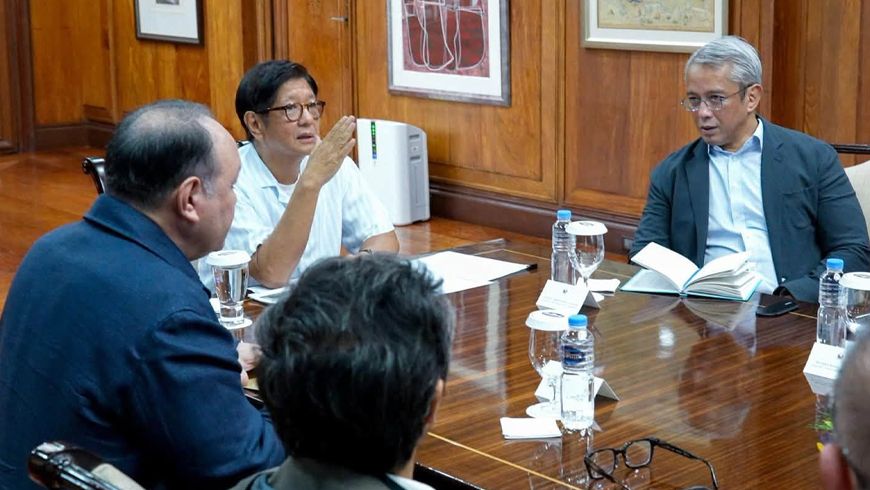
MANILA — President Ferdinand Marcos Jr. has ordered government agencies and local government units to strictly enforce “no-build zones” and strengthen disaster preparedness as severe flooding continues to affect parts of Central Luzon and Metro Manila.
Palace Press Officer Undersecretary Claire Castro said the President issued the directive during a Cabinet meeting on the flooding situation and the government’s health response on Monday, August 31.
Marcos also directed agencies to factor climate change into long-term planning, citing increasingly intense rainfall and flooding not only in the Philippines but in other countries.
“Dapat ipatupad ang batas pati ang ‘no build zone’. Huwag nang mamulitika, ipatupad ang batas,” Castro quoted the President as saying.
The Palace said local government units must strictly enforce restrictions on construction in flood-prone areas, maintain waterways, ensure regular garbage collection and coordinate with national agencies on disaster preparedness.
Marcos also cited old urban master plans for Metro Manila and Cebu that, according to the Palace, were never fully implemented. Castro said some areas that could have remained open spaces capable of absorbing excess rainwater are now occupied by infrastructure.
The President also wants climate change preparedness incorporated into education so students can learn how to respond to climate-related risks at an early age.
At the community level, residents were urged to properly dispose of waste and help keep drainage systems and waterways clear.
During the same meeting, Marcos received updates on rescue, evacuation, relief and health operations in flood-hit areas. The government said assistance continues to be delivered to affected communities, including isolated areas in Central Luzon.
More than P618 million in humanitarian assistance has been provided to Tarlac, Pampanga and Bulacan, while total assistance across Central Luzon has reached over P874 million, according to the Palace.
Marcos also directed agencies to remain prepared for health risks such as leptospirosis and to immediately repair damaged roads, bridges, dikes and other flood-control infrastructure.
The President stressed that disaster preparedness should go beyond emergency response as climate-related hazards become more severe.
“Ang utos ni Pangulong Marcos Jr., huwag tayong magpakampante,” Castro said.
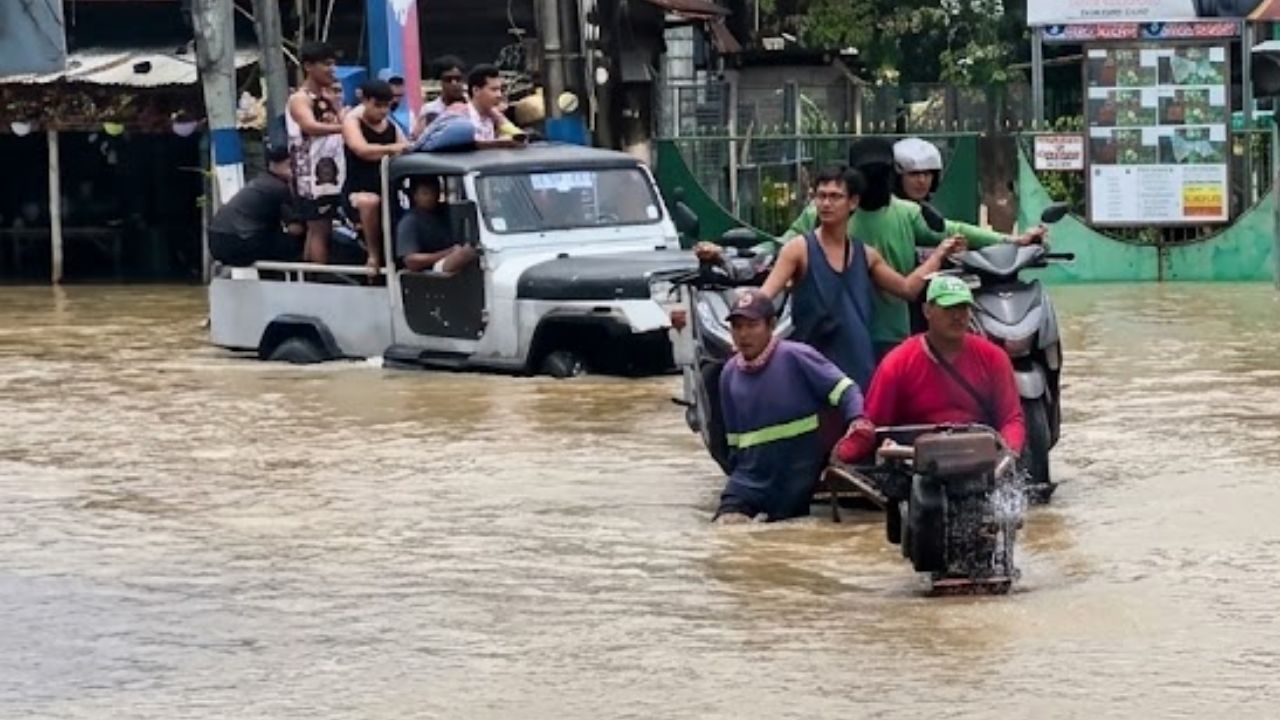
MANILA — Malacañang said the country’s recurring flooding is the result of decades of shortcomings in urban planning and flood-control implementation, and should not be blamed solely on the administration of President Ferdinand Marcos Jr.
Palace Press Officer Undersecretary Claire Castro said the problem has accumulated over several administrations, citing experts who estimate that proper planning and infrastructure measures have not been fully implemented for around 40 years.
“We do not want to point fingers at who is at fault or who is responsible for doing the work because the problem was not caused by something that happened only recently or within the past three years,” Castro said during a Palace briefing Tuesday.
She said the Marcos administration inherited long-standing problems, including alleged negligence and questionable or “ghost” flood-control projects, and is now directing government agencies to address them. Investigations into alleged ghost and substandard flood-control projects have remained ongoing, with some cases already progressing through the courts.
Castro made the statement after being asked why severe flooding continues in Pampanga and Bulacan despite the long presence of established political families in the affected areas.
She rejected efforts to place responsibility solely on particular local officials, saying the immediate priority is to implement measures that can reduce flooding. However, she stressed that local governments also have a responsibility to enforce flood-mitigation measures.
The Palace has also cited long-standing gaps in urban planning. Marcos recently noted that master plans for Metro Manila and Cebu date back to 1941 and 1936, respectively, but were not fully implemented. He has ordered agencies and local governments to strengthen disaster preparedness, enforce “no-build zones” and factor climate change into development planning.
The statements come as severe flooding continues to affect parts of Central Luzon and Metro Manila following heavy rains from the Southwest Monsoon.
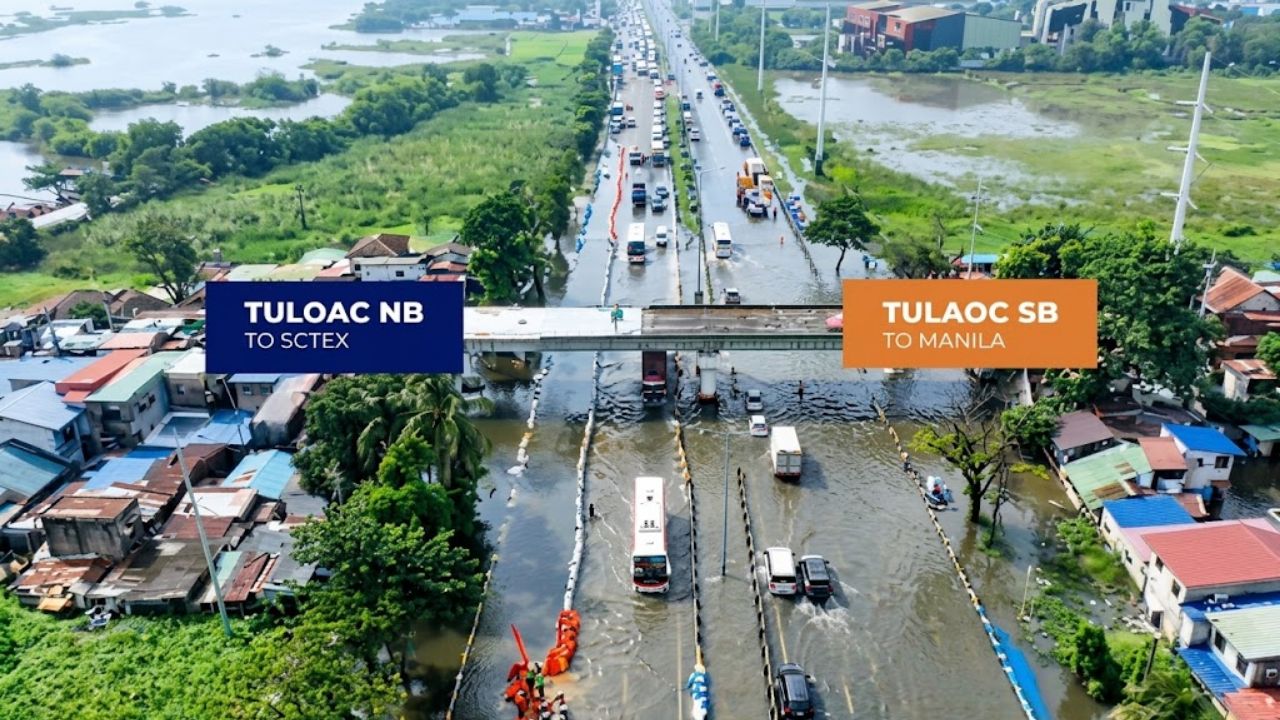
MANILA — Malacañang said the government is not considering sanctions against North Luzon Expressway management for now despite complaints over motorists being stranded for hours due to severe flooding.
Palace Press Officer Claire Castro said possible penalties were not discussed during President Ferdinand Marcos Jr.’s meeting with concerned officials on Monday.
“No sanctions were discussed. The President’s proposal focuses on how to assist our fellow citizens who got stranded on NLEX,” Castro said.
Questions over possible sanctions arose after motorists complained that vehicles were still allowed to enter the expressway despite worsening flooding and traffic conditions.
Severe flooding in parts of NLEX, particularly in Tulaoc and near the San Simon Interchange in Pampanga, caused hours-long traffic congestion as water from the overflowing Pampanga River affected portions of the expressway.
Castro said the President’s immediate priority is to ease the situation of motorists trapped along the highway rather than determine possible penalties against NLEX management.
“Imposing sanctions is not the President’s priority right now; rather, it is the welfare of our motorists,” she said.
The Palace also acknowledged an earlier proposal by Marcos to use a portion of the Candaba Swamp as a water-impounding area to help reduce flooding in Pampanga.
Castro said the proposal previously faced opposition due to concerns that agricultural lands could be affected.
She added that the government may review the implications of the earlier opposition but stressed that the administration is not seeking to assign blame.
The Palace said other flood-mitigation measures may still be considered to help address the recurring flooding affecting Pampanga and major transport routes such as NLEX.
