


%201.svg)


Emergency Hotline:
(+63) 2 911 – 8688


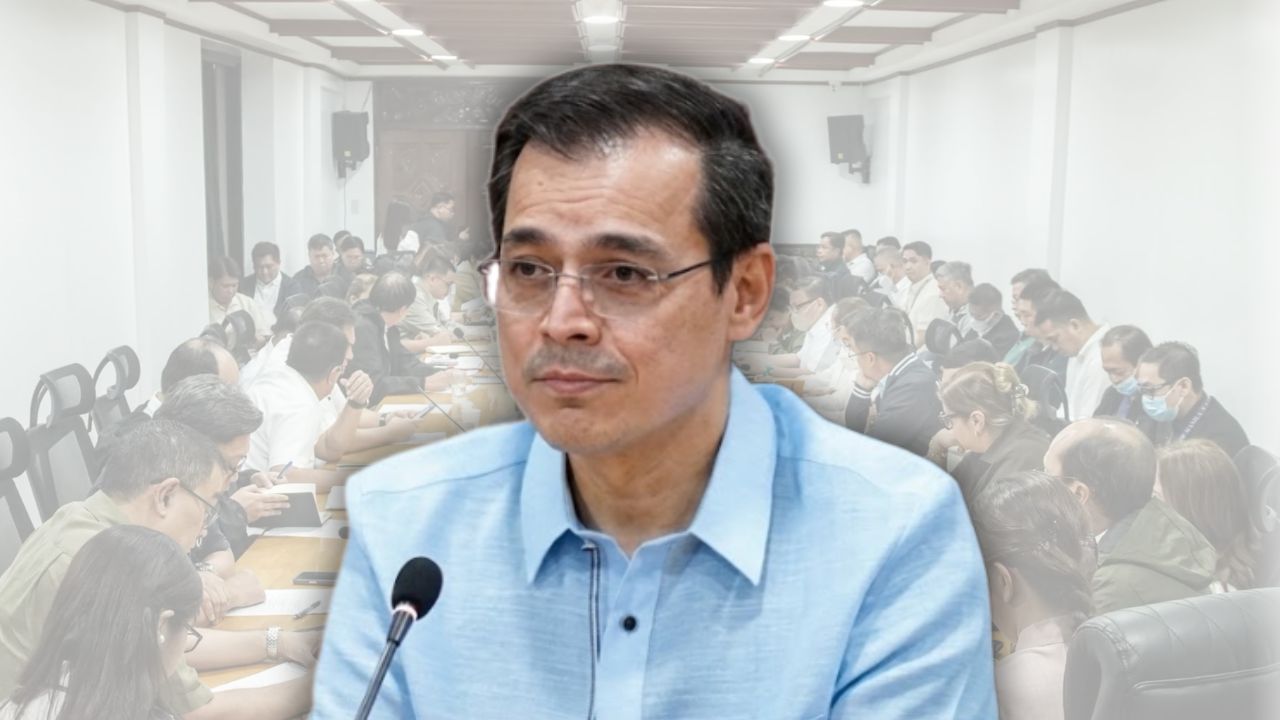

MANILA — The Manila City government has declared a leptospirosis epidemic after the number of new cases exceeded the city’s epidemiological threshold.
OIC-City Health Officer Dr. Grace Padilla reported to Mayor Francisco “Isko” Moreno Domagoso on Monday, September 7, that the spread of leptospirosis in the city had reached epidemic levels.
Data from the Manila Health Department showed the attack rate rising sharply from 1.27%last week to 3.48%, indicating a rapid increase in infections within a short period.
The declaration comes following widespread flooding in Metro Manila, which has raised concerns over leptospirosis infections. The disease can be contracted through contact with water or soil contaminated with the urine of infected animals, particularly rats.
Health authorities have repeatedly advised the public to avoid wading in floodwaters when possible and to seek medical attention following possible exposure, especially if symptoms develop.
The Manila City government is expected to intensify monitoring and measures aimed at controlling the spread of the disease following the epidemic declaration.
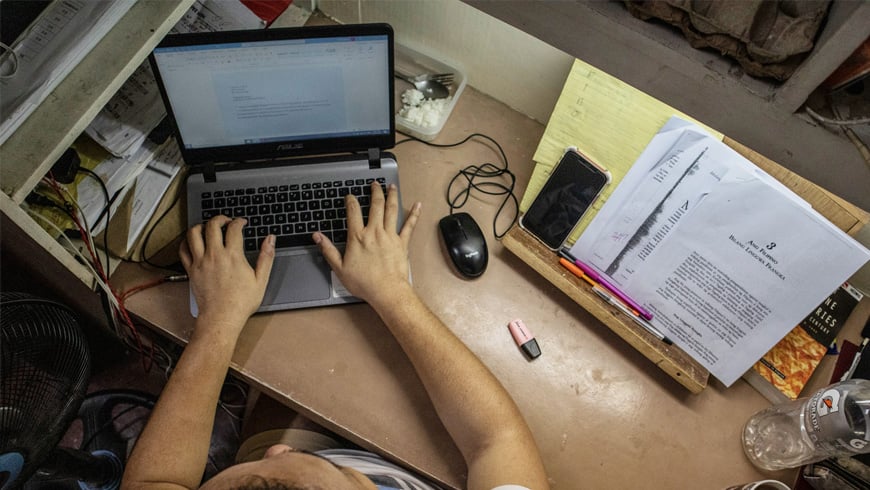
MANILA — Some Filipino college students who admitted using generative artificial intelligence to cheat in writing tasks viewed the practice less as academic misconduct and more as a way to cope with academic demands, according to a study published in the Journal of Academic Ethics.
The study, titled Cheating Writing with Generative AI: Exploring Student Motivations Using the Theory of Planned Behavior, examined why Filipino undergraduate students intentionally used generative AI for academic cheating. Researchers found that participants reframed the practice as a legitimate “academic survival strategy” rather than misconduct.
The qualitative study involved six undergraduate students from different disciplines, year levels and institutions in Metro Manila who admitted using generative AI to cheat in writing tasks.
Because the sample was small and deliberately selected, the findings reflect only the experiences of the participants and should not be taken as representative of all Filipino college students.
Researchers found that students were more likely to use AI in general education subjects they considered less relevant to their future careers. Peer influence also contributed to the behavior, as students learned AI techniques from classmates and increasingly viewed the practice as normal when others were doing the same.
Unclear school policies were another factor. Some participants interpreted the absence of specific rules on generative AI as indirect permission to use it, while others were highly confident they could submit AI-assisted work without being detected.
The study recently gained attention online after the Facebook page Iskolar ng Bayan featured the research and raised discussion over how students are using AI in academic work.
The researchers stressed that the findings do not justify cheating. Instead, they said schools may need clearer policies on generative AI, stronger AI literacy programs and more explicit guidance on how the technology can be used ethically in academic work.
They also argued that traditional punishment alone may not be enough as AI becomes more accessible, particularly when academic pressure, peer behavior and unclear institutional rules influence how students use the technology.

MANILA — Philippine businesses turned sharply pessimistic about the economy in July as tensions in the Middle East, higher oil prices and persistent inflation weighed on confidence, according to the Bangko Sentral ng Pilipinas (BSP).
The BSP’s latest Business Expectations Survey showed the overall confidence index dropping to -20.3 in July from a neutral 0.0 in June. A negative index means pessimistic businesses outnumbered those with an optimistic outlook.
Among businesses that reported weaker sentiment, 19.8 percent cited renewed tensions in the Middle East, while 15.1 percent pointed to higher oil prices amid disruptions in fuel shipments through the Strait of Hormuz. Another 11.3 percent cited persistent inflation.
The weaker sentiment also extended to businesses’ expectations for the coming months. The confidence index for the next three months fell to 3.7 from 18.8, while the outlook for the next 12 months dropped to 29.4 from 42.4.
Despite the decline, businesses remained generally optimistic about their prospects over the next year, although fewer firms expected to hire additional workers. Companies also reported weaker business activity, tighter financial conditions and more difficult access to credit.
The July reading was also below the BSP’s published quarterly confidence readings of -5.3 in the third quarter of 2020 and -5.6 in the third quarter of 2021. The figures, however, are not directly comparable as the BSP conducted the survey quarterly during the pandemic and did not conduct one during the strict nationwide lockdown in the second quarter of 2020.
The decline in business confidence comes as concerns are also being raised over the Philippines’ ability to attract foreign capital.
Meanwhile, BDO Capital and Investment Corp. President Eduardo Francisco recently said foreign investors have increasingly overlooked the Philippines despite resilient earnings among local companies.
“Foreign investors are not really looking at the Philippines anymore. We’re so small. We’re really negligible as part of the overall index,” Francisco said.
He explained that the country’s relatively small weight in global investment benchmarks makes it easier for international fund managers to reduce their Philippine exposure and direct their money to other markets.
The BSP said it continues to monitor developments in the Middle East and their possible effects on business and consumer sentiment, spending and investment decisions.
The July survey covered 506 firms nationwide.

MANILA — Government employees who are promoted or whose positions are reclassified may soon receive salary adjustments faster as the Department of Budget and Management (DBM) moves to automate the release of funds for personnel services deficiencies.
Acting Budget Secretary Kim Robert De Leon said the DBM is drafting a policy that would allow the department to identify salary funding gaps through updated agency plantilla records and release the needed funds even without a separate request from the agency.
Under the current system, agencies must first report promotions, reclassifications and corresponding salary changes before the DBM can determine and release additional funding.
Under the proposed mechanism, agencies would only need to keep their plantilla master lists updated. Once the DBM detects a funding deficiency, it could automatically release the amount needed to cover the salary adjustment.
The policy is targeted for signing by the end of September, with live testing across government agencies planned in the fourth quarter of 2026.
De Leon said the fourth quarter is an ideal testing period because this is when agencies typically submit requests for additional personnel services funds to cover salary and other compensation requirements.
The reform could particularly benefit public school personnel whose positions are upgraded under the Department of Education’s Expanded Career Progression System.
The DBM recently approved P8.68 billion for salary differentials covering 93,344 reclassified public school positions for fiscal years 2025 and 2026.
Another P12.09 billion is proposed in the 2027 national budget for the continued implementation of the career progression system.
The proposed mechanism will not be limited to DepEd and may also cover other national government agencies with personnel services funding deficiencies.
The DBM said the fourth-quarter rollout will be used to assess the system before it is considered for wider implementation.
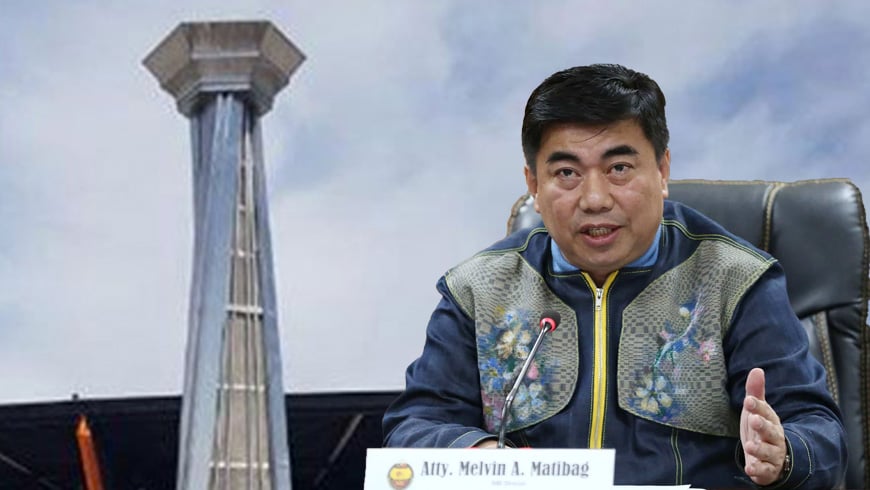
MANILA — The National Bureau of Investigation (NBI) is preparing to file cases over alleged irregularities involving the “golden cauldron” used during the 2019 Southeast Asian Games.
NBI Director Melvin Matibag said the bureau has gathered documents and testimonies that may support criminal charges, with cases expected to be filed within days.
The cauldron reportedly cost P55 million, while investigators are looking into claims that its actual cost may have been significantly lower.
The probe is part of a broader NBI investigation into the Philippine Southeast Asian Games Organizing Committee (PHISGOC), which organized the 2019 SEA Games.
Matibag said several sports officials and individuals linked to PHISGOC are also under investigation, including people associated with then-PHISGOC chairman Sen. Alan Peter Cayetano.
Sports executive Ramon Suzara is also among those being looked into.
The NBI is further examining why PHISGOC continued sponsoring international events despite having been created specifically for the 2019 SEA Games.
Matibag said the investigation remains ongoing and separate cases may be filed based on the evidence gathered.
